

Prakriti's curriculum features a core STEM program where students engage in project-based learning. This year, students were tasked with identifying and addressing real-world problems using STEM principles. The resulting projects, presented at the school exhibition, demonstrated their ability to apply scientific and technological knowledge to practical challenges.
Building upon those personal journeys of discovery, the Grade 6 learners' recent STEM projects demonstrated remarkable ingenuity. They didn't just conceptualize solutions; they built them.
From solar cookers crafted from simple materials to explore alternative energy, to intricate water filtration systems and eco-friendly air purifiers, their projects tackled real-world challenges with both creativity and practical problem-solving. A portable cleaning cart, a space-optimizing bottle holder, an artificial ant habitat, and a plant pulley system for natural air purification further showcased the diverse and impactful applications of hands-on STEM learning.
Student Journeys: Real Learning in Action
Ananya: From Burnt Masks to Breakthroughs
Ananya wanted to create an affordable and accessible air filter to help people with respiratory problems like asthma, a condition she saw affecting people around her. Her initial design involved using readily available mask materials and a fan.
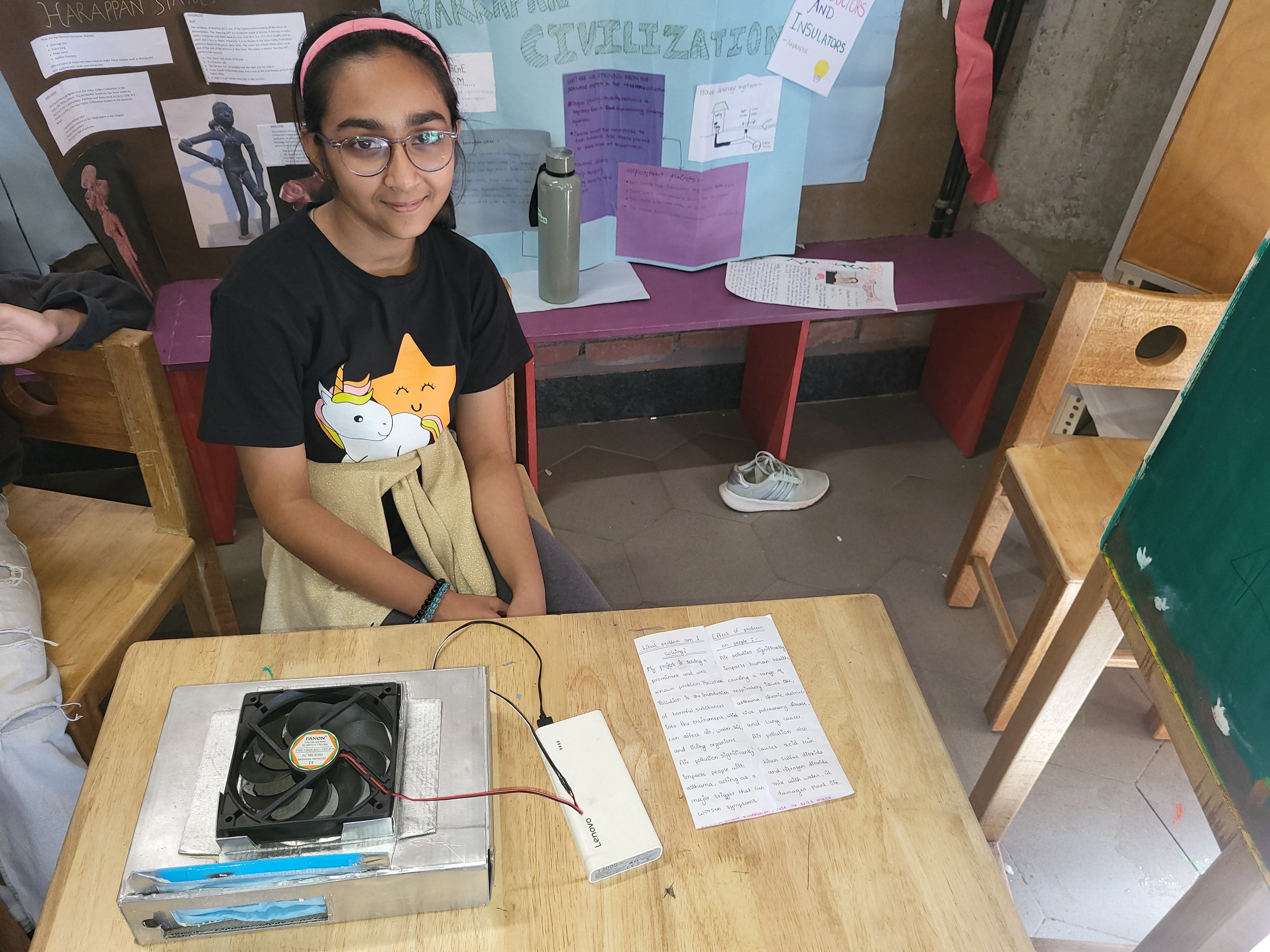
"It wasn't just about putting things together. I remember the first time I tested the fan with the mask material, it caught fire! I was so scared. I had to figure out why, and how to make it safe. Then, the masks kept ripping. I spent hours experimenting with different fabrics, different fan speeds. Rudra Bhaiya helped me understand how air flows, how the fan pulls the particles. I learned that you have to keep trying, even when things go wrong. And I learned that even simple things can make a big difference for people."
Avneesh: The Evolution of a Cleaning Cart:
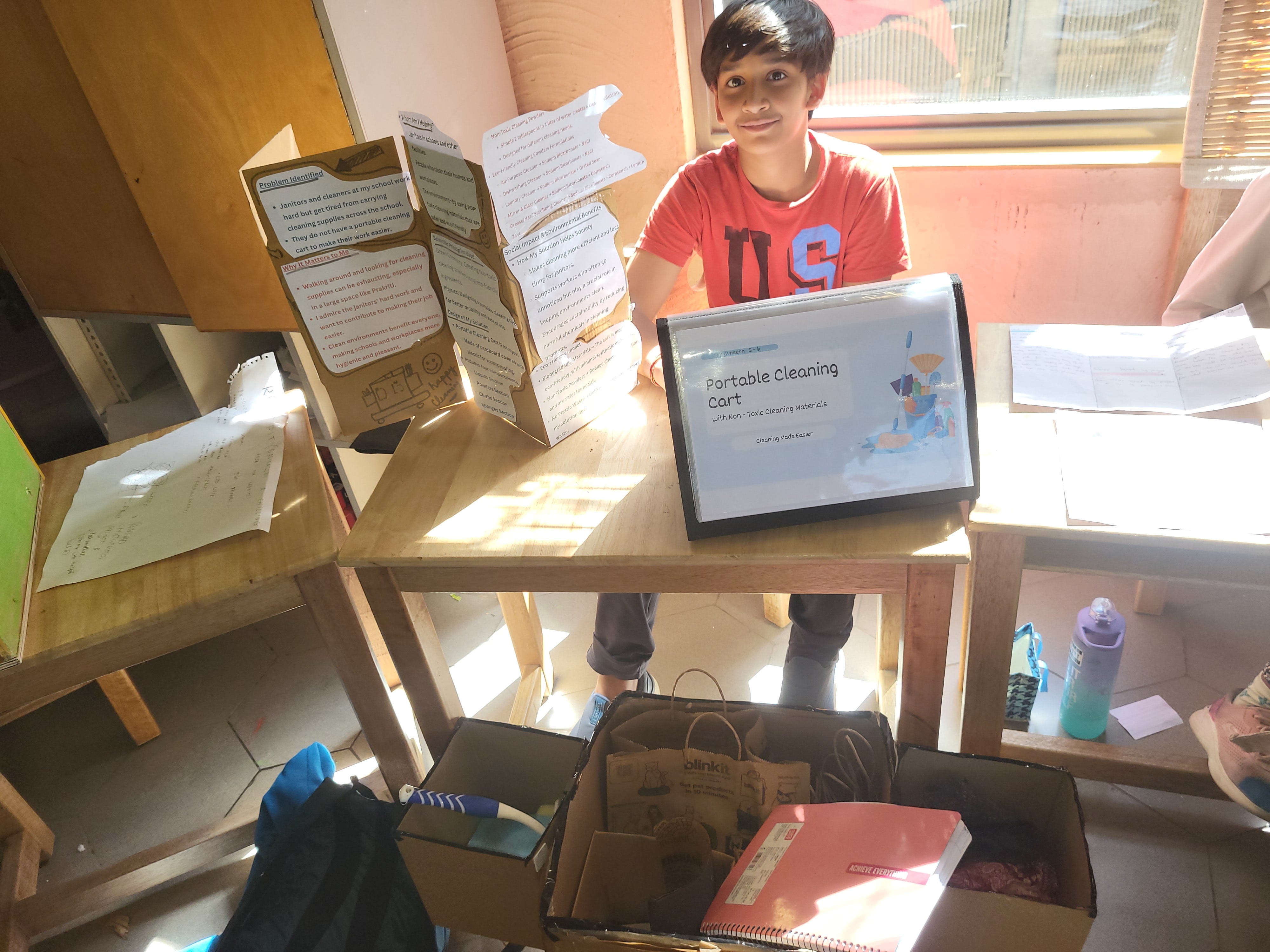
"I didn't just build the first cart I thought of. I asked the janitors what they needed, what problems they faced. Then, I tried building a cart with just a box, but it was too wobbly. That's when I found the old skateboard. I also wanted to make cleaning safer, so I researched non-toxic ingredients. Mixing the baking soda and salt, it was like a chemistry experiment! I learned that design is about solving problems, and that you can make things better with simple materials, and also that many revisions may be needed."
Chahna: The Hook That Wouldn't Fall:
Chahna aimed to solve the problem of cluttered classrooms by creating bag hooks for student belongings. Her initial idea was a simple hook design.
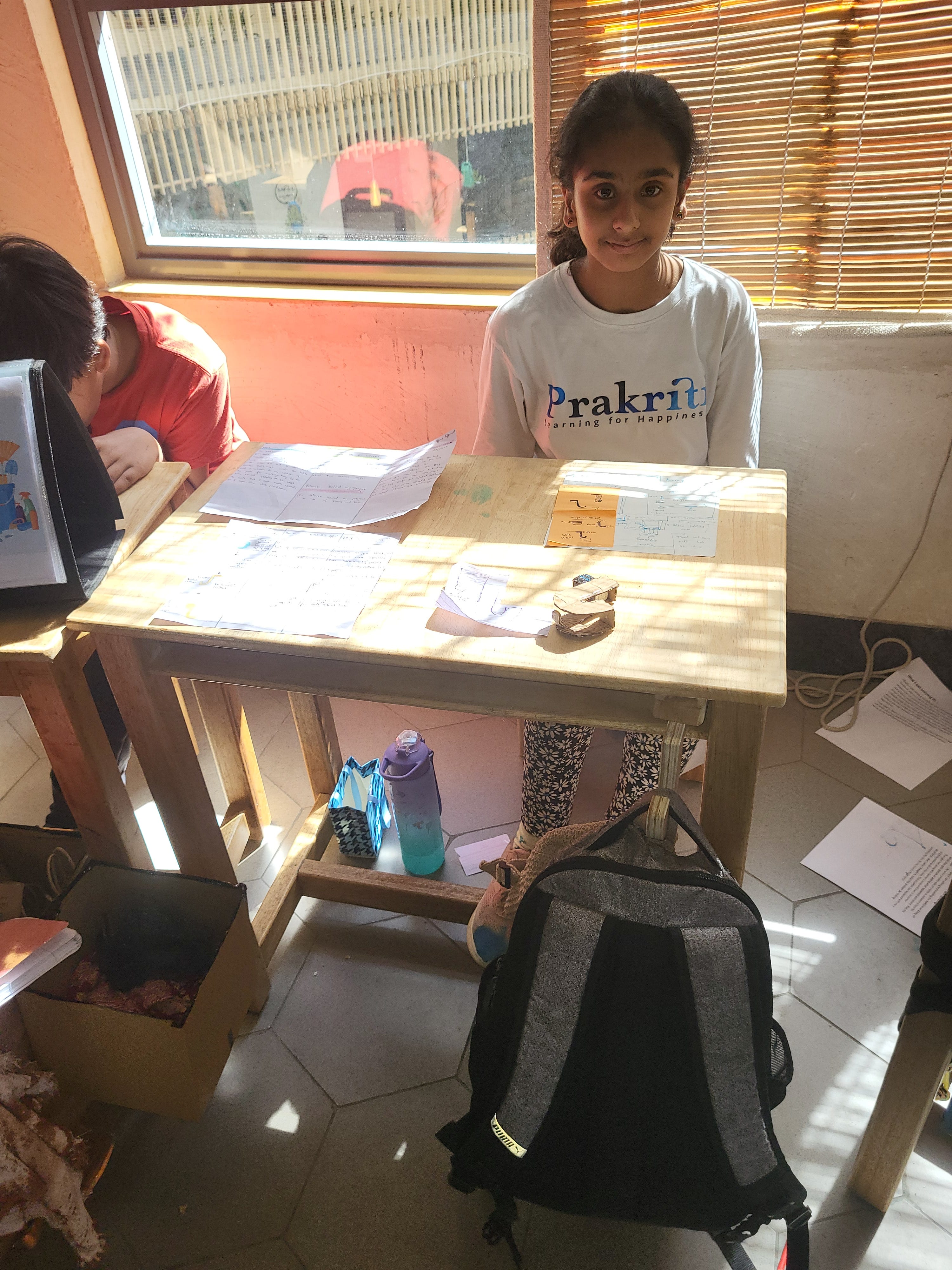
"The first failure I got was that the bag roof would just fall off," she recounted. "Then the second failure I got was that we couldn't drill anything into the tables." Further enquiry into the project lead to a deeper understanding of principles of friction and gravity, but more importantly, she learned the value of creativity and perseverance, adapting her design to overcome each obstacle.
Academic Learning in Action
Noor: Breathing Easier, Crafting a Khas(Grass) Filter:
Noor aimed to improve indoor air quality in her classroom, addressing the problem of rising air pollution in her city. Her initial idea was to use plants, but she found them insufficient.
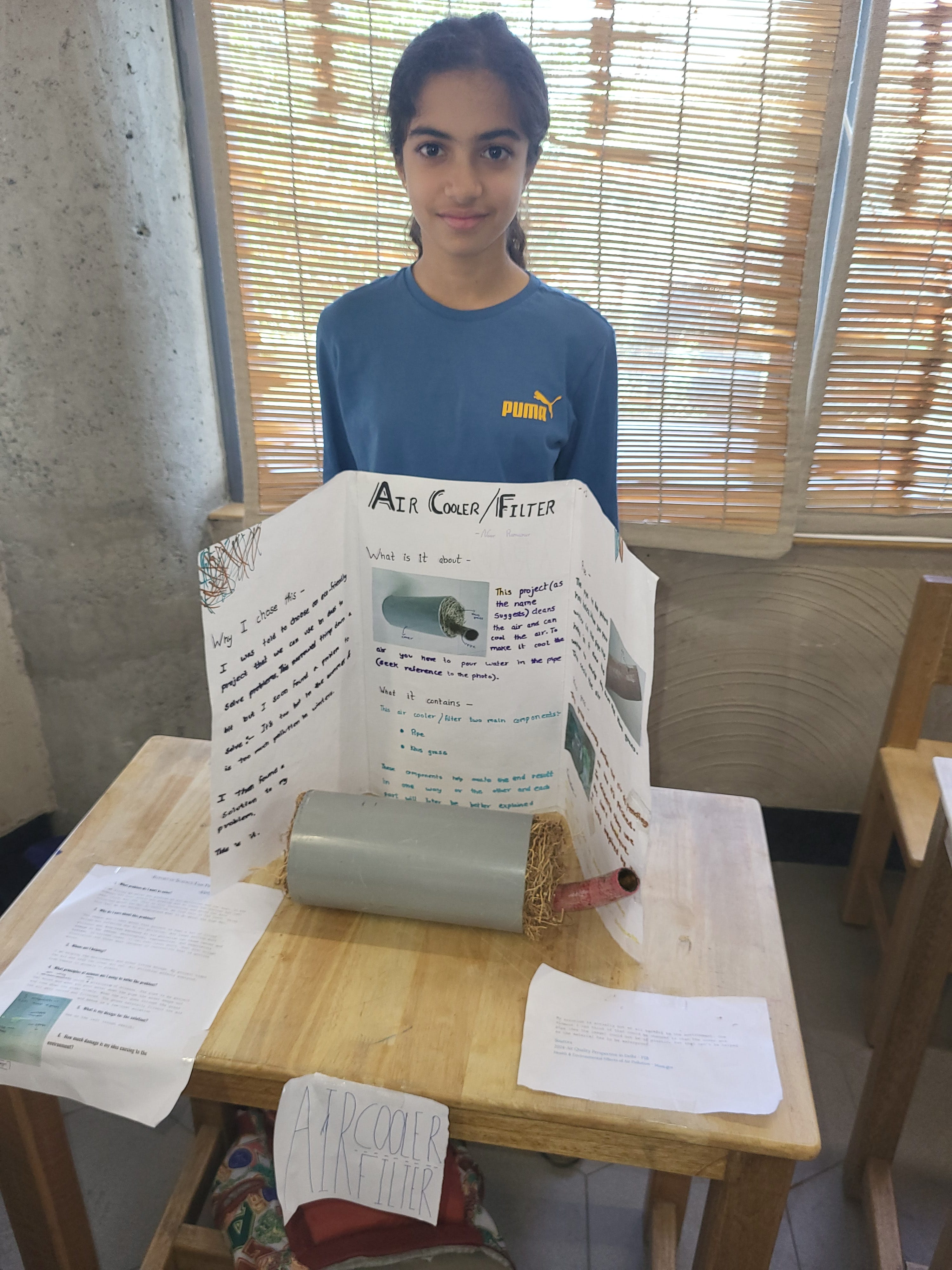
"When I started, I just thought about cooling the air," she said. "But then I realized I needed to understand how air purification works." She researched filtration, material properties, and air quality. Last year, the AQI was 209, which was the average, which includes summers and winters, and it is especially polluted in the winters.”
She learned how different materials trap particles and how Khas grass naturally purifies air. "I had to understand the science behind it to make it work. It wasn't just about building something; it was about understanding the scientific principles behind it."
Vaidehi: Building Bird’s Haven, Learning a Habitat:
Vaidehi was concerned about the declining bird population in her area, and she wanted to create a safe space for them to thrive and be observed. Her project was to build a bird observation area that would protect smaller birds from predators and provide them with food and water.
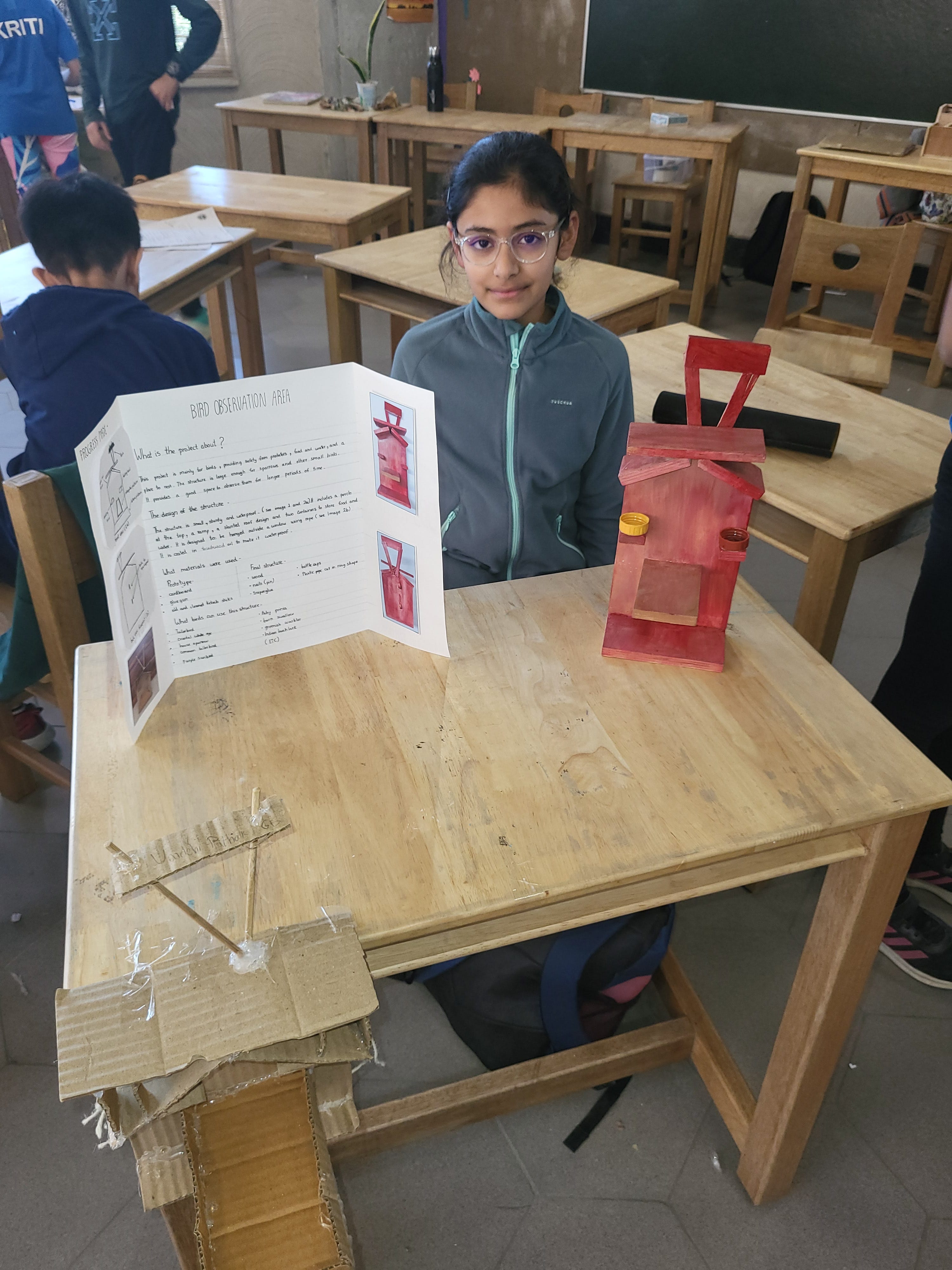
"I always liked birds, but I didn't know much about their habitats," she said. "To design the observation area, I had to learn about different bird species, their sizes, their nesting habits. I had to understand how predators affect them. I even learned about the principles of leverage when I designed the access door. And of course, I learned a lot about measurement and geometry in carpentry. It was like applying everything I learned in science and math class to a real-world problem."
Tvisha: Vegetable Peels and the Palette of Chemistry:
"Making paint from vegetables was a real chemistry lesson!" Tvisha aimed to create a portable and eco-friendly paint palette, addressing the problem of bulky and unsustainable art supplies. Her project involved using vegetable peels to create natural pigments.
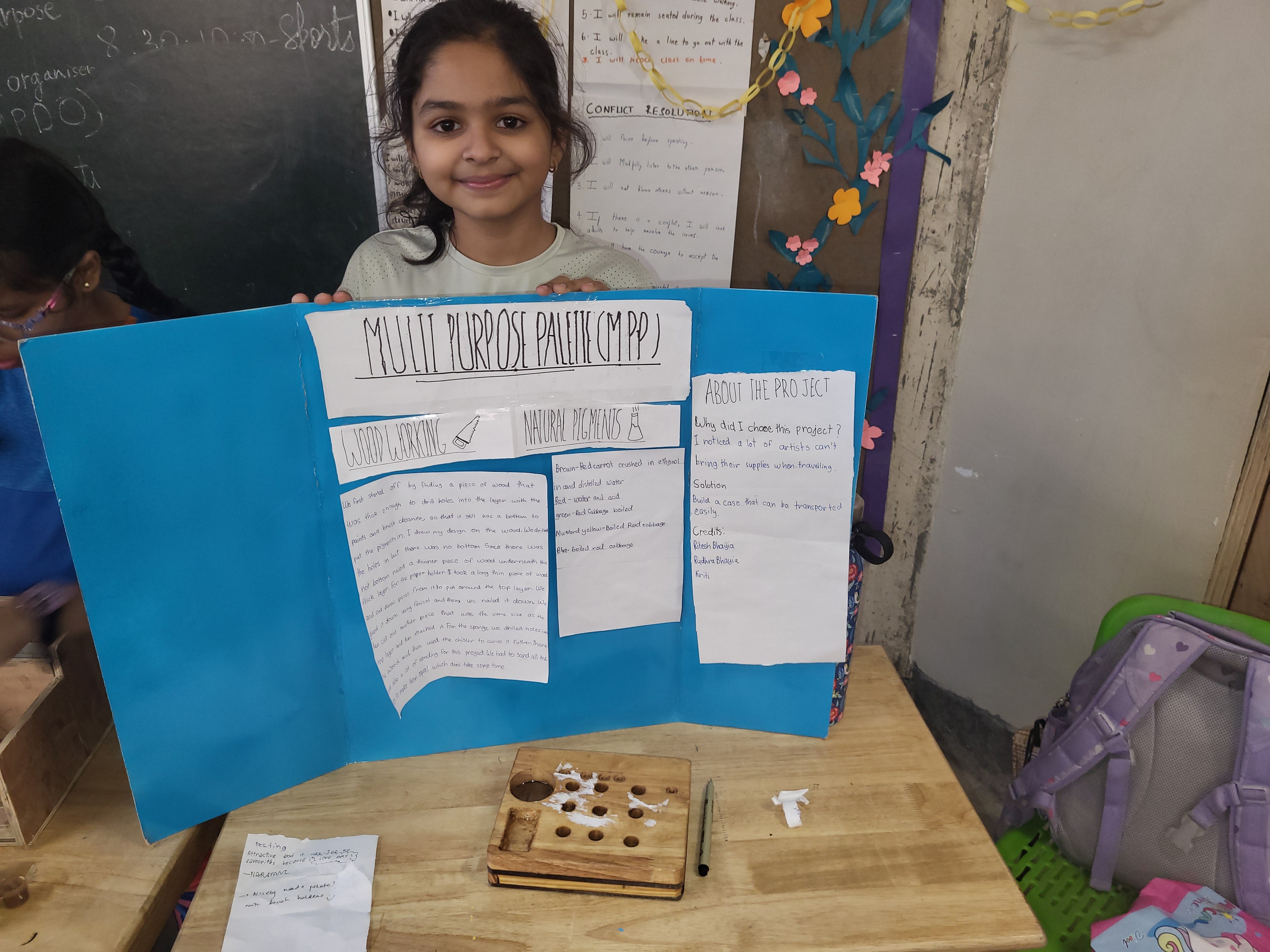
"I had to learn about pigments, how they're extracted, and how they react with different substances. I researched which vegetables contained which pigments and how to stabilize them. I learned about the chemical properties of different peels. It was like a lab experiment, but with art materials. I learned how science can be used to create something beautiful."
STEM and Self: Discovering Personal Impact
Durva & Adira: Filtering Water, Building Empathy:
Durva and Adira were troubled by the contaminated water they saw in some local school water sources.
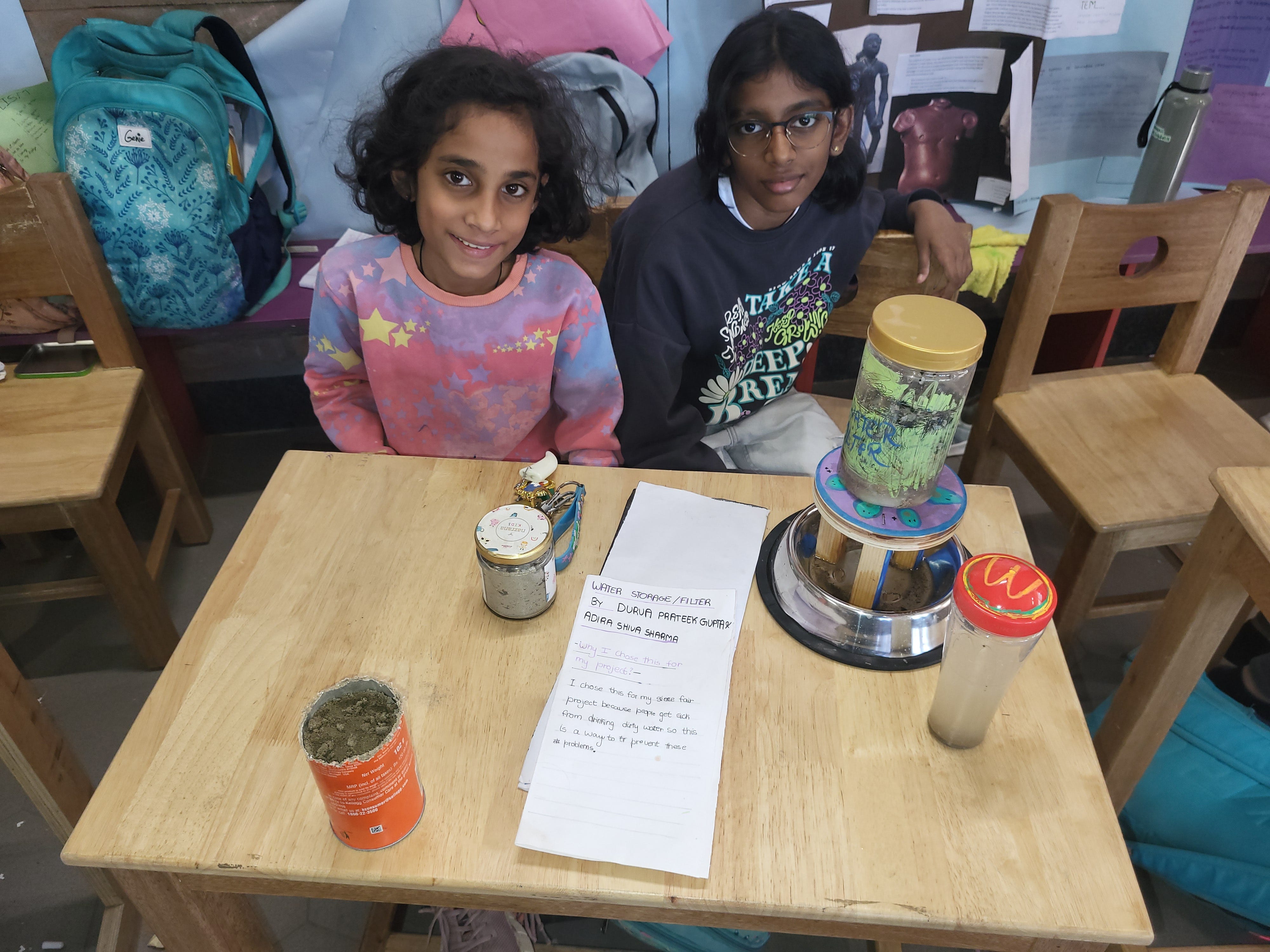
They aimed to build a simple water filter to help. Utilizing layers of gravel, charcoal, and cotton, they designed a system to remove impurities. "Before this project," Durva reflected, "I didn't really think about how hard it is for some kids to get clean water. We learned to work together and be patient." Adira added, "Science is about helping people. We learned that even young kids can make a difference." Their project taught them empathy, collaboration, and the power of their actions.
Shakti: Making Tidying Fun, Finding Confidence:
Shakti wanted to address the problem of classroom litter, creating a portable table bin designed to make tidying up an engaging activity. "I used to think cleaning was just something someone else should do," Shakti admitted. "But when I started building the bin, I realized I could make it fun. I learned that if you want people to do something, you have to make it interesting."
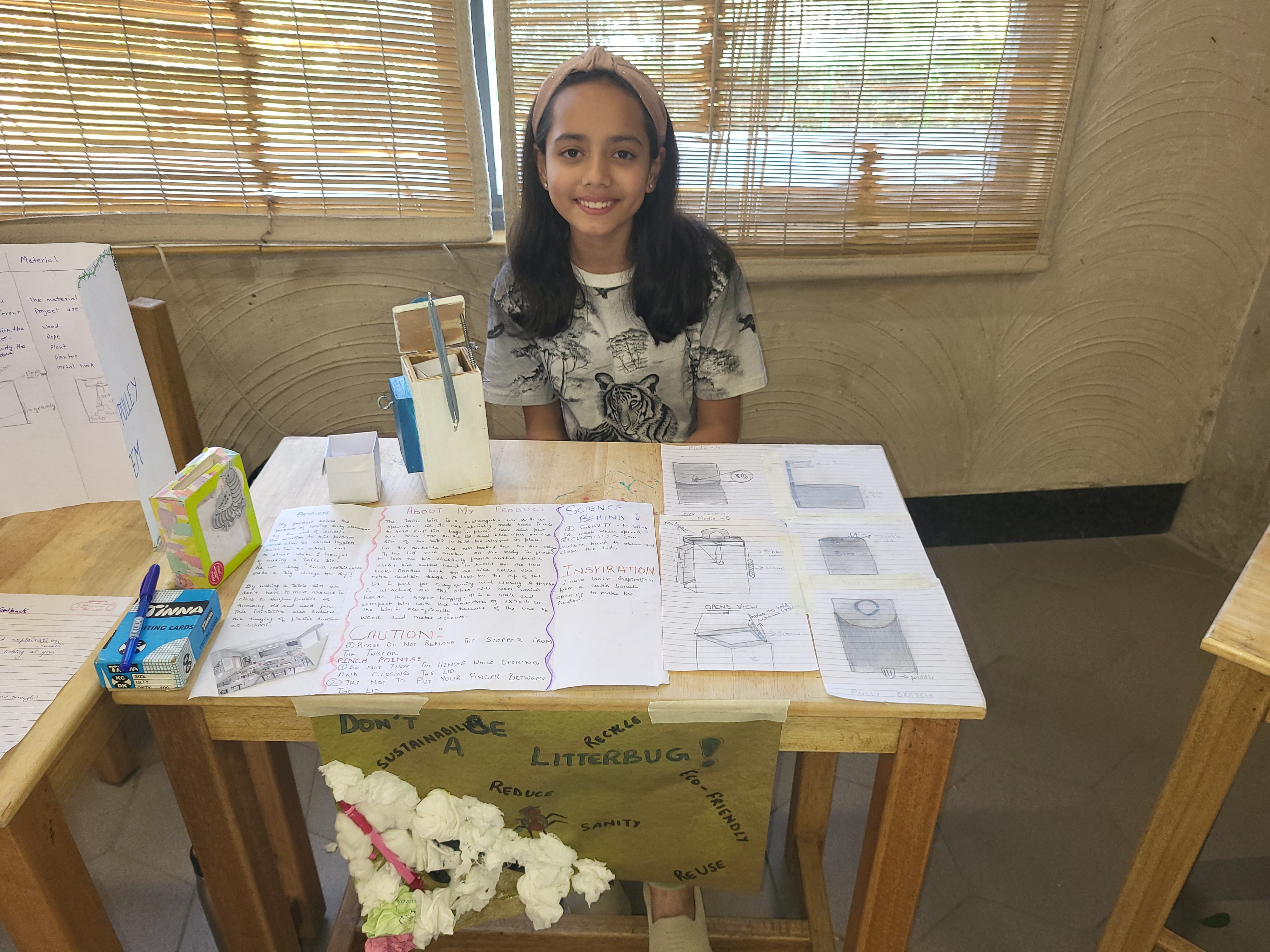
She designed the bin to be easily portable and incorporated a simple rubber band mechanism for the lid, demonstrating ingenuity in its simplicity and effectiveness. "It taught me to be more creative and think about how other people feel. I also learned that I can build things, which I never thought I could do. It made me more confident." Her project helped her develop a sense of responsibility, creativity, and self-belief, transforming a chore into an engaging solution.
As these students move forward, they carry with them not just the knowledge gained, but the invaluable experience of turning ideas into reality. Their stories are a testament to the power of hands-on learning and a reminder that every challenge is an opportunity to learn, grow, and innovate. The future is bright, and it's in good hands.
wonderful creations..
The celebration of failures,mistakes,trials and retrials,despondence and persistence seems to be a valuable life skill imbibed.