
Trails, Tales, and Transformations
Where nature, service, history and culture became guides, leading our learners on journeys of curiosity, reflection, and discovery

Finding Purpose Through Service Learning: Grades 8 & 9 at Madhuban, Sri Aurobindo Ashram
Grades 8 and 9 were immersed in the serene surroundings of Madhuban, Sri Aurobindo Ashram in Ramgarh from 3rd to 7th November. Here, learners engaged with forests, rivers, and orchards as a living classroom, participating in hands-on service, creative projects, and community interactions that encouraged collaboration, responsibility, and reflection.
Nestled in the serene Kumaon hills, the venue offered a peaceful sanctuary away from the distractions of daily life. The forested surroundings, orchards, rivers, and mountains became a living classroom, where every trail, tree, and community interaction became a lesson in connection, responsibility, and observation.
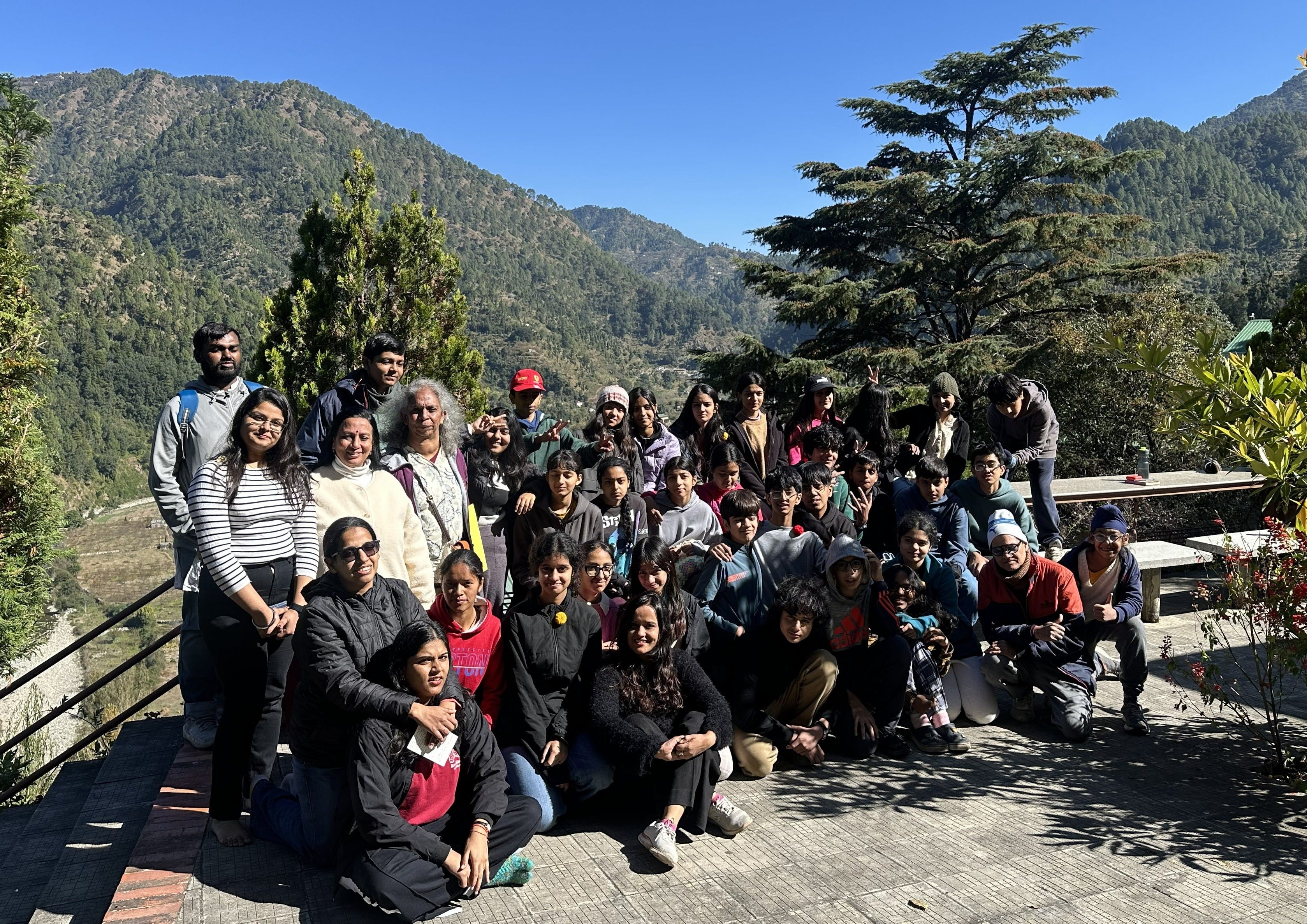
The OLE was structured around authentic service-learning projects that encouraged learners to step into meaningful roles. Learners engaged closely with local communities, artisans, and school children through activities like:
Educational Outreach: Teaching and designing bilingual learning materials for local school children, bridging language and cultural gaps.
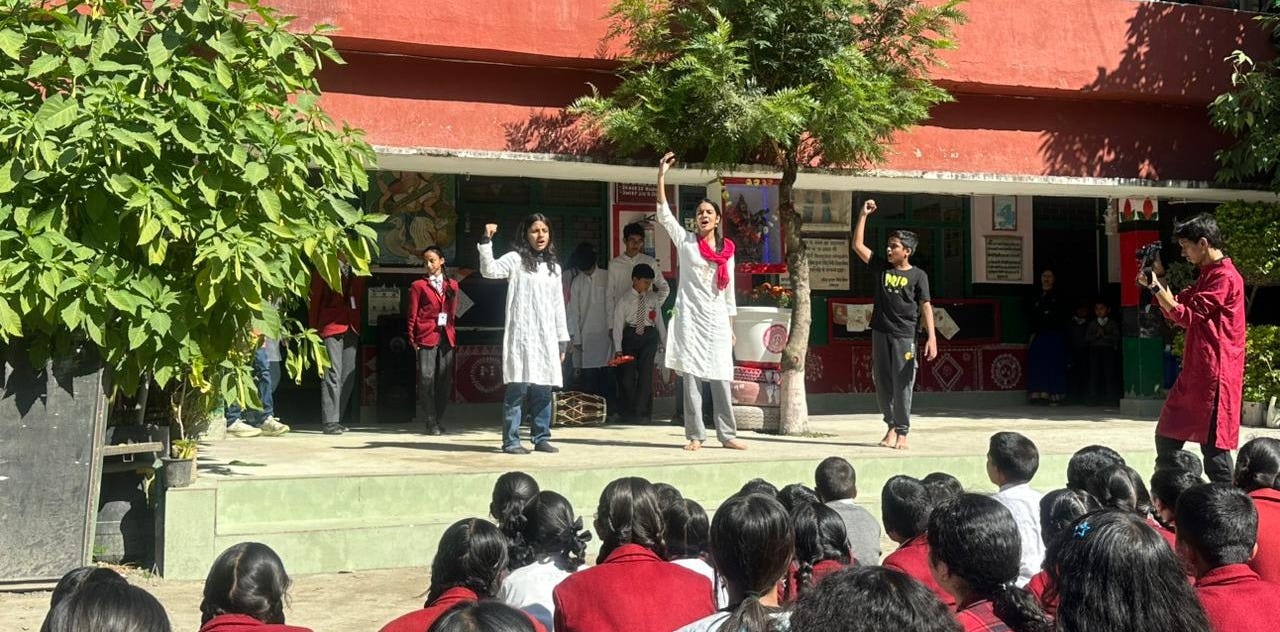
Community Storytelling: Performing vibrant street plays (nukkad nataks) to raise awareness about social and environmental issues.
Environmental Action: Designing informative signage, cleaning hiking trails, and participating in flower plantation drives — contributing to the ashram and the surrounding landscapes, inspired by the colors and diversity reminiscent of the Valley of Flowers.
Women’s Empowerment: Collaborating with local women on food preservation, financial literacy, and traditional craft workshops, supporting skill-building and self-sufficiency.
Cultural Documentation: Capturing local heritage through art, murals, storytelling, and short films, preserving traditions while celebrating creativity.
Learners learned to co-design sessions, plan projects, and collaborate in teams, developing leadership, communication, and problem-solving skills.
Throughout the expedition, learners engaged deeply with the work: during the street play on water conservation, the group organized dialogues, coordinated roles, and practiced stage movements, focusing on clear delivery, stage expression, and timing to convey their message effectively.
On trail cleanups and flower plantation drives, learners encouraged one another, managed tasks safely, and completed physically demanding work as a team. Reflection sessions provided space for learners to consider both community needs and peer contributions, fostering self-awareness, empathy, and thoughtful planning.
Each day followed a purposeful rhythm: morning Shram Daan to contribute to the campus and village, project blocks for hands-on CAS (Creativity, Activity & Service) work, afternoon hikes and games for vitality, meditation and journaling for reflection, and circle time to integrate insights and share learning.
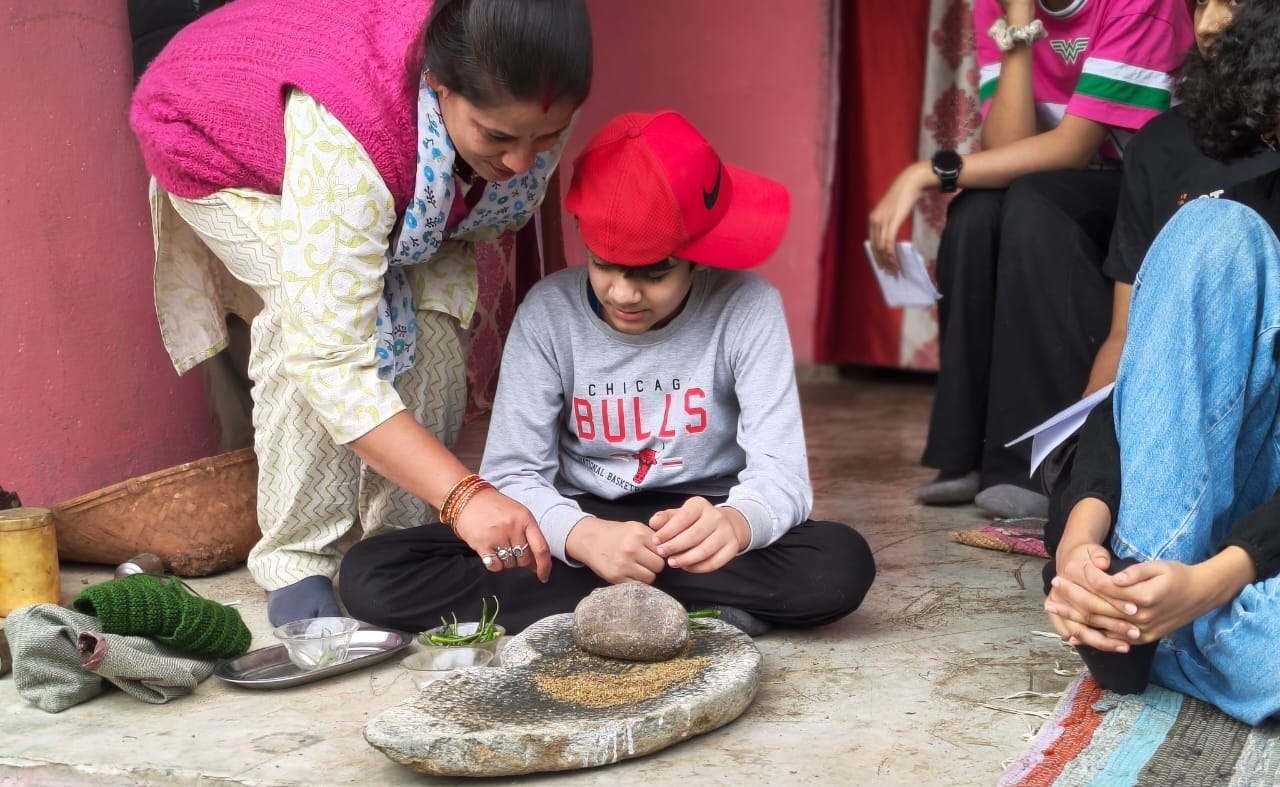
By the end of the expedition, learners had not only contributed tangibly to the local community but had also grown in self-awareness, empathy, and resilience. Madhuban became more than a destination; it was a space where learners discovered purpose through action, reflection, and connection — embodying the principles of integral education in mind, heart, body, and spirit.
Click here for a glimpse into a transformative rural immersion experience
During the street play on water conservation, I couldn’t help but notice how learners divided responsibilities on their own — some focused on the dialogue, others on stage presence and timing. I could see clear indicators of effective teamwork and ownership as they coordinated, adjusted, and supported each other through the process.
- Umesh Pal (Hindi facilitator)
Exploring Wings and History: Grades 4–6 at Keoladeo National Park & Fatehpur Sikri
From November 3rd to 6th, Grades 4 to 6 learners visited Bharatpur, Rajasthan, exploring the wetlands of Keoladeo National Park and the historical sites of Fatehpur Sikri and Agra. They observed birds, studied ecological patterns, and connected these experiences with lessons in history and conservation.
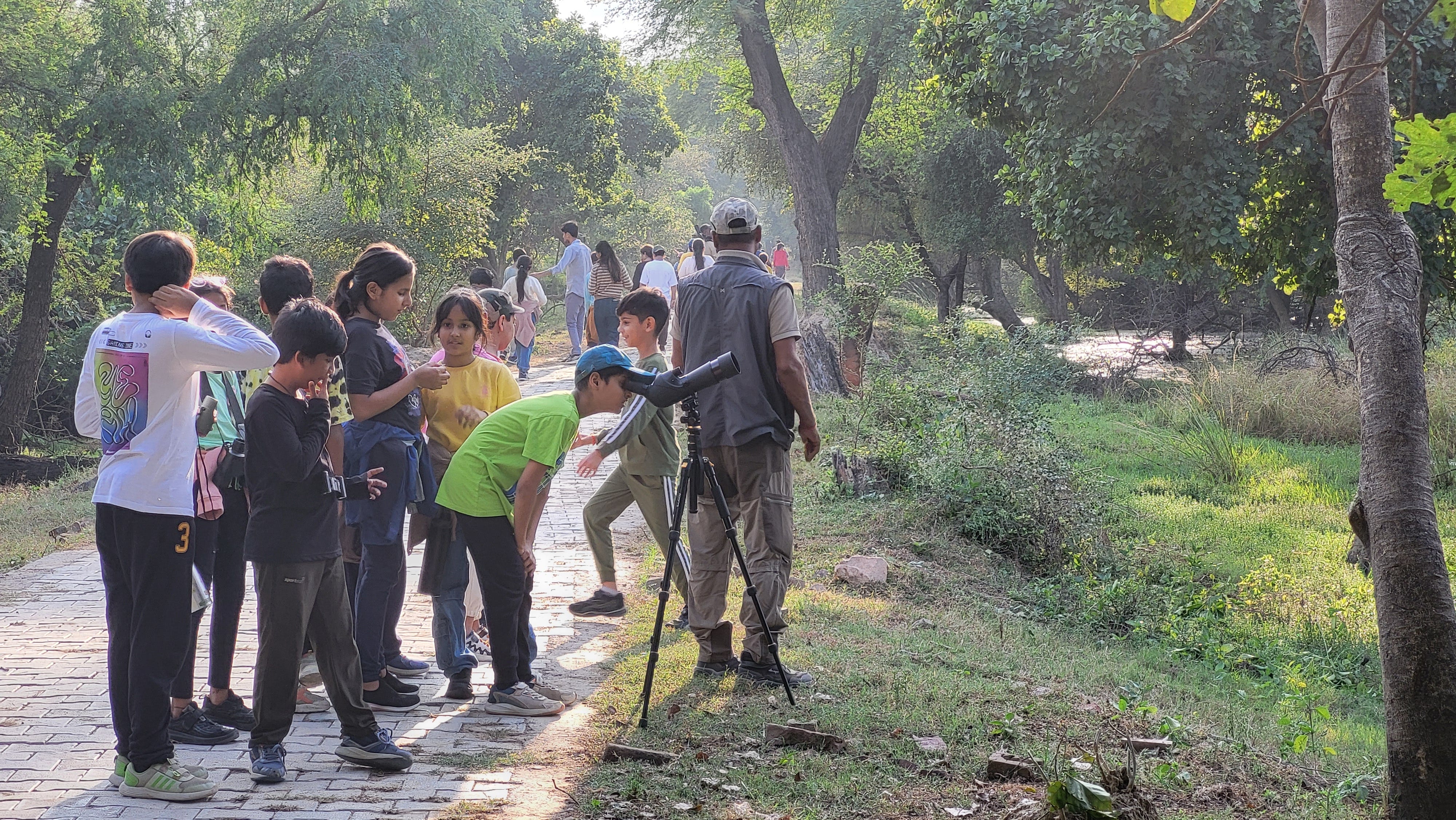
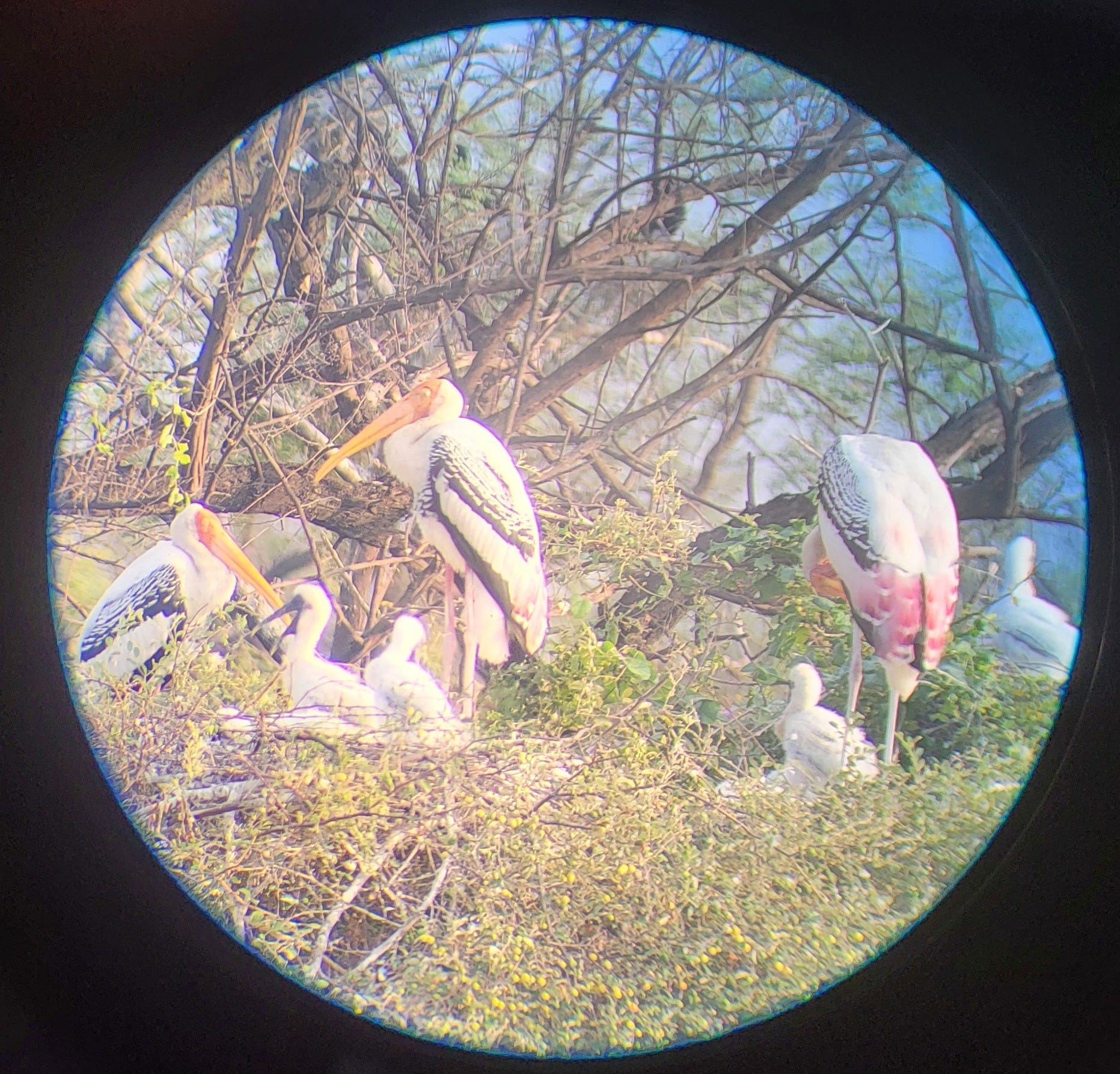
The journey began with immersive exploration at Keoladeo National Park. After orientation, learners joined evening and early-morning birdwalks, spotting species such as owls, herons, and forest hens.
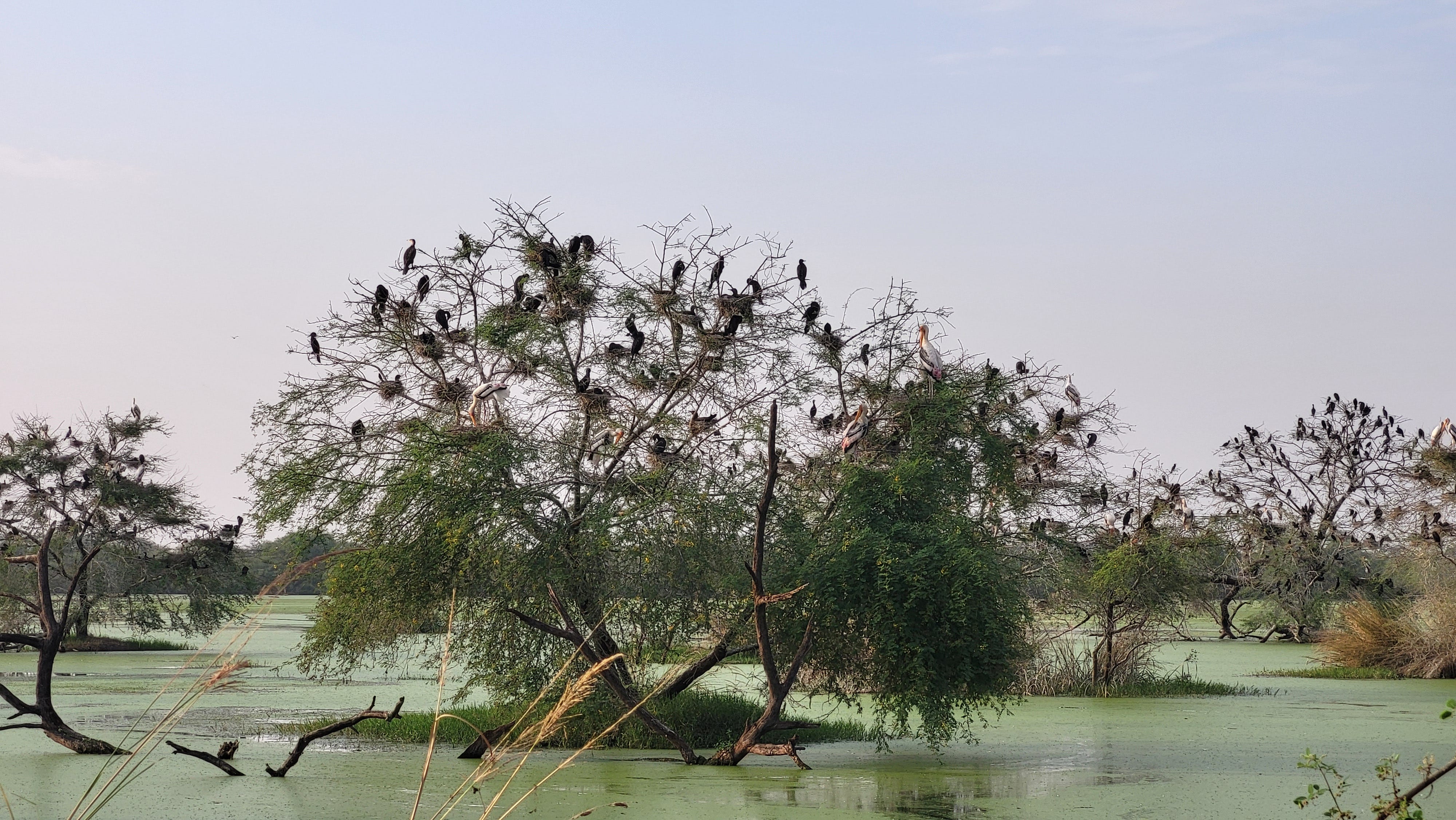
The rickshaw rides across the park became impromptu classrooms, as local drivers shared stories about the “tarter bird,” antelopes, and wetland ecology. A poignant moment arose while learning about the Siberian cranes — once migratory visitors to India, now absent due to hunting — sparking reflection on the fragility of ecosystems and the importance of conservation.
Following the ecological immersion, learners shifted to cultural exploration. On the third day, they visited Fatehpur Sikri, witnessing grand Mughal architecture and the temple built for Jodha Bai. Guided discussions brought Akbar’s lineage to life, while stories of the Black Taj Mahal and Shah Jahan’s later years deepened their appreciation of history.
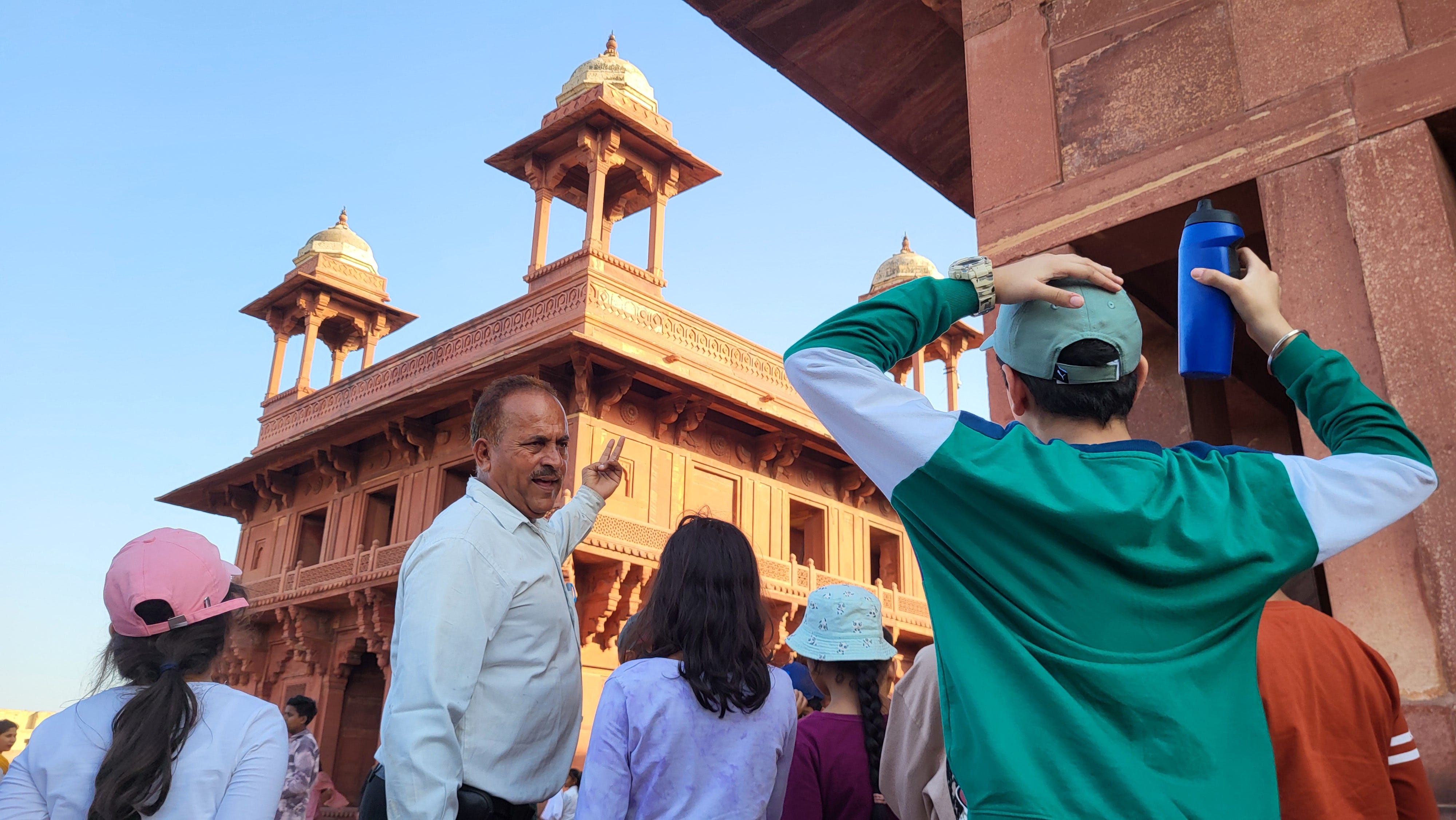
Learners observed local customs respectfully, taking off their shoes before entering sacred spaces, connecting historical knowledge with ethical awareness.
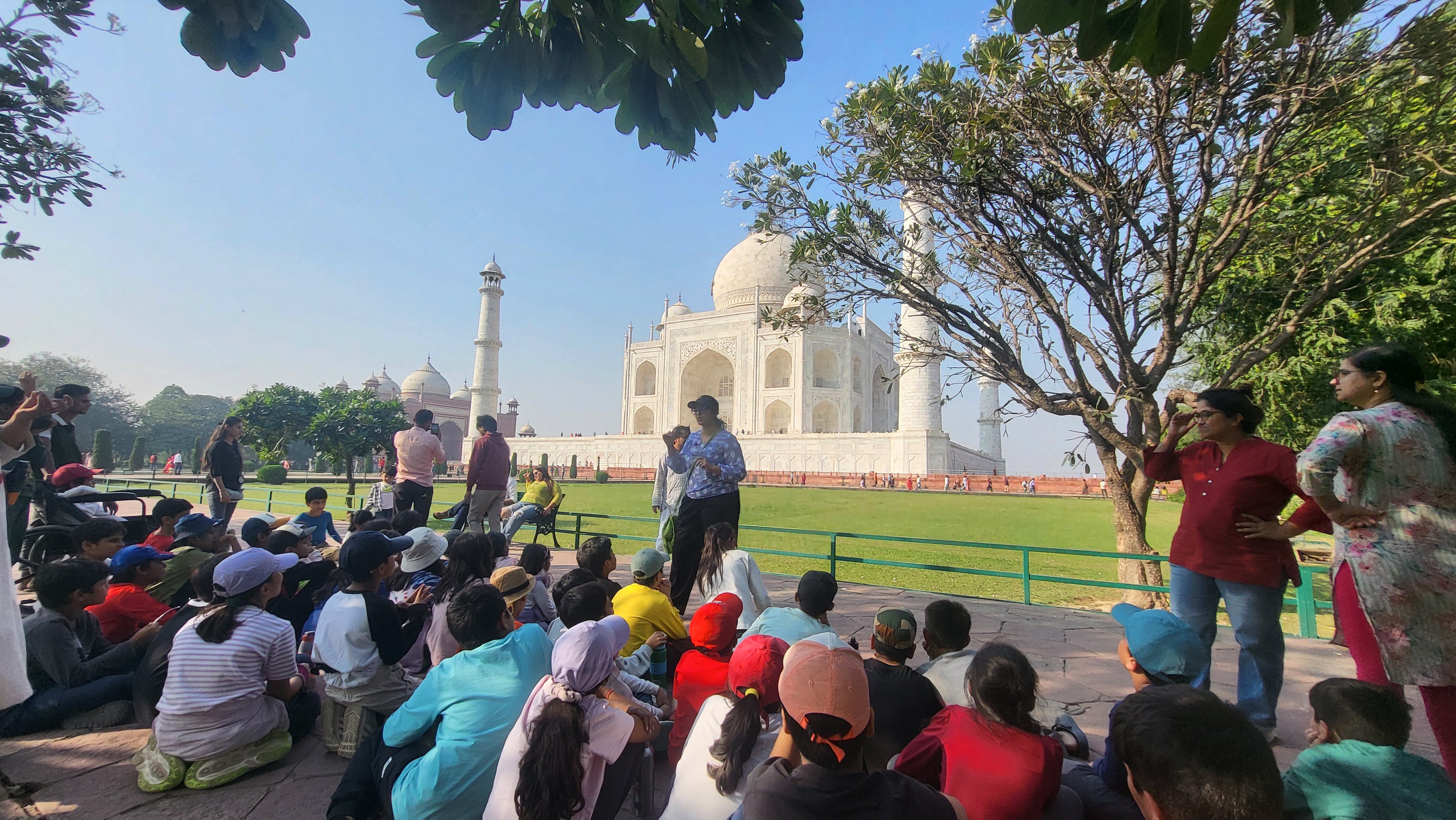
On the final day, the group visited the Taj Mahal in Agra, marveling at its architectural brilliance and the stories of love and legacy it embodies. Observing its symmetry and intricate craftsmanship, learners reflected on history, culture, and human creativity, bringing classroom lessons into vivid, real-world context.
Throughout the expedition, learners exhibited curiosity, patience, and empathy. They helped peers when needed, resolved minor conflicts with maturity, and bonded across grades. From observing birds and trekking trails to exploring heritage sites, each experience nurtured observational skills, emotional intelligence, and ethical awareness — key outcomes of the OLE program.
By the journey’s end, the learners had not only discovered the natural and cultural wonders of Bharatpur, Fatehpur Sikri, and Agra but had also grown as compassionate, reflective individuals, ready to carry these insights into their everyday lives.
One of our learners was fascinated by the “tarter bird” after hearing from the rickshaw driver how it dries its wings in the sun since it has no wax coating. She excitedly ran ahead during the walk, pointing out each bird she spotted, and insisted on explaining its unique habits to her peers — a spontaneous mini-lesson that showed how curiosity spreads.
- Ritu Martin (Homeroom facilitator for Grade 5 and accompanying facilitator)
Discovering Purpose Amid the Hills: Grades 3 & 7 at Bodhigram, Dehradun
From November 3rd to 6th, our learners from Grades 3 and 7 embarked on dual Outbound Learning Expeditions to Bodhigram, Dehradun, where they explored forests, collected and observed natural specimens, participated in reflective walks, and engaged in creative expression activities over four days.
Bodhigram welcomed both groups with bamboo huts draped in clock vine creepers, offering open rooms that overlooked the lush green forest. The dining hall faced rolling hills, and even the resident dog and cat became part of the shared space — simple reminders of coexistence that enchanted learners of all ages.
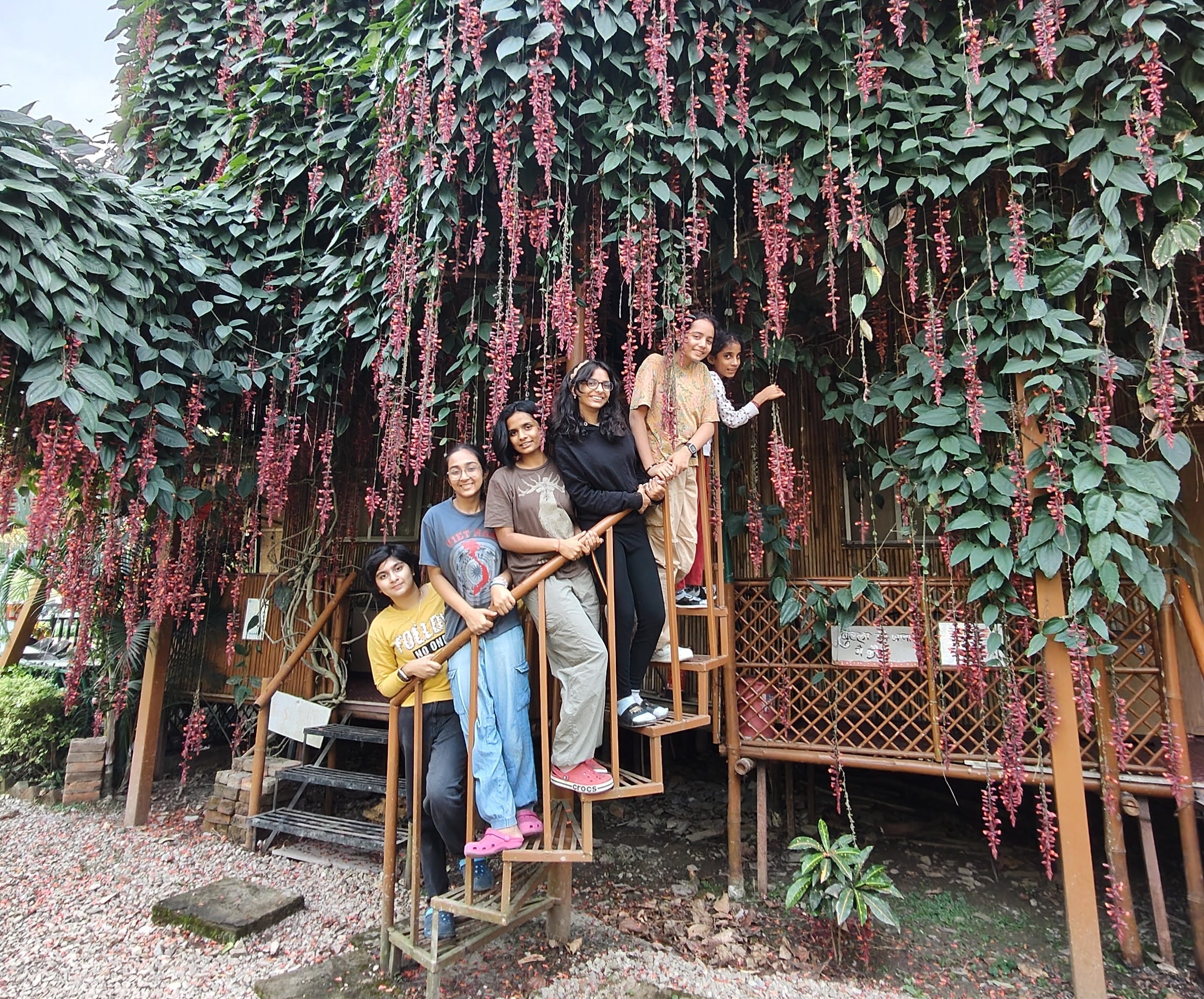
While Grade 7 learners began noticing the quiet beauty and reflecting on the expansive surroundings, Grade 3 learners approached everything with wonder and delight, marvelling at leaves, insects, and the textures of the forest floor.
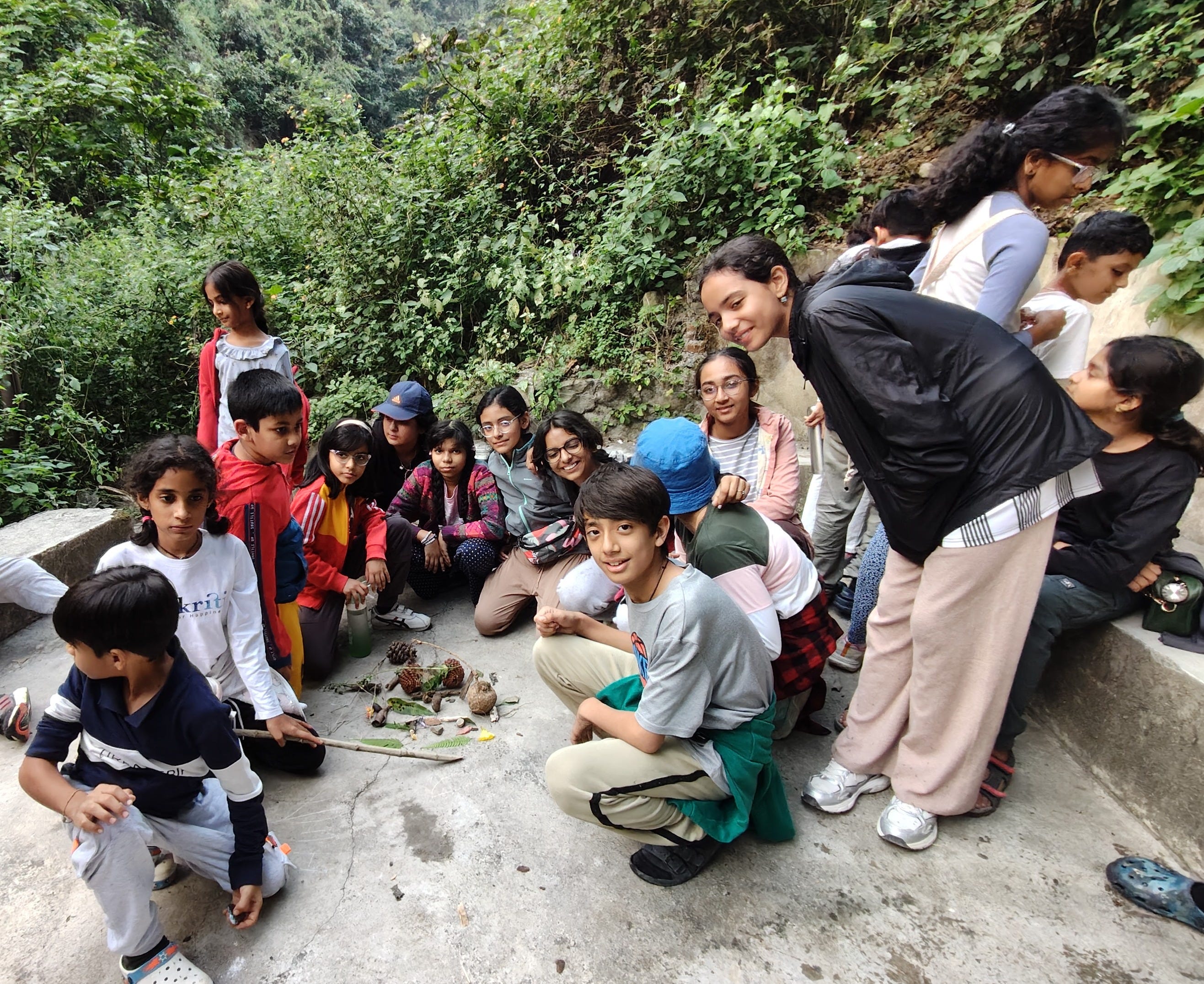
The first day focused on grounding and sensory awareness. A silent forest walk encouraged them to listen, breathe, and attune to nature. Grade 7 learners reflected on the stillness and the wisdom of mystic saints during the Shabadshala session, while Grade 3 learners explored the forest with curiosity, collecting leaves, spotting birds, and noticing small details. Younger learners also engaged in nature scavenger hunts and intuitive stone painting, creatively capturing their observations and emotions.
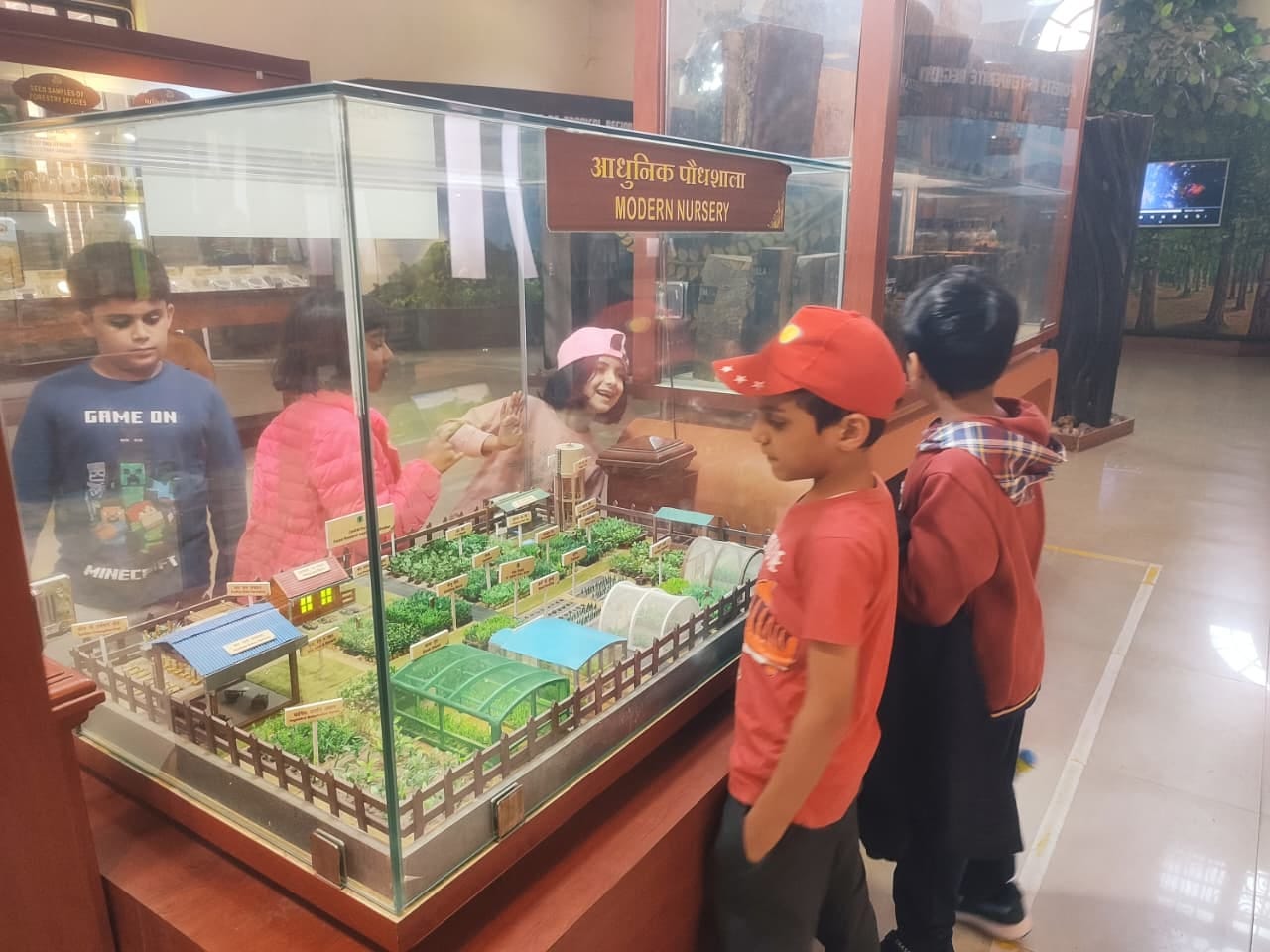
On the second day, learners visited the Forest Research Institute (FRI). Grade 7 learners explored timber and non-timber forest products and considered how museums foster environmental awareness. Meanwhile, Grade 3 learners were captivated by the variety of plants and animals, asking enthusiastic questions, and delighting in tangible discoveries — from leaf patterns to small birds nesting nearby. Later, a village walk revealed flowing mountain water and centuries-old ruins. One Grade 3 student carefully collected water to take home for her family, while Grade 7 learners reflected on the deeper ecological and historical context — a perfect example of age-specific engagement in the same environment.
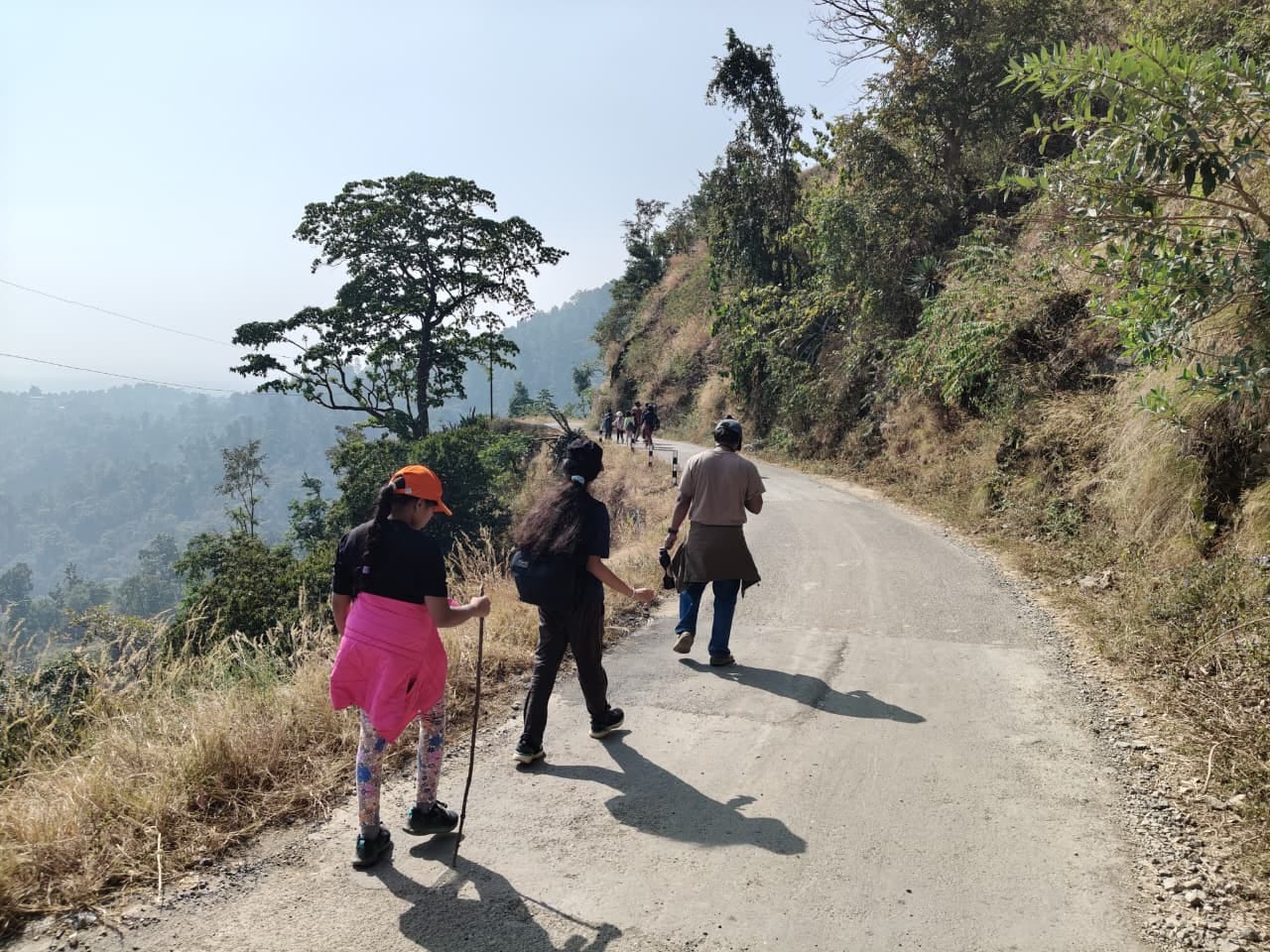
Day three tested physical endurance and observation. Trekking narrow, rocky paths, Grade 7 learners balanced resilience with reflection, navigating thorns and exposed roots while absorbing the surrounding beauty. Landslide remains, native plants, and farming tools became hands-on lessons in ecology and history. Grade 3 learners approached the trek with excitement and teamwork, building focus and endurance while learning to navigate the terrain safely. In the afternoon, both groups engaged in creative reflection: Grade 7 learners through Mandala art and discussions on social entrepreneurship, and Grade 3 learners through expressive activities, connecting their experiences to feelings and discovery.
A shared anecdote captured the spirit of both groups: during the scavenger hunt, a Grade 3 learner proudly carried a smooth stone to paint later, while a Grade 7 student nearby paused to reflect on the patterns of the forest floor — a quiet reminder of how the same space nurtured wonder and contemplation differently across ages.
Evenings were filled with music, open-mic performances, and joyful moments of connection. By the final day, learners had not only explored the mountains and forests but also discovered new layers within themselves and one another. As one student noted, “Didi, you are a different person when you are not teaching Math.” Indeed, Bodhigram proved to be a classroom like no other — where nature, curiosity, and reflection intertwined seamlessly.
- Sumayya Khan (Homeroom Facilitator for Grade 7 and an accompanying facilitator)
During the forest hike, a nervous learner paused at a steep, rocky path. With a few deep breaths and cheers from peers, the learner climbed step by step — reaching the top with a radiant smile and proudly encouraging others. Watching the children take care of one another and tackle challenges independently left me thinking, “Wow — this is true teamwork and courage in action!”
- Sandeepa Pal (Homeroom facilitator for Grade 3 and an accompanying facilitator)