
Student Voice: A Guide for Shaping Environments
On this children’s day, we collected student voices on trust, belonging and beauty through an anonymous survey for Grades 5 and above

Painting The World They Want to Live in: A Digital Canvas of Hopes
When asked to imagine the world as a blank canvas, learners’ responses were full of hope, creativity, and care. Themes of nature, safety, equality, compassion, and freedom stood out.

Click/tap on the image above to see how other learners envisioned their perfect world
Many envisioned a world in harmony with nature: clean air, flowing rivers, thriving forests, and animals living safely. One child wrote, “A world full of trees and water, safe for everyone, with bright, pastel thoughts for all,” while another imagined oceans alive and forests protected out of love rather than obligation.
Other students focused on fairness and equality: a world without poverty, discrimination, or war, where everyone has access to resources, education, and opportunity. One reflection read, “A world where every person, every animal, and every corner of the earth feels cared for…compassion would be the foundation of every choice we make.” Safety, fairness, and kindness were central to almost every vision.
Play, curiosity, and creativity also emerged strongly. Some responses were whimsical—flying cars, Hogwarts-inspired schools, or basketball courts in the sky—while others imagined freedom from strict rules and pressures, spaces to learn, explore, and enjoy life. Taken together, these responses paint a picture of a world that is safe, just, inclusive, and full of possibility.
These ideas remind us that children value joy, curiosity, and wonder alongside fairness and safety.
Home: Choices, Freedom, and Safety
The survey showed that children feel most confident making decisions about education and play at home. For example, 85% said they have a say in what, when, and where to study, while 72% can decide when and what to play. Other areas like food, screen time, or outings saw less participation, but students still feel home is a space where they can express themselves, do what they like, and be who they are.
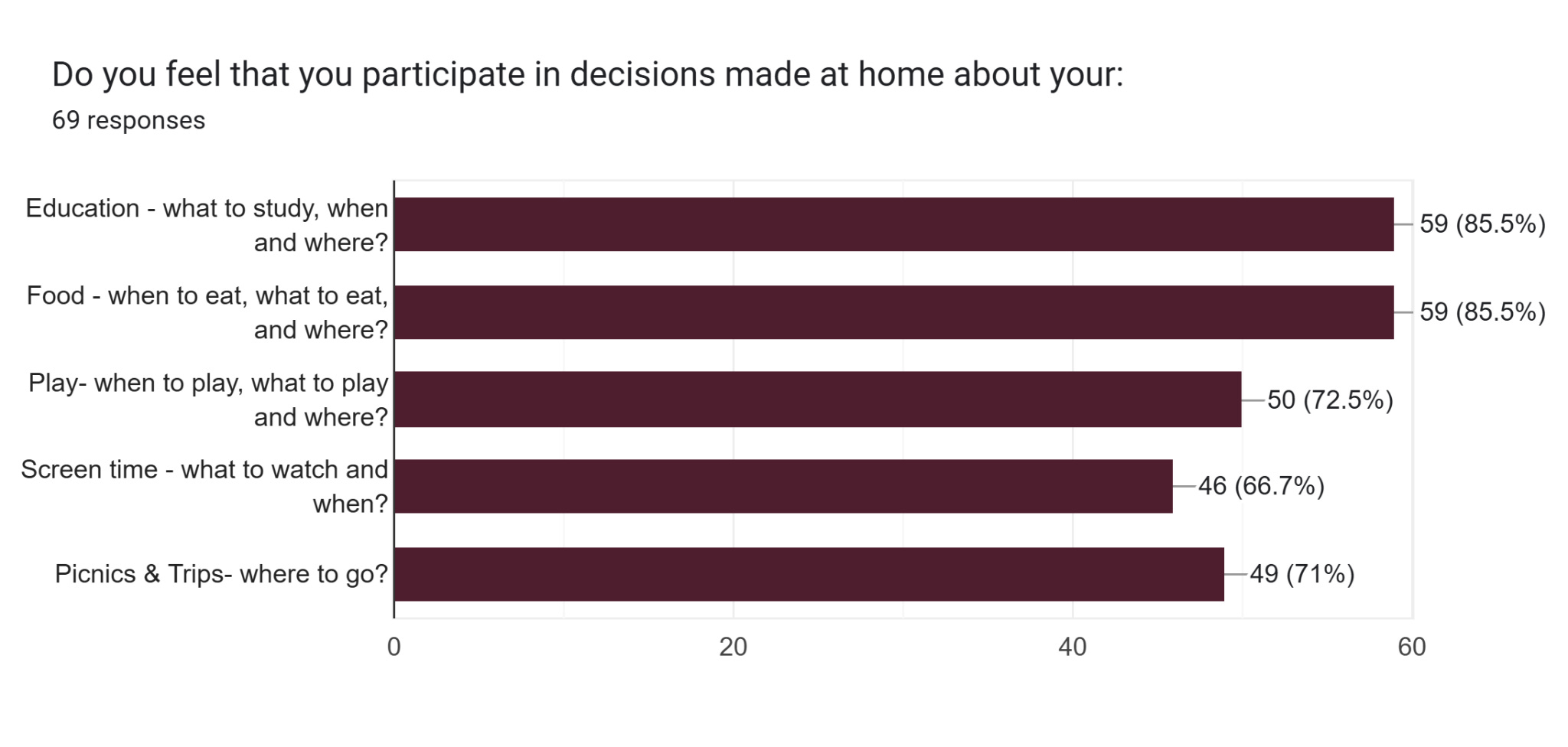
Decision-making at home often blends guidance with freedom. Students are aware of rules around saving, spending, meals, and screen time, but the overall sense is one of safety and inclusion. Many wrote that home allows them to explore ideas and hobbies without fear, giving them confidence that extends into other parts of life.
Learning by Doing
At school, learners emphasized hands-on learning and creative engagement as the most significant ways with which they learn.
When asked about how they prefer to study, almost 70% favored learning by doing, a preference further underscored by the over half who enjoyed making things with their hands.
Students still value structure, but they also want opportunities to experiment, create, and contribute ideas.
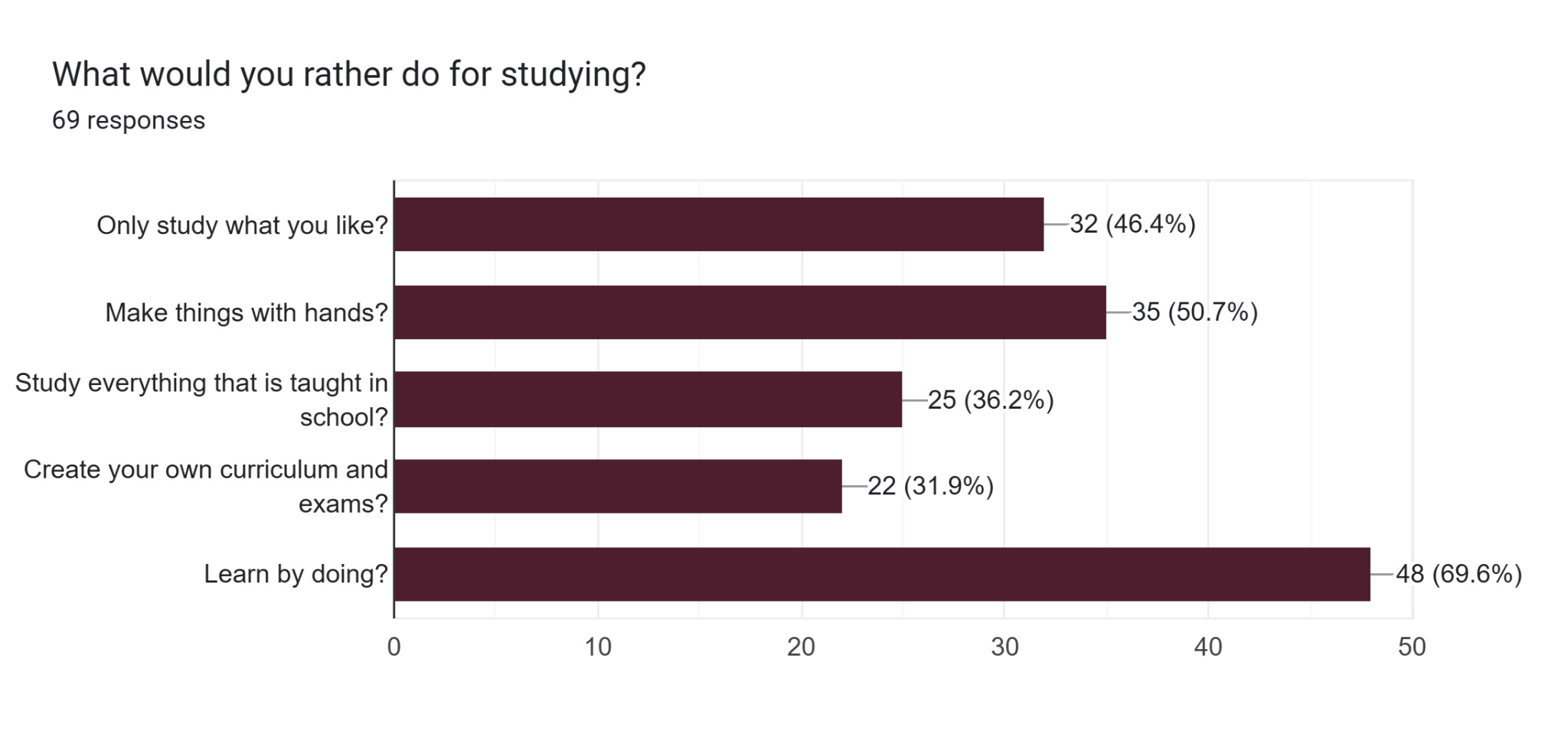
These insights reinforce the philosophy we hold: learning is strongest when it combines guidance with agency, structure with creativity, and curiosity with support.
Recognition and Belonging
The survey shows that, irrespective of how students participate or express themselves. A majority feel recognized and heard at school, experiencing a sense of acknowledgment for their efforts and contributions. Achieving a 100% participation in these parameters is our goal.
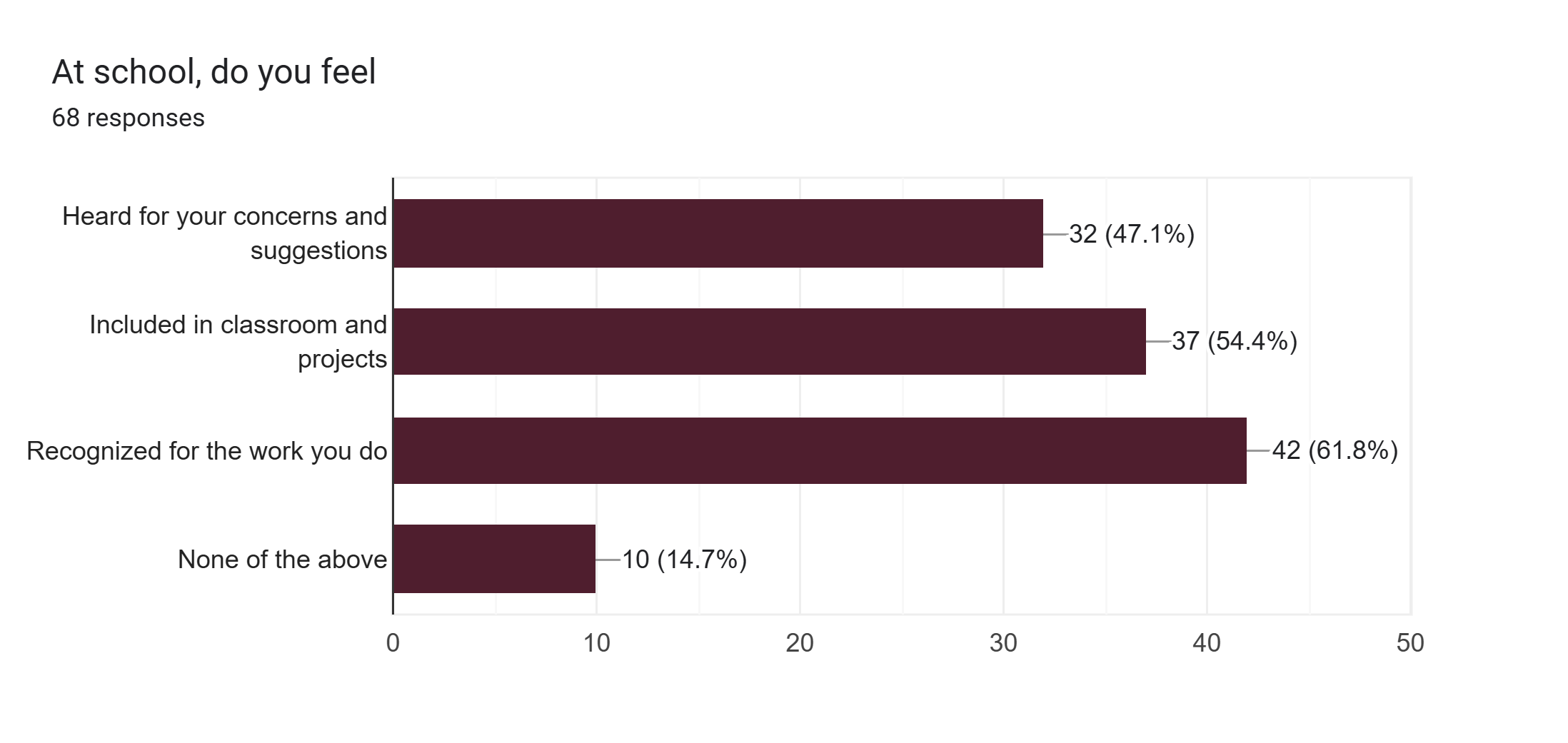
This highlights a fertile foundation of recognition and belonging, creating a supportive environment where every learner feels seen and valued.
Community and Country: Awareness and Connection
Learners also reflected on their communities and the country at large. About half expressed interest in learning from the community, through interaction or problem-solving. Many noted that spaces to play freely, safety, and opportunities to thrive vary across neighborhoods and the country, showing thoughtful awareness of real-world conditions.
When asked how they see their country, over half said they love it, but many also highlighted challenges such as safety concerns, pollution, and limited play spaces. This is a reflection of our society today, something both parents and educators must be mindful of while creating experiences for children.
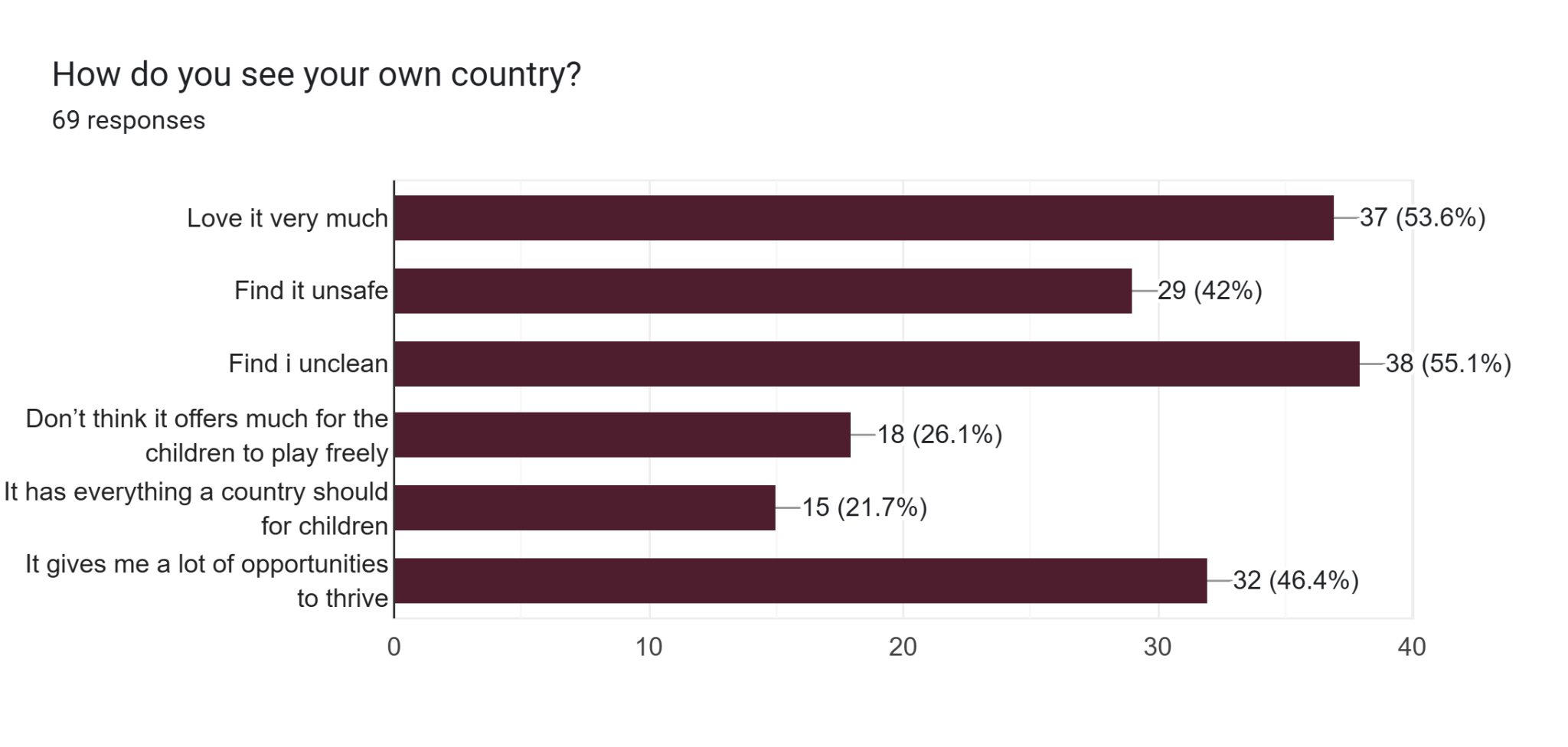
These reflections reveal that children can hold both pride and critique—they recognize the strengths of their surroundings while imagining how they could improve.
Why Student Voices Matter
The survey shows that children’s opinions are more than responses—they are insights into how to make schools, homes, and communities better. At our school, these perspectives guide how we structure classrooms, projects, and learning experiences, ensuring that every student feels seen, heard, and empowered.
Listening to learners helps us create environments that encourage curiosity, creativity, and confidence. By responding to their feedback, we ensure students are supported in exploring interests, expressing ideas, and contributing meaningfully to their world.
Children’s voices show us what matters to them—the freedom to explore, the ability to express themselves, and a world where kindness, curiosity, and care for each other and the planet are the norm.