

When we begin planning an Outbound Learning Expedition (OLE) for seven-year-olds, our conversations as educators are rooted in a quiet question: How do we gently initiate our youngest learners into place-based learning?
On October 13th and 14th, twenty-five Grade 2 learners set off for Beejom Gram Sanctuary in Tajpur, Bulandshahr. For many, this single-night stay was their very first time sleeping away from family. Designed as a “starter OLE,” the trip was never meant to be a rushed marathon of back-to-back activities. Instead, it was an invitation to step outside the classroom walls and learn with nature—allowing the soil, the animals, and the rhythm of shared living to teach lessons that no textbook could ever capture.
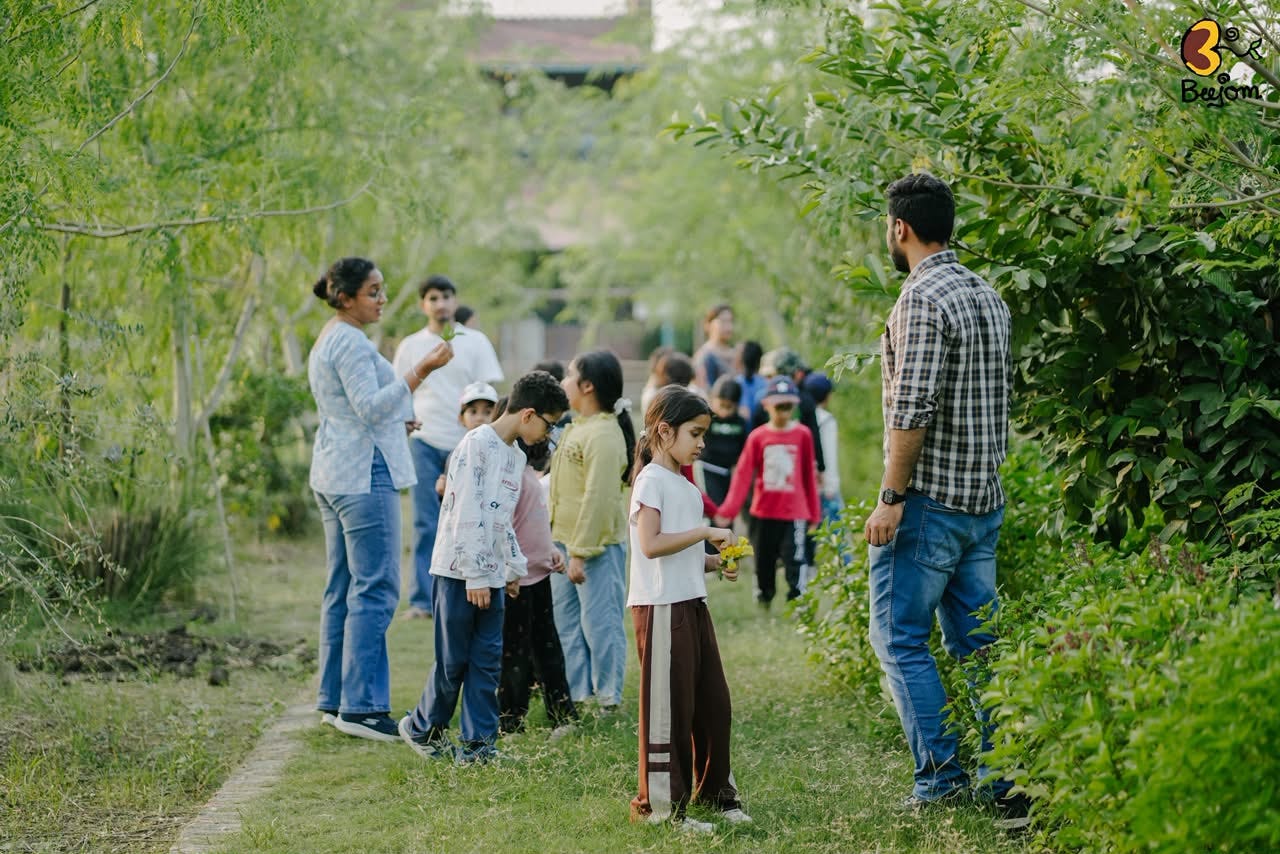
Carrying Our Own Weight
Long before we boarded the bus, we gently guided the children to embrace a new sense of responsibility and independence. This journey belonged to them. From keeping track of their personal belongings to carrying their own luggage—even up and down the stairs—they took each small responsibility in stride.
At Beejom, the dormitories became their first arena of self-reliance. There was a visible spark of excitement as the children claimed bunk beds, organized their belongings inside lockers, and took ownership of making their own beds.
As the first day came to a close, we gathered in the dorms for a cozy bedtime story—a warm, grounding end to a day filled with new experiences. Watching them carefully pack their bags and tidy their personal spaces before departure showed us just how capable young children become when trusted with real responsibility.
When Fear Turns into Curiosity
Place-based learning invites children to meet the living world on its own terms. Beyond feeding, there was something deeply therapeutic about the simple physical act of touching and petting the animals.
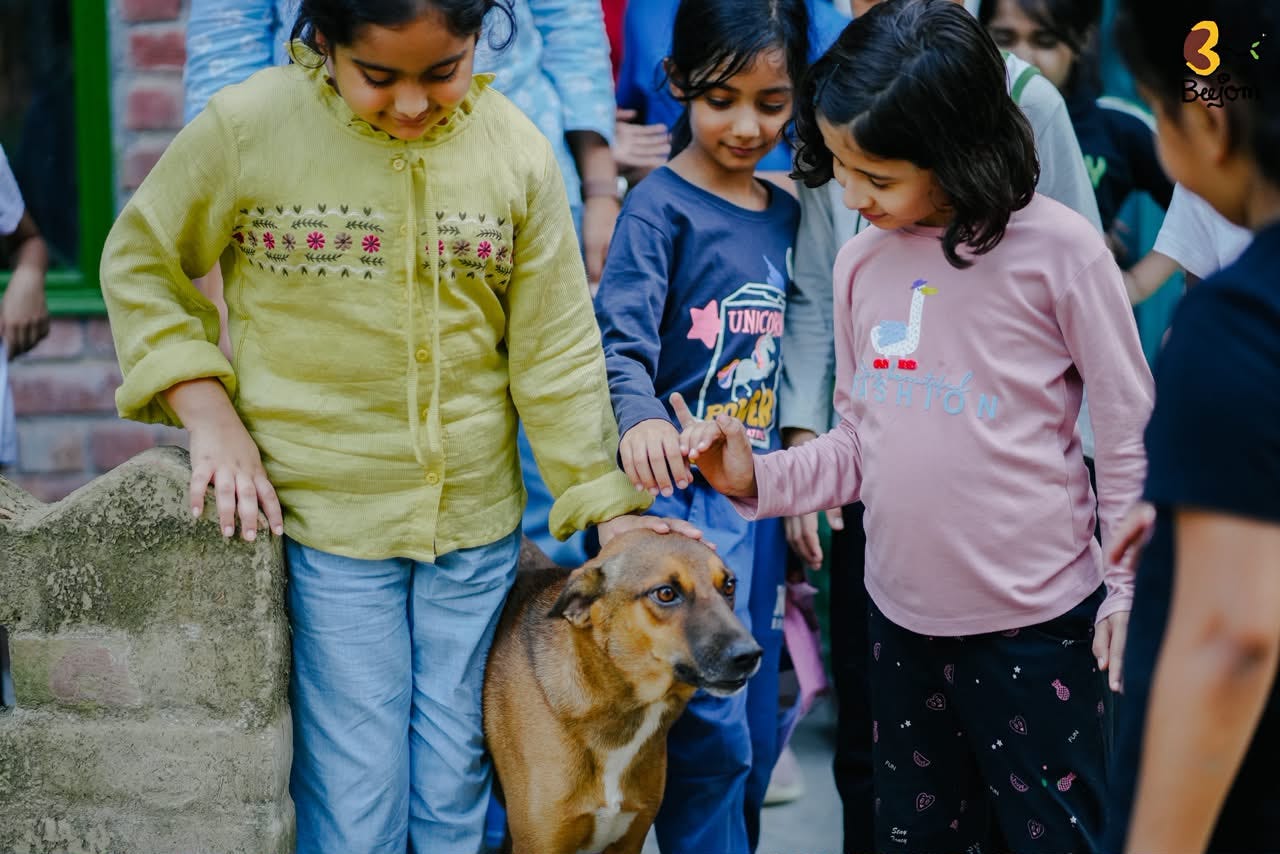
Feeling the soft fur of Pari and Sufi or gently stroking a horse offered a quiet, grounding comfort. For seven-year-olds, that tactile connection provided a visceral sense of peace and warmth—showing them how calming a gentle interaction with another living creature can be.
During animal feeding, our learners had the opportunity to experience the quiet peace that animals bring and appreciate the subtle ways they communicate without words. The children keenly observed distinct eating habits and discovered how different animals have their own food preferences among the horses, donkeys, goats, and bulls.
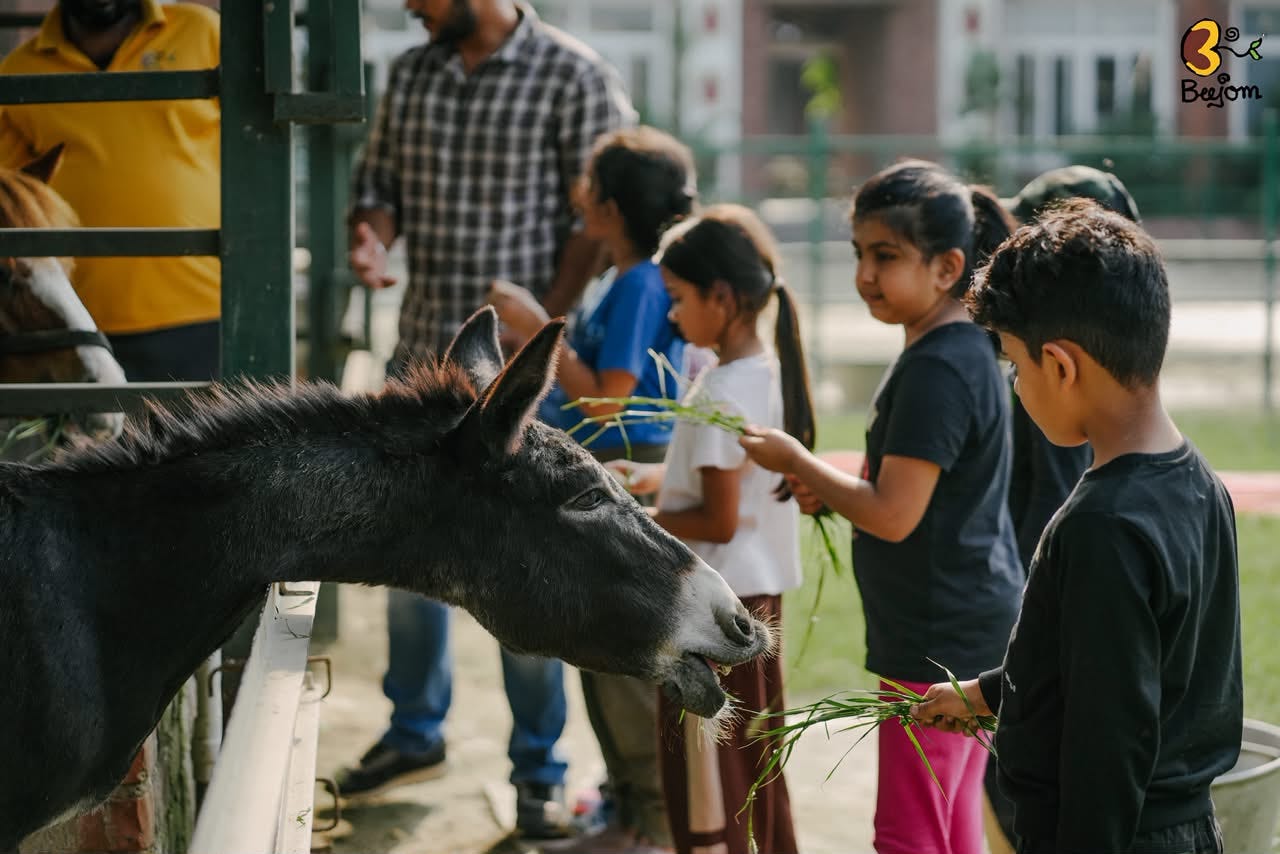
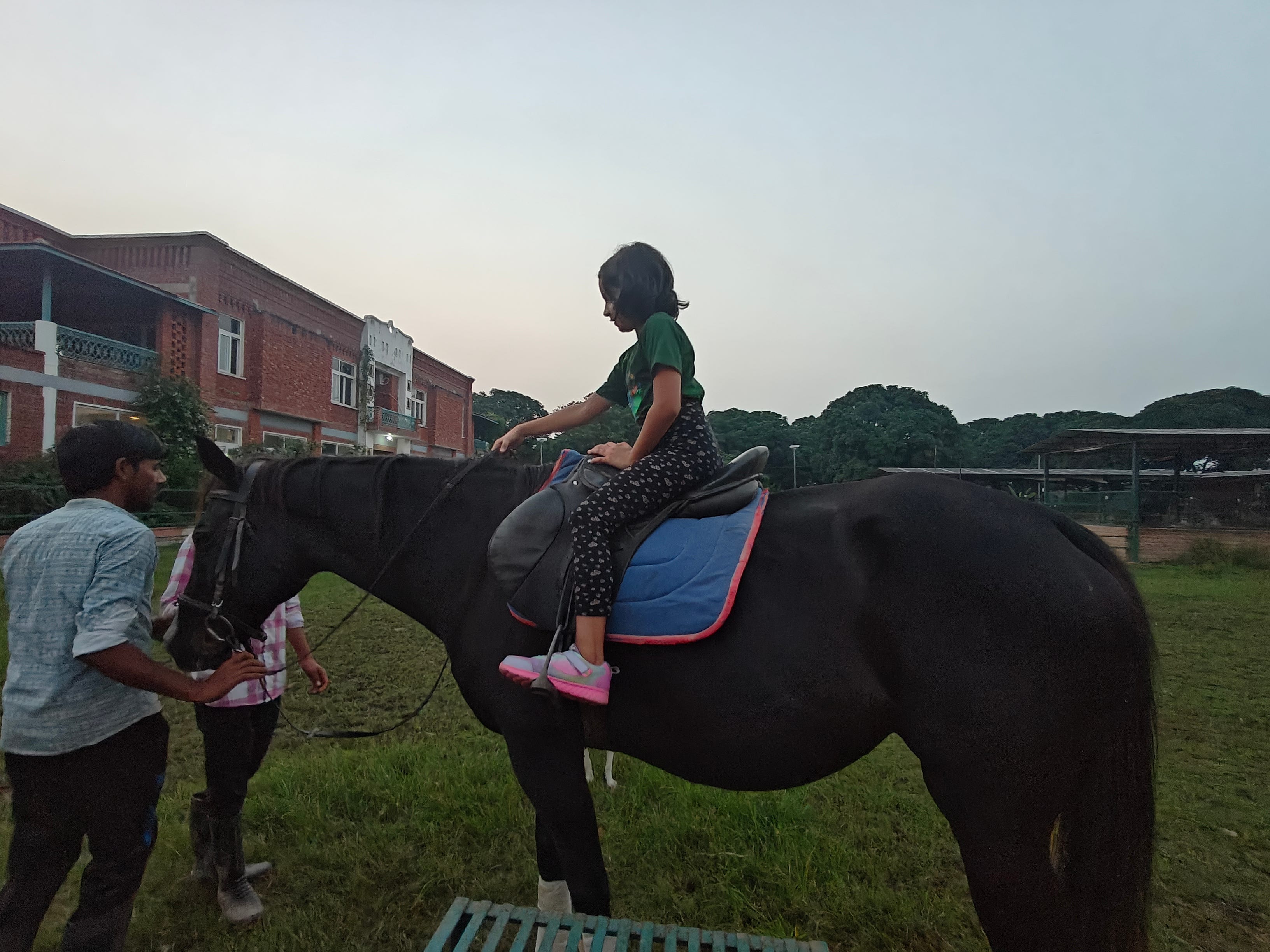
One of the most moving moments of the trip involved a child who is generally afraid of animals. Initially, she was hesitant to step near the horses. Yet, as she stood back, watched her peers, and gradually participated, her hesitation began to soften. The following morning, she approached us with a quiet request:
“Even though I’m still afraid of animals, I’m very keen to go and feed them again.”
To acknowledge one’s fear while still choosing to step forward is a remarkable act of courage for a seven-year-old.
Our interactions with Pari and Sufi, the sanctuary’s gentle resident dogs, offered a similar lesson in coexisting with animals often perceived as intimidating. For children who entered the farm with a fear of dogs, seeing them move freely through the corridors felt daunting at first. With gentle guidance and time, however, a quiet shift occurred. Some children felt ready to pet them, while others chose to maintain a comfortable distance. What felt like a true victory was that even those who remained afraid learned to navigate around the dogs calmly—without running, shouting, or panicking. They learned to recognize their comfort levels, respect their own boundaries, and coexist peacefully.
The horse riding experience brought its own lesson in adaptability. Rain had left the main grounds muddy, leaving us briefly unsure if riding would be possible. But the Beejom team arranged an alternative dry space, allowing every child to enjoy two rounds in the saddle. Sitting tall on horseback turned out to be the most cherished, triumphant moment of the entire stay.
Reframing the Unpleasant Through Senses
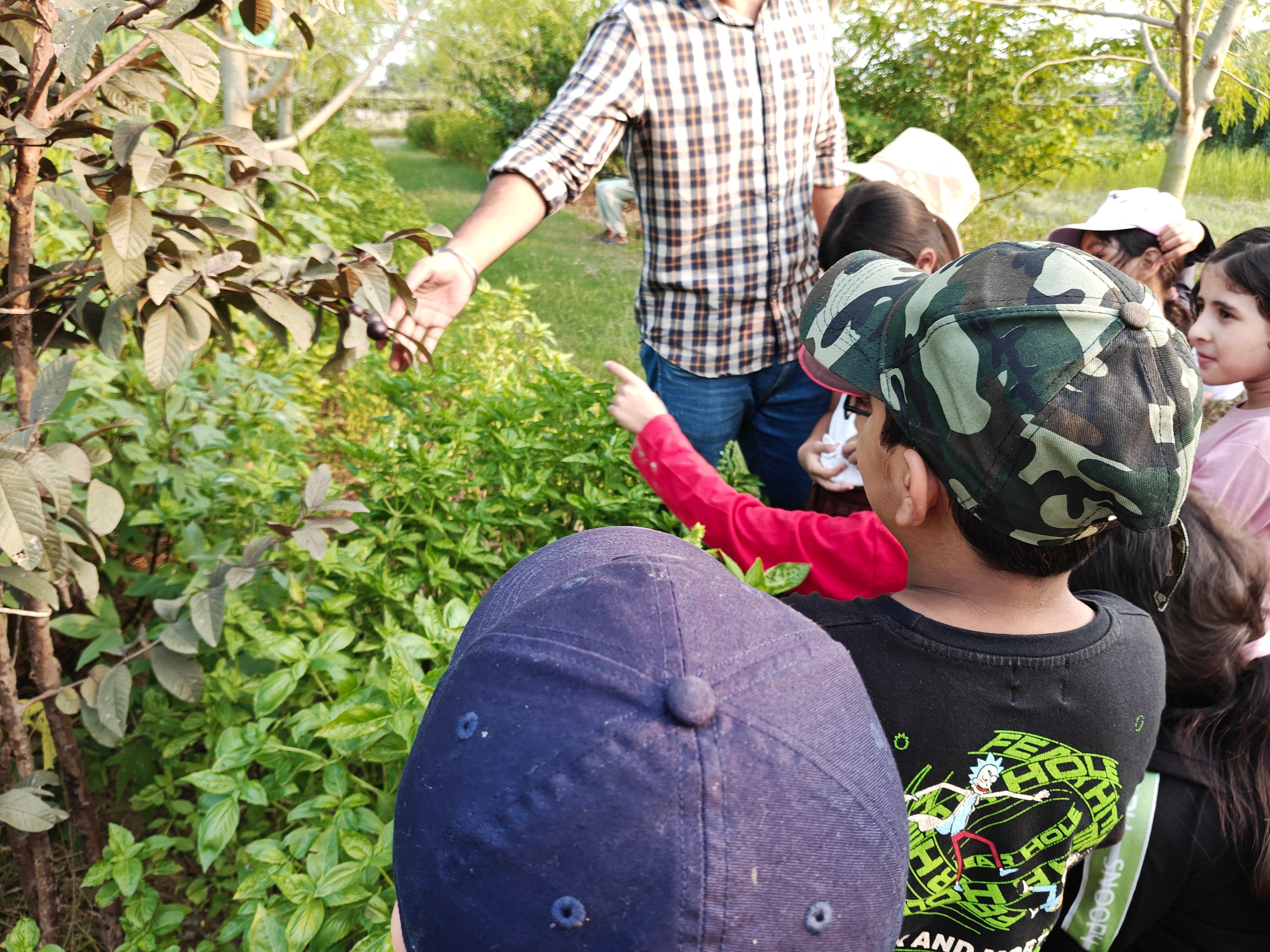
Place-based education encourages children to observe the natural world through direct, unfiltered experience. During our farm walk, the learners engaged all five senses—observing, touching, smelling, and tasting different plants, with the unique black guava quickly becoming a favorite point of wonder.
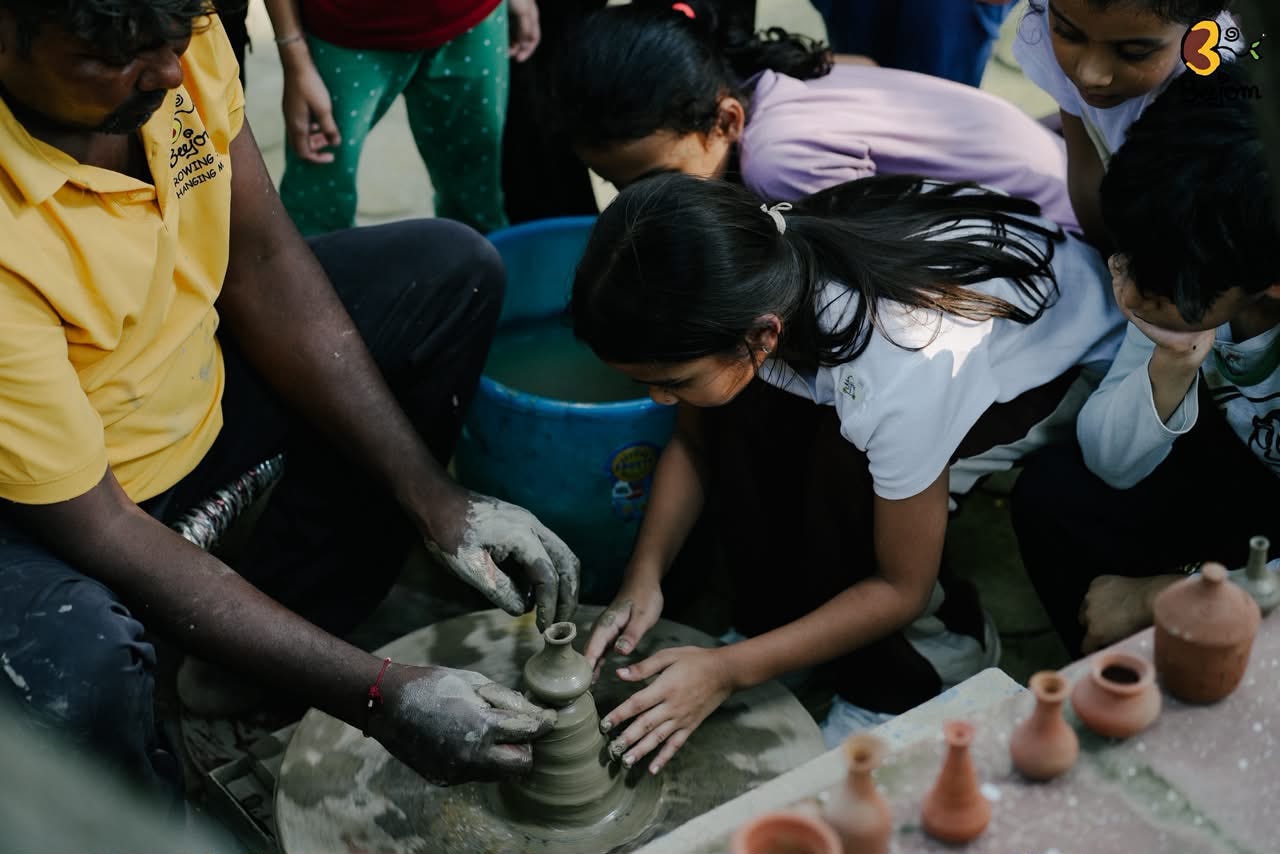
At the craft stations, the children observed traditional heritage skills up close, exploring handlooms, weaving machines, knitting, and the charkha before shaping clay on the potter’s wheel.
But one of the most eye-opening moments occurred during our session on sustainable farm systems.
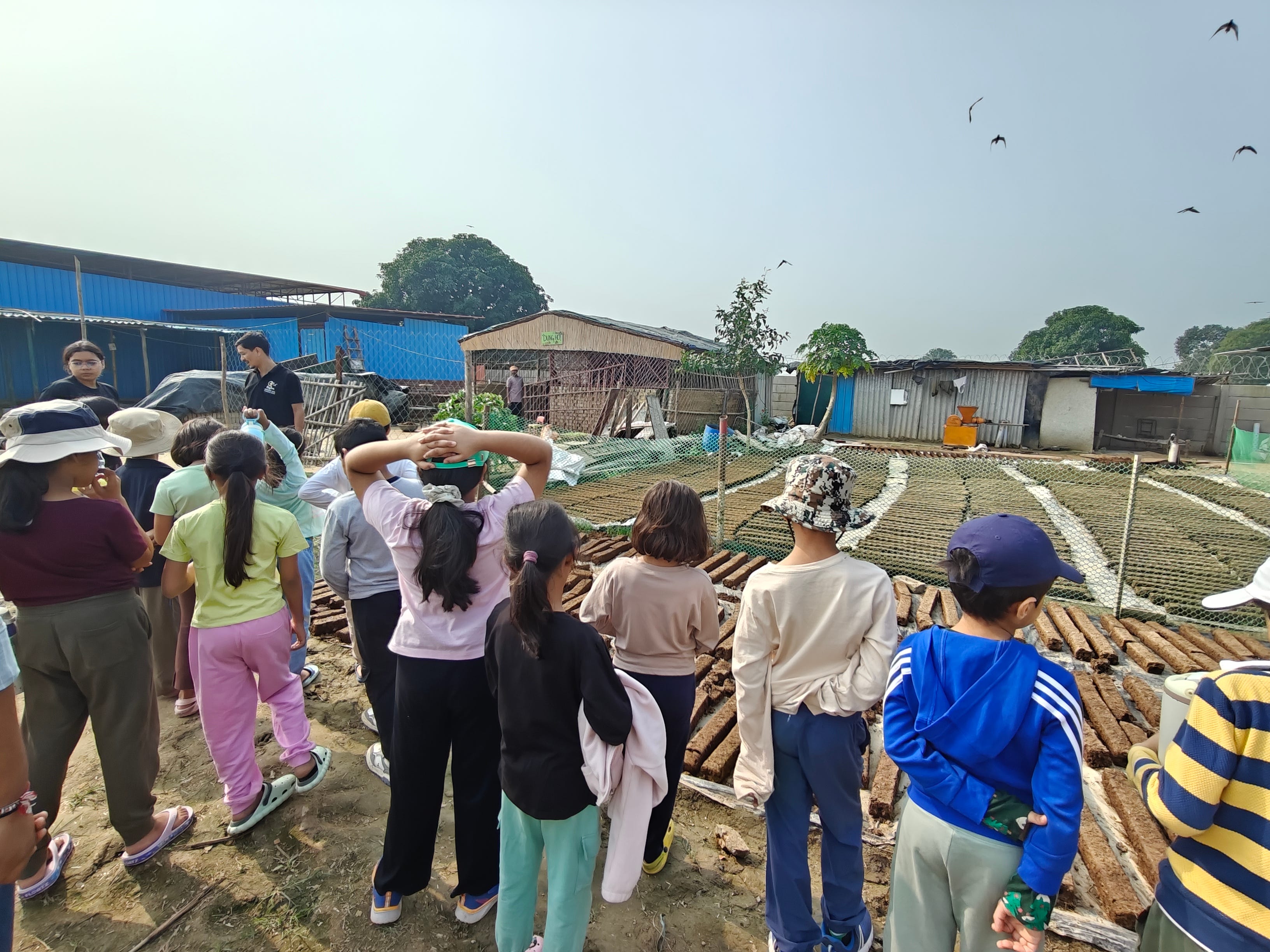
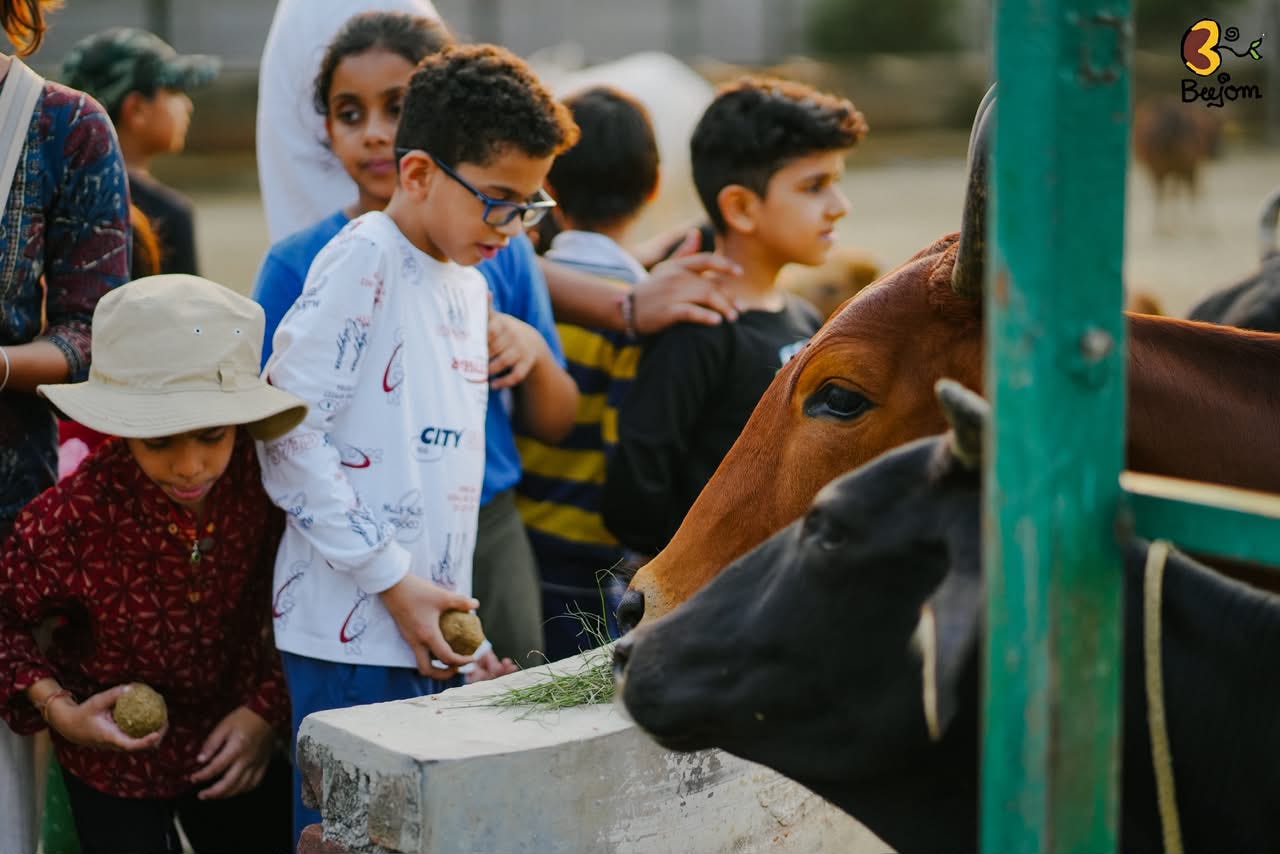
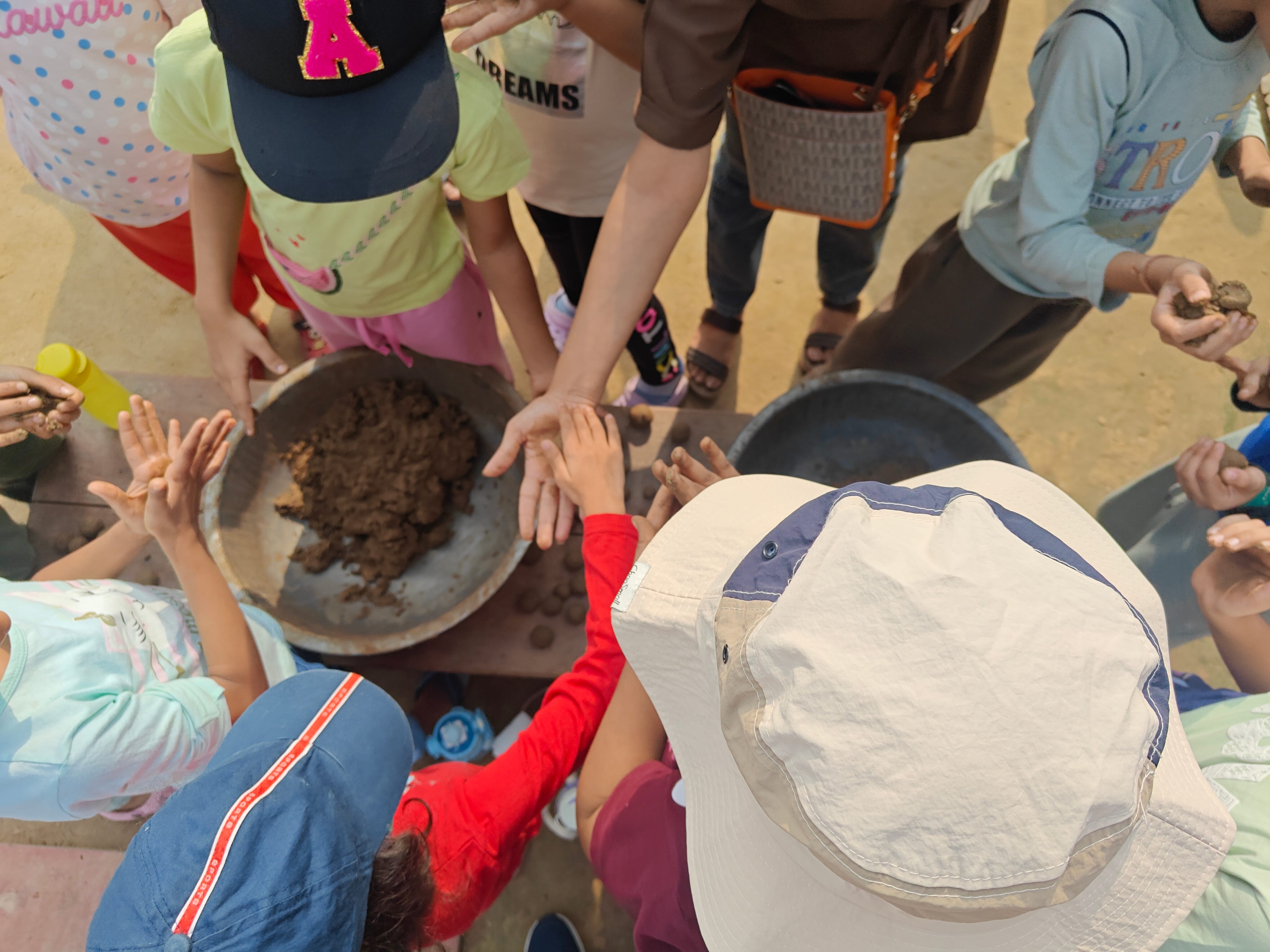
Using fermented cow dung mixed with soil, the children learned how cow dung generates biogas and is repurposed to make scented sticks, seed balls, and pots. Many were genuinely surprised that the material did not have a strong smell, opening up an opportunity to view something they usually find unpleasant in a completely new light. Getting their hands delightfully messy while rolling their own cow-dung seed balls became an absolute highlight of tactile discovery.
Unfamiliar Flavors at the Table
Meal times at Beejom provided a surprising lesson in open-mindedness. The sanctuary serves entirely organic, vegan meals prepared using plant-based alternatives like oat milk and peanut milk instead of dairy.
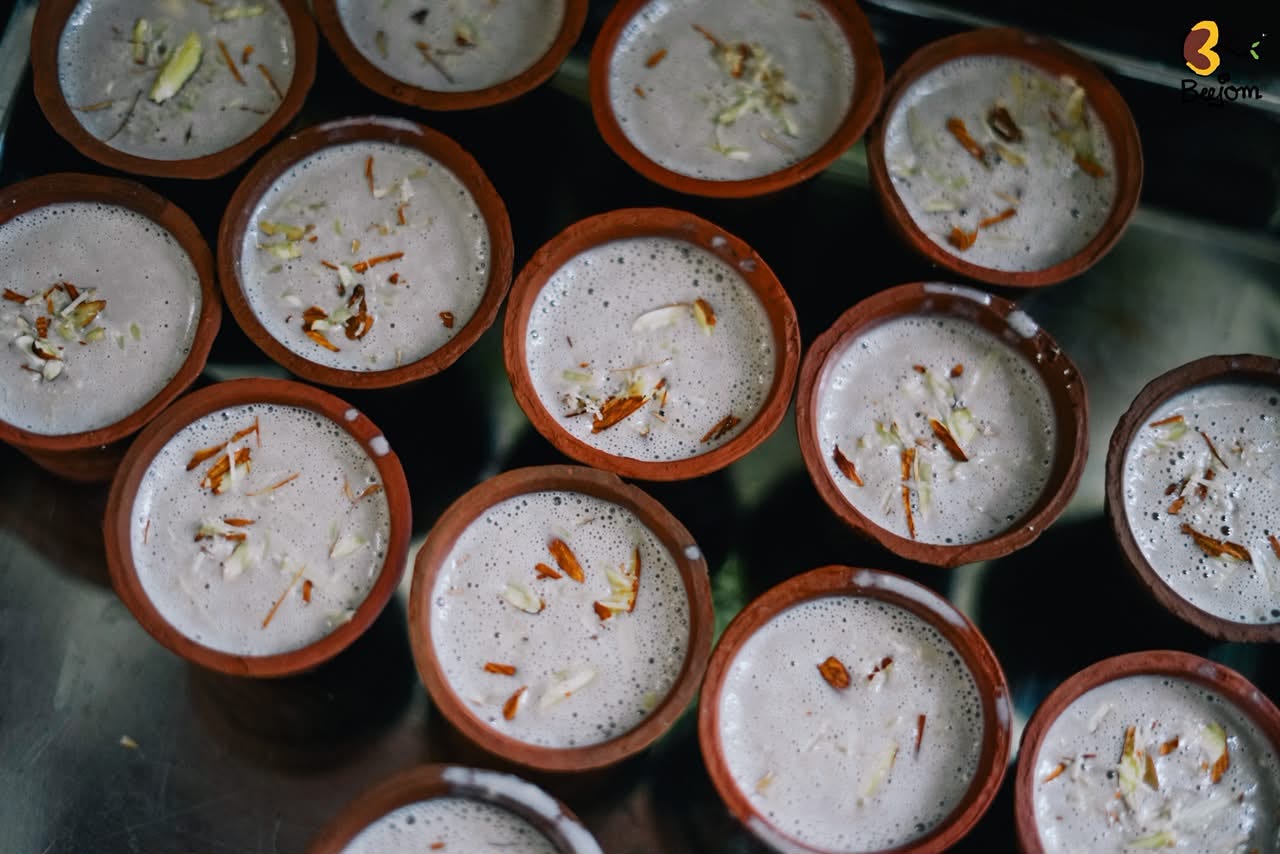
As facilitators, we were curious about how the children would adjust to an unfamiliar menu. To our delight, they adapted effortlessly. Dishes like ragi chaach and a special pineapple halwa prepared without ghee disappeared quickly.
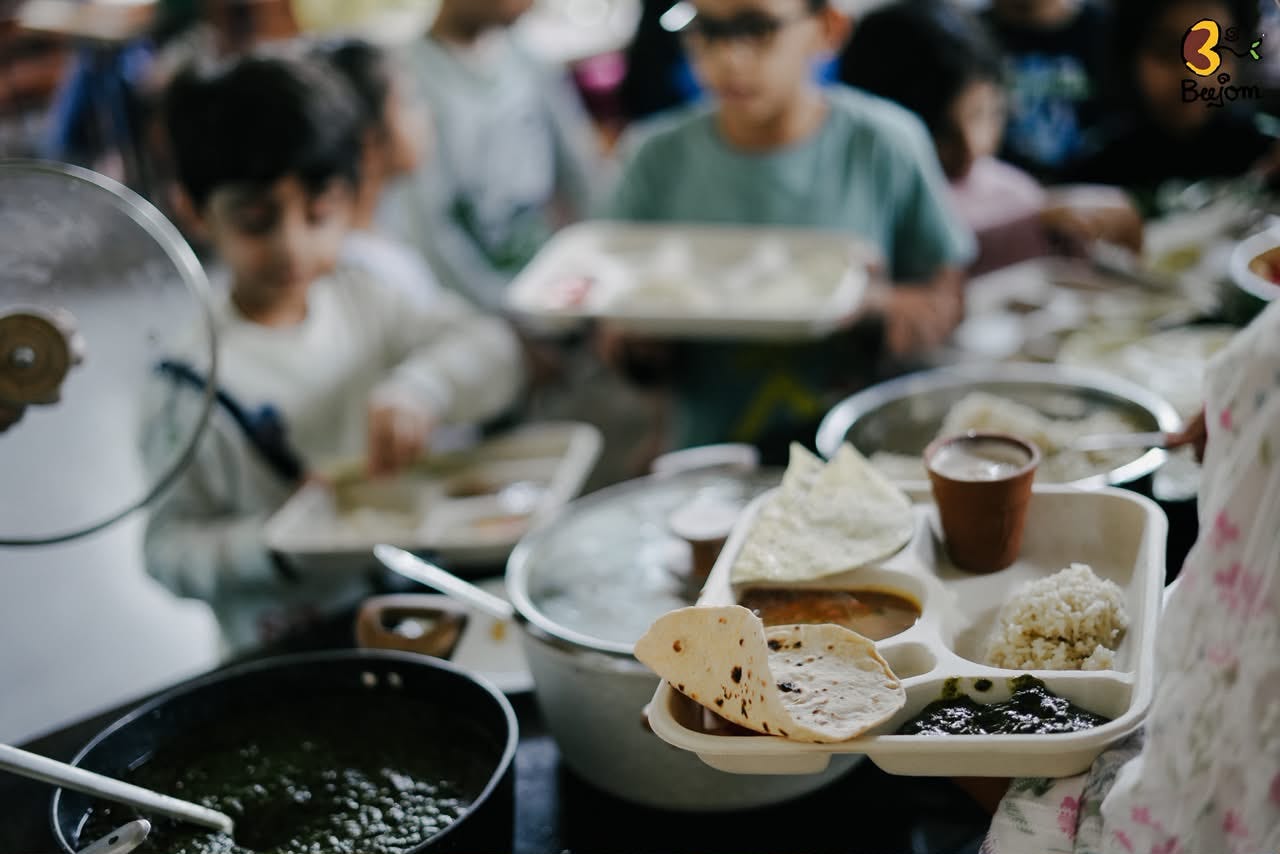
Children whom we knew to be selective eaters at school willingly tried new dishes and even returned for second and third helpings without any prodding. Away from familiar routines, trying new flavors became an exciting part of the farm adventure.
The Wisdom of Giving Space & Gathering in Reflection
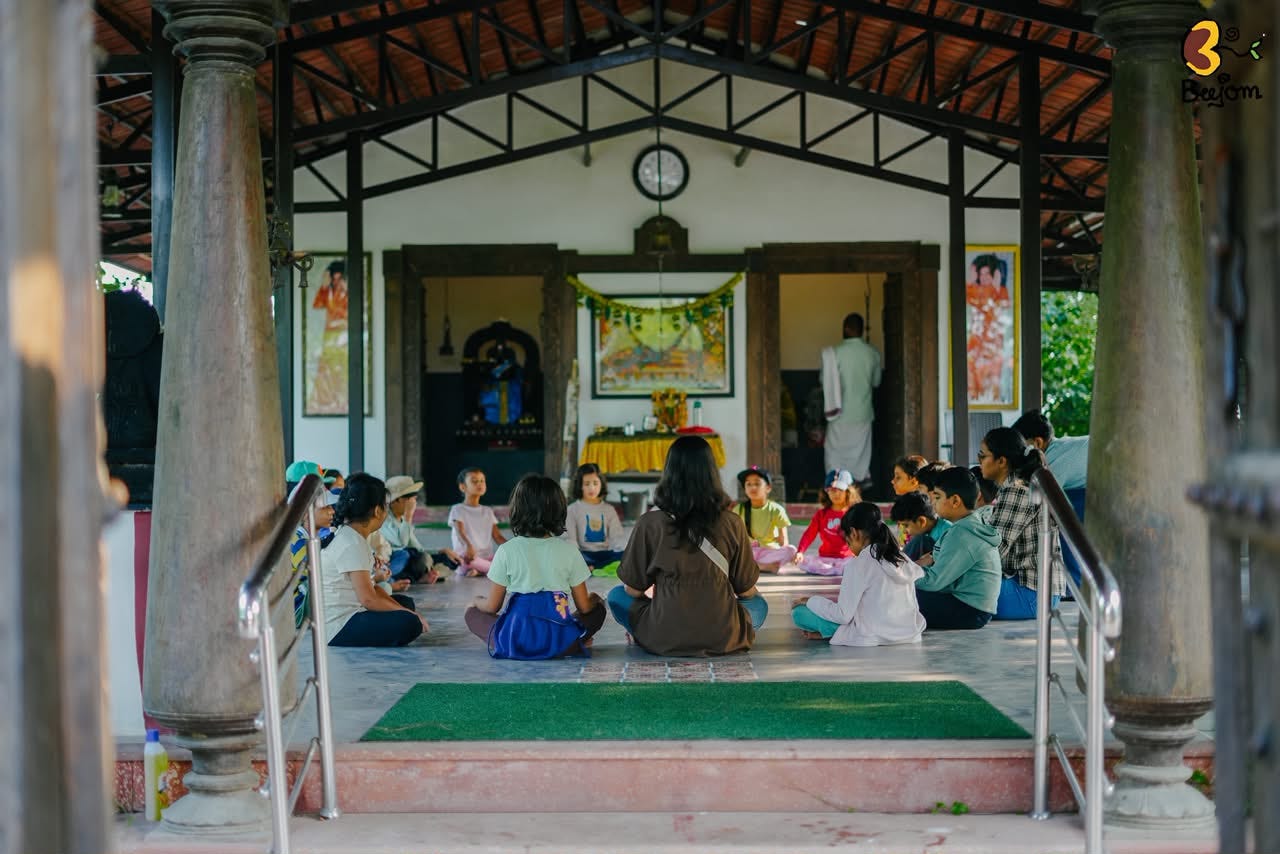
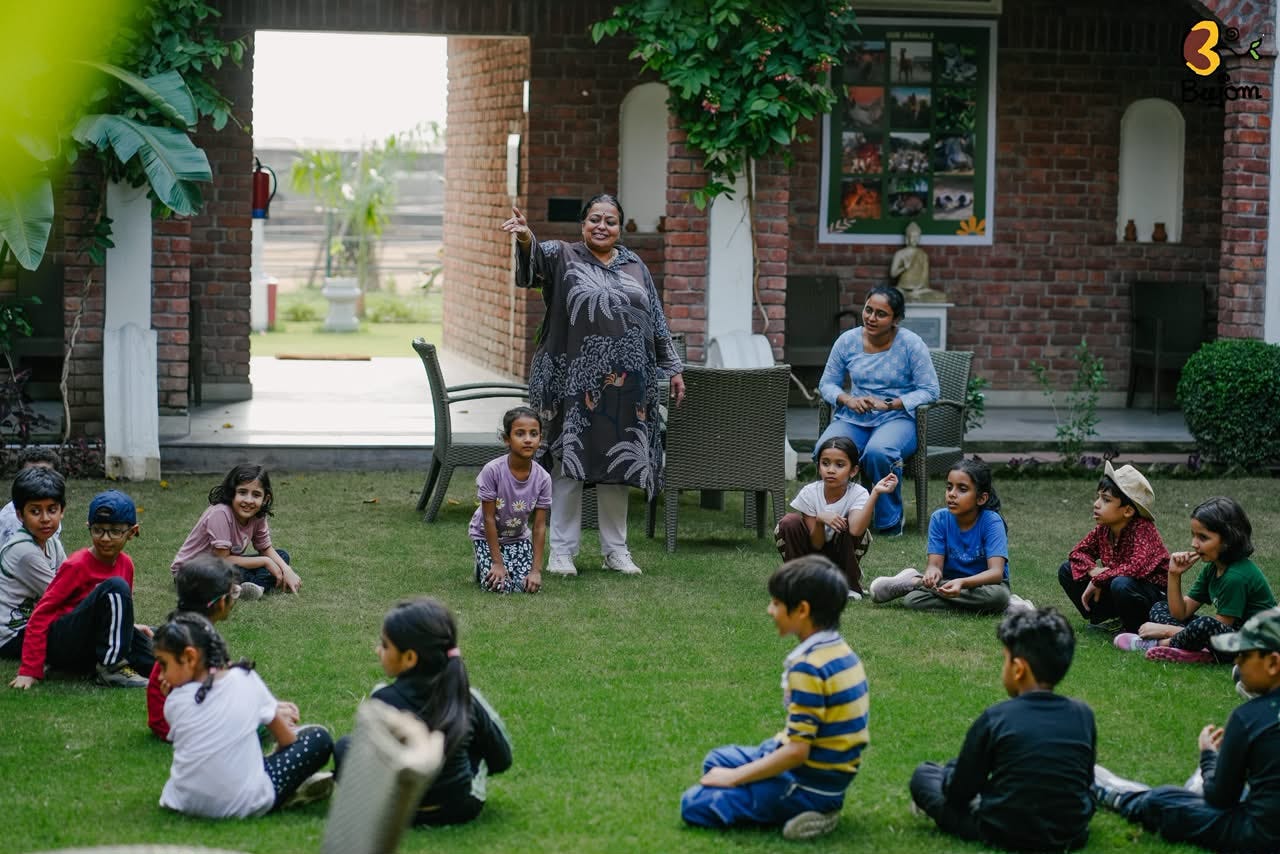
Before gathering our bags for departure on Day 2, we sat together in a Reflection Circle—a simple, grounding conversation to gather the memories, thoughts, and discoveries of our twenty-four hours at Beejom:
What did we see and learn about farming and animals?
Which activity did we enjoy the most, and what surprised us?
What will we hold onto long after we return home?
Listening to seven-year-olds articulate their growth in their own words was deeply moving. Some spoke about the thrill of horse riding, others about the softness of Pari and Sufi, and many about the pride of sleeping in a bunk bed and making it themselves.
As educators, the most beautiful takeaway from this expedition was seeing how much children learn when given the space to explore, experience, and figure things out on their own. Learning happened in the simplest moments: in trying unfamiliar food, in holding a peer’s hand, in overcoming hesitation near an animal, and in taking pride in a tidy dormitory bed.
Through these quiet steps, our Grade 2 learners didn’t just learn about nature—they initiated a lasting, empathetic relationship with it.
They returned on October 14th with a deeper sense of empathy, growing confidence in their own independence, and the quiet realization that courage isn’t the absence of fear, but the willingness to take a gentle step forward anyway.
Over to Our Parent Community:
What was the first story or memory your child shared with you upon returning from Beejom Gram Sanctuary? Have you noticed any small shifts in how they manage their belongings or approach daily routines at home?
Beejom Gram Sanctuary is the passion project of Aparna Rajagopal—a corporate lawyer-turned-regenerative farmer, animal welfare advocate, and eco-entrepreneur. She has transformed her love for nature into a thriving, off-grid sanctuary dedicated to indigenous cattle preservation, sustainable agriculture, and a zero-waste farm economy.