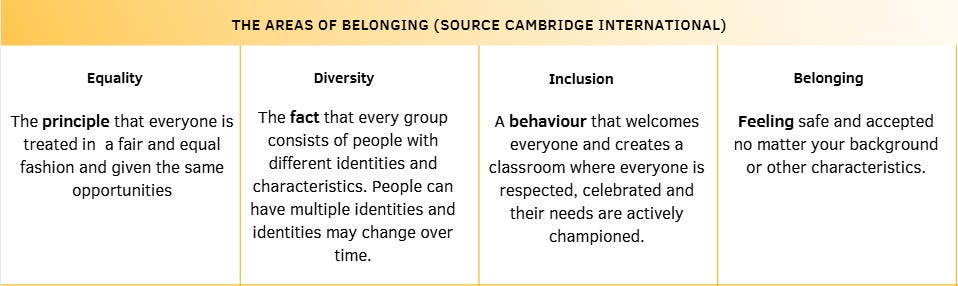
Hocokah or the Socratic Dialogues at Prakriti aim to build a learning space defined by safety and courage with students (adolescents) from various schools.
Safety, not through isolation, but by recognizing our shared journey of inquiry. Courage, to honestly examine ourselves and engage with each other's challenging questions. This process fosters the sensitivity and integrity vital for communal living, requiring us to master both conversation and self-awareness.
Far from a simple exercise in facilitating "connection," the dialogues confronted learners with the conundrums inherent in the concept of belonging: the tension between individual authenticity and the pressure to conform & relate. We asked, not merely "where do we belong?" but "what are the mechanisms by which we are compelled to belong, and what are the costs?"
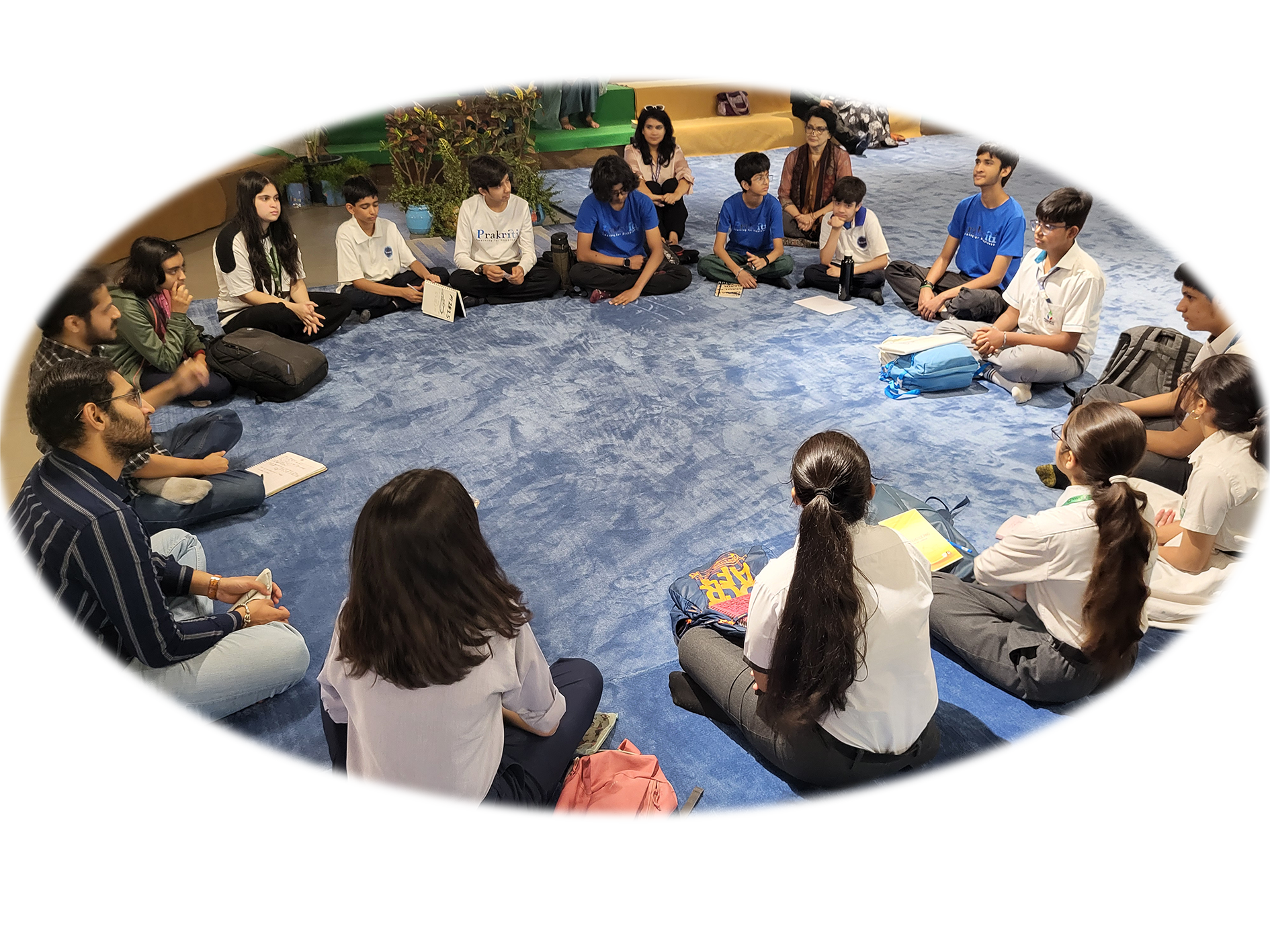
Learners engaging in a circle discussion about the complexities of identity.
The "Circles of Belonging" were not designed to create a harmonious echo chamber, but to expose the fault lines in our understanding of identity and community. Learners were tasked with dissecting themes like gender, identity, nation state, friendship, war & violence, xenophobia etc. not as abstract concepts, but as lived realities that shape and often constrain individual experience.
The examination of technology, particularly social media, was not a simple condemnation. Learners acknowledged its potential for connection, but also recognized its capacity to amplify the anxieties of belonging. They asked, not just "how does it affect my self-worth?" but "how does it manipulate my perception of reality?"
The dialogues ultimately revealed the inadequacy of simplistic notions of "belonging." They exposed the inherent contradictions in our desire for connection and our fear of alienation (FOMO as they call it). They forced learners to confront the uncomfortable truth that belonging is not a state of being, but a constant struggle, a negotiation between the individual and the forces that seek to define them.
From there, the discussion moved to the nature of relationships and belonging despite broken trust - with family the connection will remain and friends you can let go– This led to “fake belonging” - to what extent we change ourselves to “fit in”, being with the “popular group” in school as whose responsibility is it to make someone feel belonged - your own or others? Some said other as they are the majority, some said your own and some said both, ultimately it is your choice whether you want to belong somewhere or not.
“Belonging starts with self exploration which gives rise to self awareness, ultimately resulting in self love, where only acceptance of self and others remain and the need for social validation fades away.”
This intellectual rigor manifested in several key thematic explorations:
Foundations of Belonging: Learners moved from simplistic definitions to complex questions of self and societal pressure.
Realities of Conflict: Both internal and external, challenging notions of easy resolution.
Belonging in Daily Life: Questioning norms and the interplay of validation and acceptance.
Identity: Dissecting its fluidity and external influences.
Gender: Highlighting its impact on belonging.
The Concept of Self: Defined by boundaries and 'otherness'.
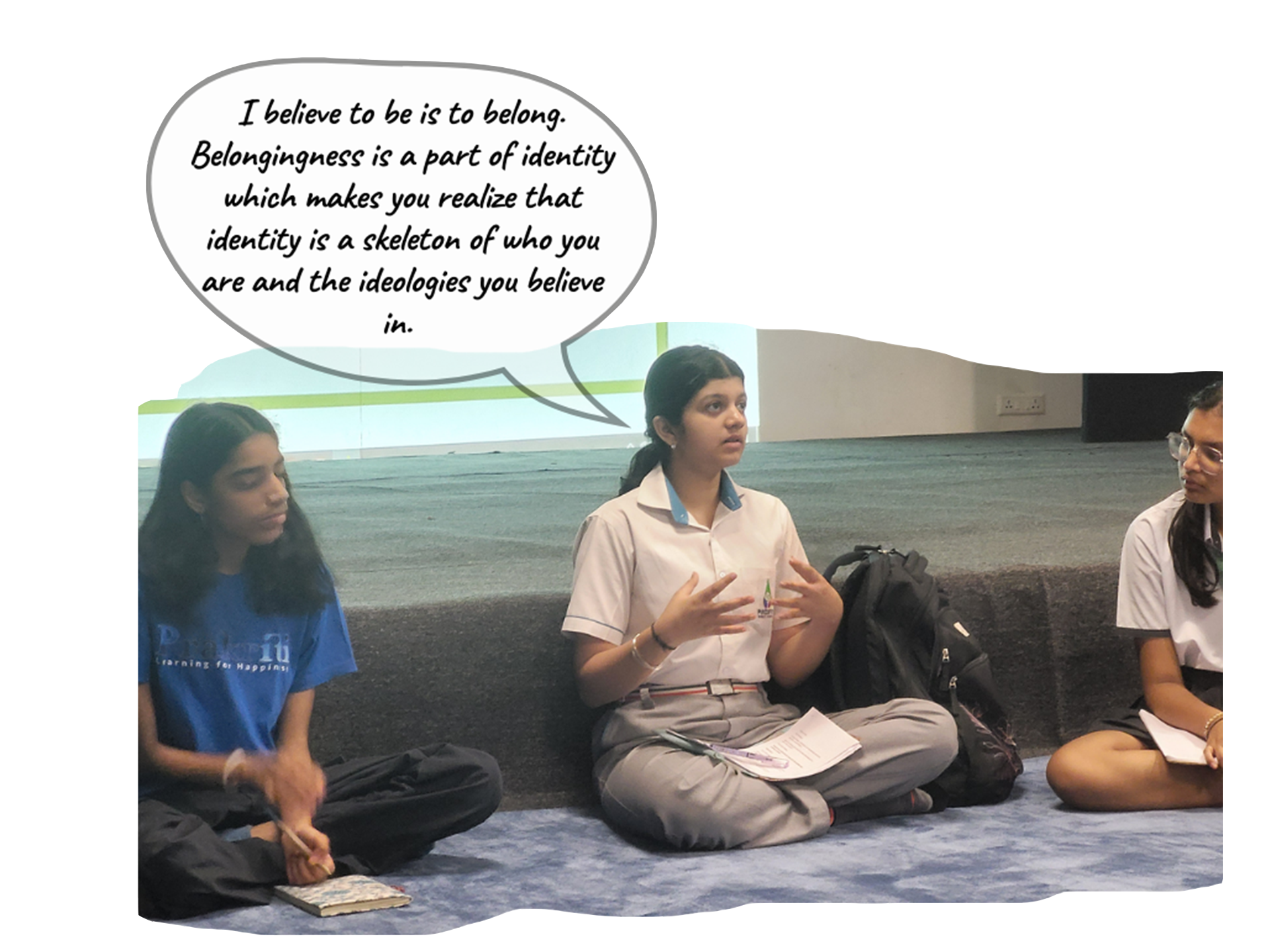
These thematic threads collectively revealed belonging not as a static state, but a dynamic, often fraught, negotiation between individual and societal forces.
Conundrums as tools for deeper inquiry
The dialogues were propelled by a series of potent conundrums, designed to expose the fault lines in established paradigms. For instance, the question, 'To what extent are traditional gender roles social constructs, and at what cost are they maintained?' sparked heated debate, forcing participants to confront the dissonance between societal expectations and lived realities. Similarly, the group wrestled with the dilemma of reconciling cultural traditions with evolving social values, questioning who holds the authority to determine relevance. These conundrums, by their very nature, forced participants to confront the inherent contradictions within their own belief systems, pushing them beyond simplistic answers. By confronting these fundamental conundrums, learners gained a deeper understanding of how the very fabric of our social reality influences our sense of belonging.
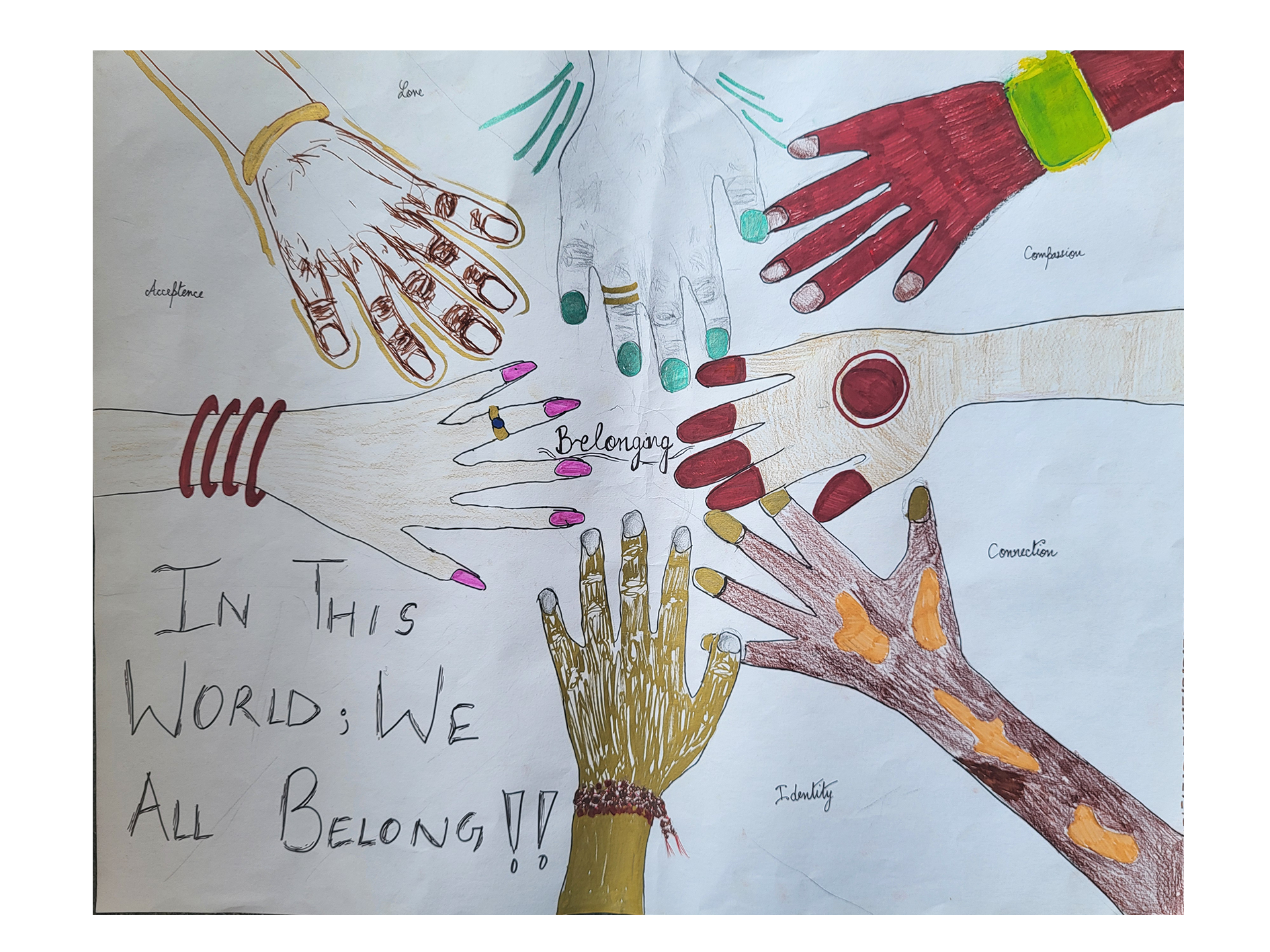
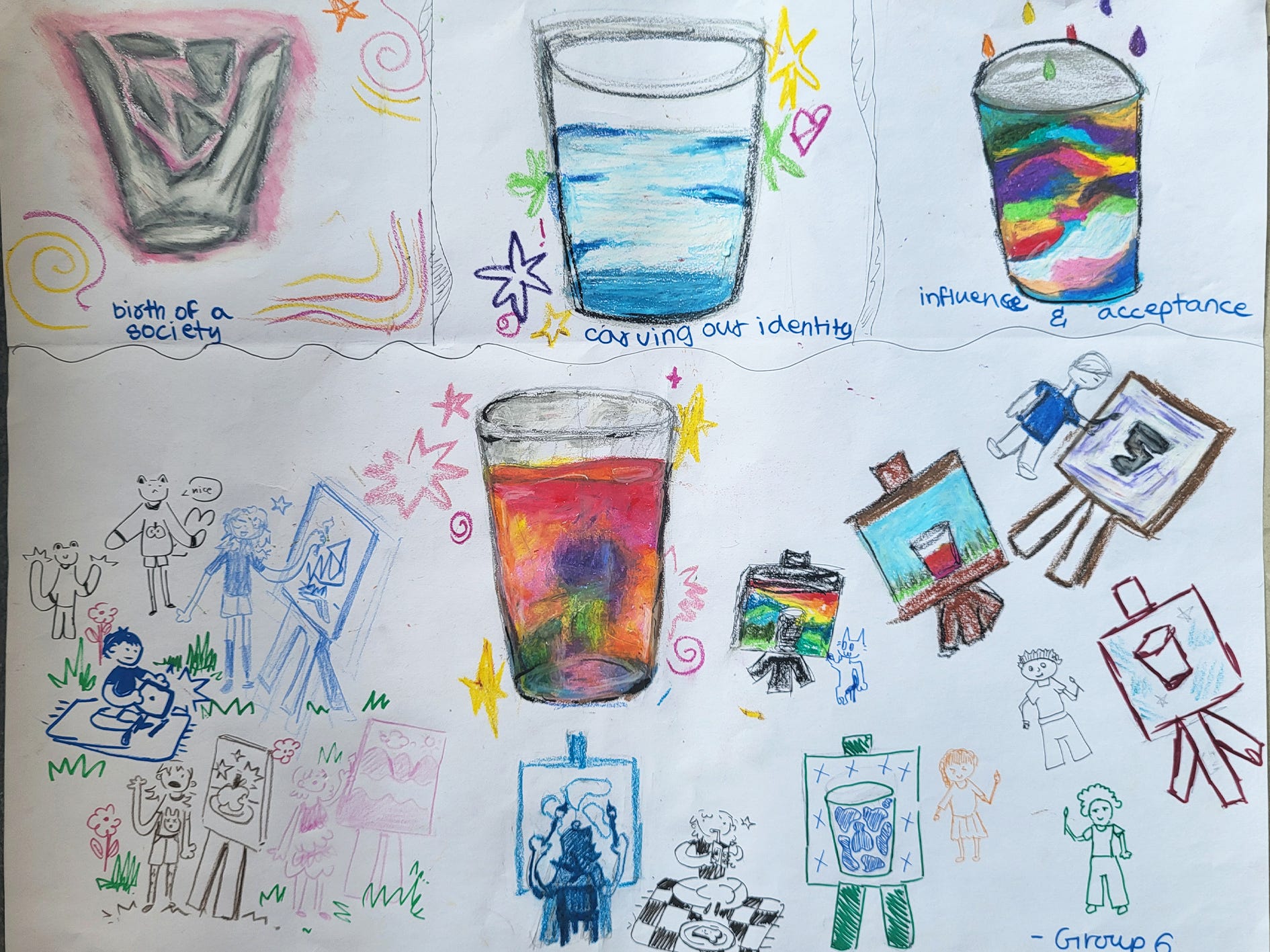
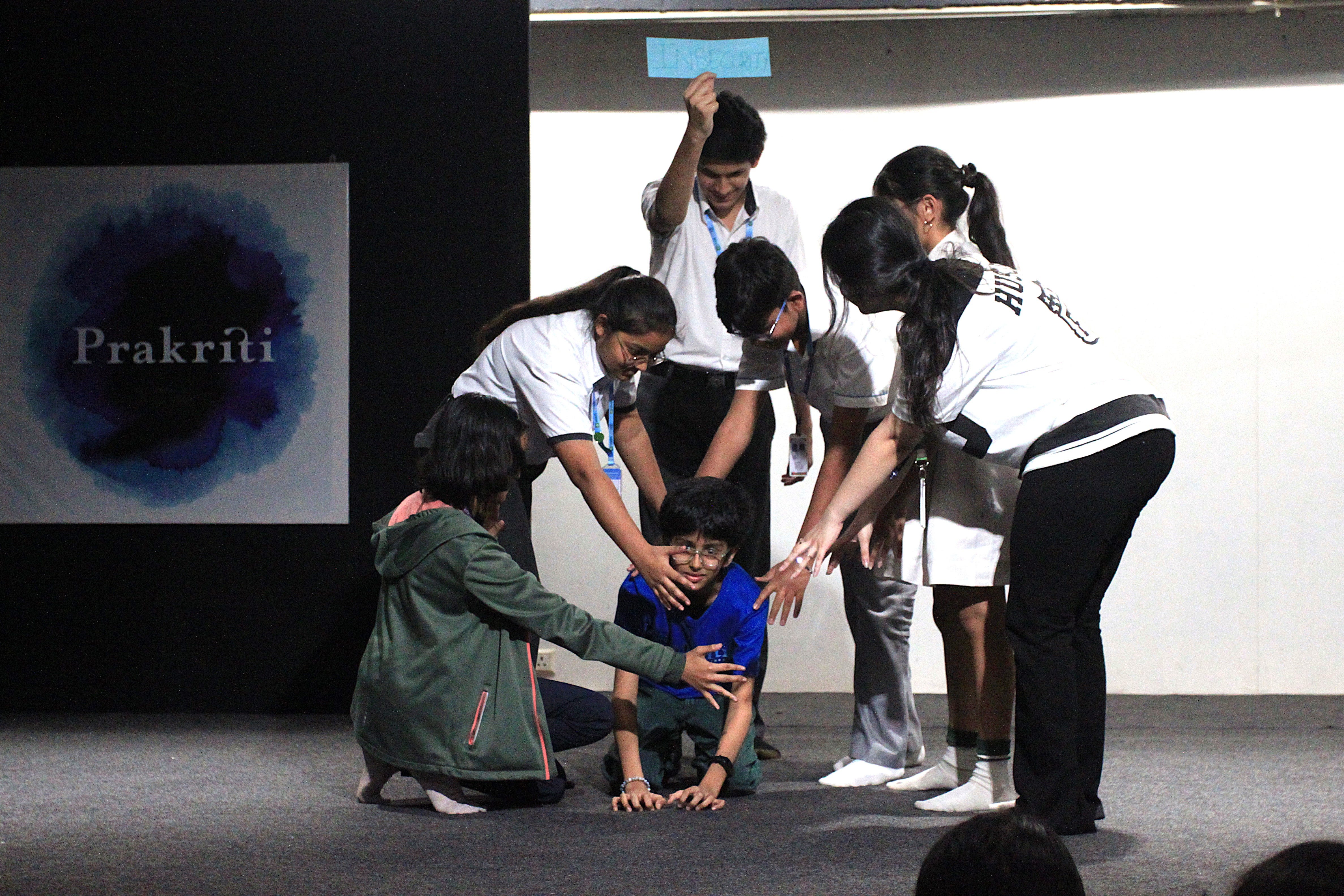
Towards the end of the event, the learners presented their takeaways through creative expressions in form of theatre, art and poetry.
Ultimately, the Hocokah Dialogues serve as a reminder that the search for belonging is an ongoing process, one that requires constant vigilance and critical reflection. Let us continue to foster spaces where such courageous conversations can take place, empowering individuals to forge their own paths towards authentic connection.
A short reel showing students engaged in lively discussions capturing the essence of these dialogues.
Finally, we would like to laud the students from DPS Sec 45 (Gurugram), The Heritage school (Vasant Kunj), Pacific World School, Nehru World School, Shiv Nadar School (Noida), and Gurukul The School (Ghaziabad) for their exceptional engagement and insightful contributions throughout these dialogues. Their willingness to grapple with complex questions and their commitment to open and honest discourse were instrumental in the success of this transformative experience. The preparatory online simulations, and the following in person dialogues created a very impactful learning experience.