

The “Why” of Purpose Projects
Light up a candle in a hall of mirrors, one flame would reflect infinitely, symbolizing how we are all connected. This interconnectedness is a reminder that our individual actions contribute to the collective experience of happiness and suffering worldwide. It is with this fundamental acknowledgment that we started our journey of purpose (community) projects.
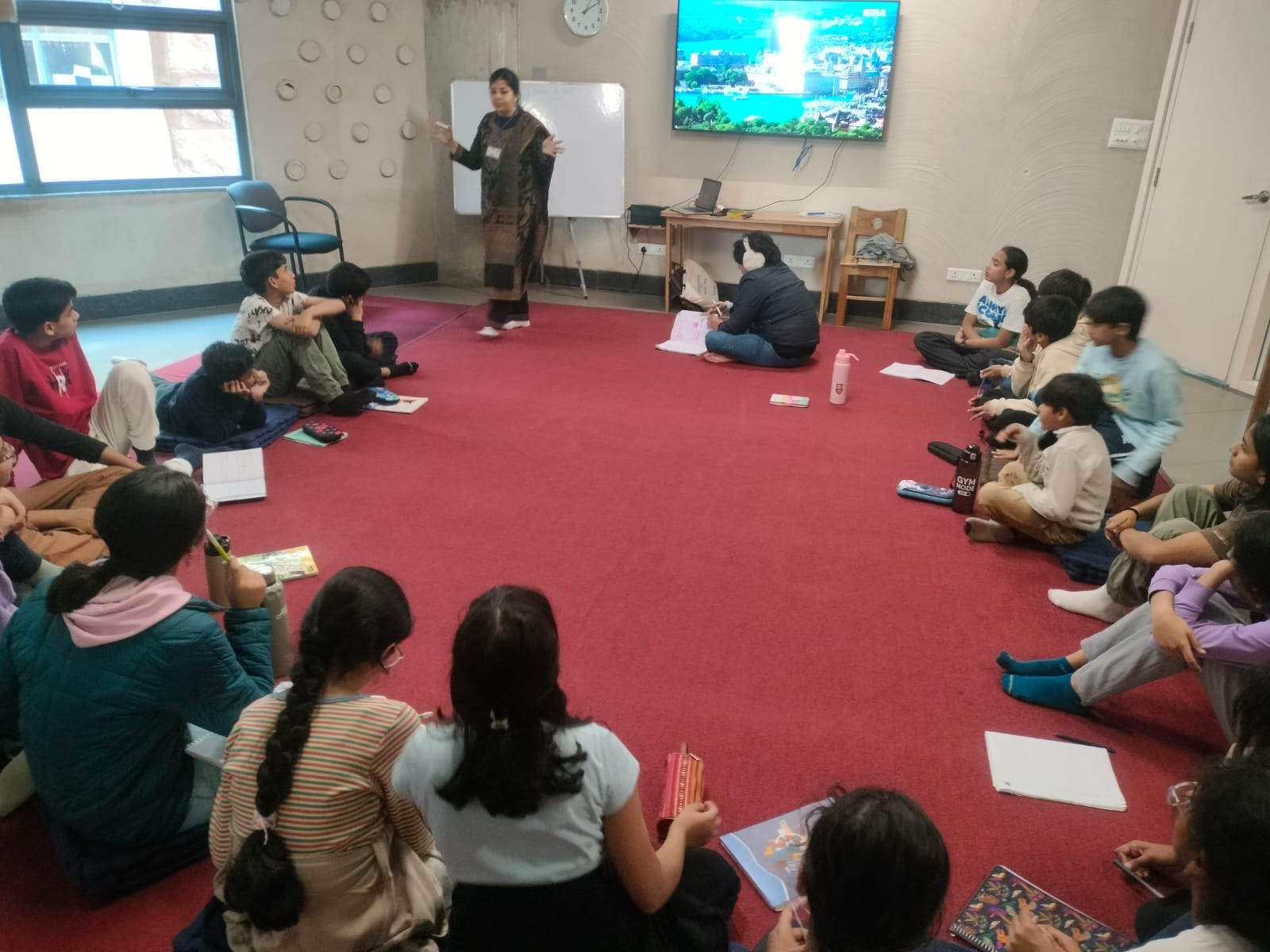
But aren’t we too small to bring a big change? Logically, our learners asked. Our learners reasoned themselves; every action, no matter how minuscule, can affect others in ways we may not immediately see.
Just as a butterfly's wings can influence a tornado's path, our actions contribute to the larger tapestry of existence.
With this understanding, our learners in Grades 6 to 9 and 11 embarked on Purpose Community projects. As facilitators, we felt that this will be the opportunity to understand what they observe as the pressing problems of the world. For us, this was the opportunity to build courage to solve complex problems around us. With faith in the process of creative interaction, we began. We were helped in steering the projects by one of the parents in our community Deep Jyoti bhaiya.
During the majority of the last five months, learners had been exploring the issues through observations during OLEs, or interactions with the diverse community at school. A wide and deep exploration ensued that they could define the problems they wished to solve quickly. We pushed back to provide evidence that these problems existed, to which they brought in surveys, interviews and pictures. Over the last leg, they developed prototypes to show how they will solve the problem. The learners have developed solutions that can first be implemented at school as well as in their homes, and then expanded to the larger community.
Problems Our Learners Picked Up
Grade 6 students felt strongly about the issue of ‘pollution’, specifically, that caused by the dumping of food waste (anaerobic decomposition). They believe that simple steps can go a long way in solving a large-scale problem. They therefore started with the composting of organic waste at school.
Organic waste, in particular, accumulates in landfills and produces methane gas. Composting can help reduce, reuse, and recycle organic waste. Reflecting on the effectiveness of their action, many students have volunteered to set up composting pits at their homes as well. Guiding their solution-building process was the enterprise project of Grade 10 students who have set up auto-segregating bins powered by technology.
“Urban Water Scarcity” is an issue that troubled Grade 7 students the most when they went to their OLE at Dehradun, where they saw local efforts in conservation. They realised that just because they do not encounter this problem does not mean that it does not exist. They understand their privilege and also recognise that if they do not act, they may soon become its victims too.
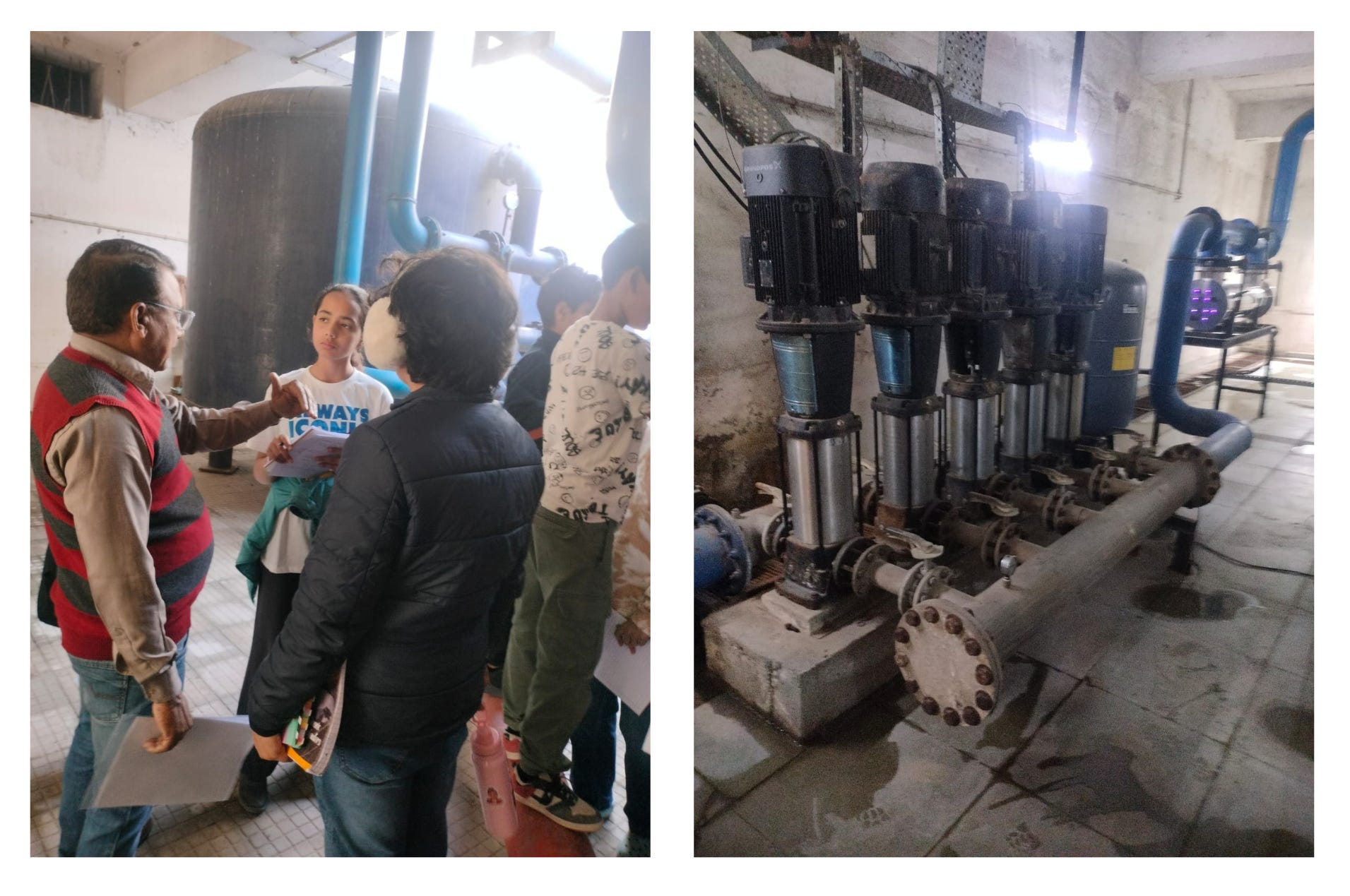
To explore the problem further, they researched global statistics on water cleanliness and shortage. They also attended a talk by one of Prakriti parents, Bhawna didi, who works with the Piramal Foundation. She shared her experiences from her field visits to rural areas and how access to potable water is a challenge there.
The solution the students wanted to offer was one that builds on existing solutions, and their exploration led them to the Jaypee Sewage Treatment Plant in Noida. Here, water is filtered and made reusable for landscaping, industrial processes, and groundwater recharge. Realising that water is the most overused yet essential commodity, the students thought of minimising its use. They therefore proposed the idea of ‘waterless toilets’. They learnt that such toilets are used while travelling or camping. They have concluded their research and have built a prototype to show the maintenance of these toilets. Their plan is to build a stationary waterless washroom at the school. They have also built a model for it. As an immediate next step, they will test its feasibility and explore the logistics involved.
Grade 8 students offered a diversified range of solutions to quite a few pertinent set of problems linked with pollution. Some of them identified with plastic waste as a continuing big problem and the need to promote biodegradable crockery, paper and cloth bags. One group came up with creating and distributing paper bags to replace the conveniently available plastic bags. They plan to provide these self-created bags for carrying stationery and light books. They also made paper mâché bowls that can replace plastic bowls. They now want to test their usability in the school dining area for serving snacks.
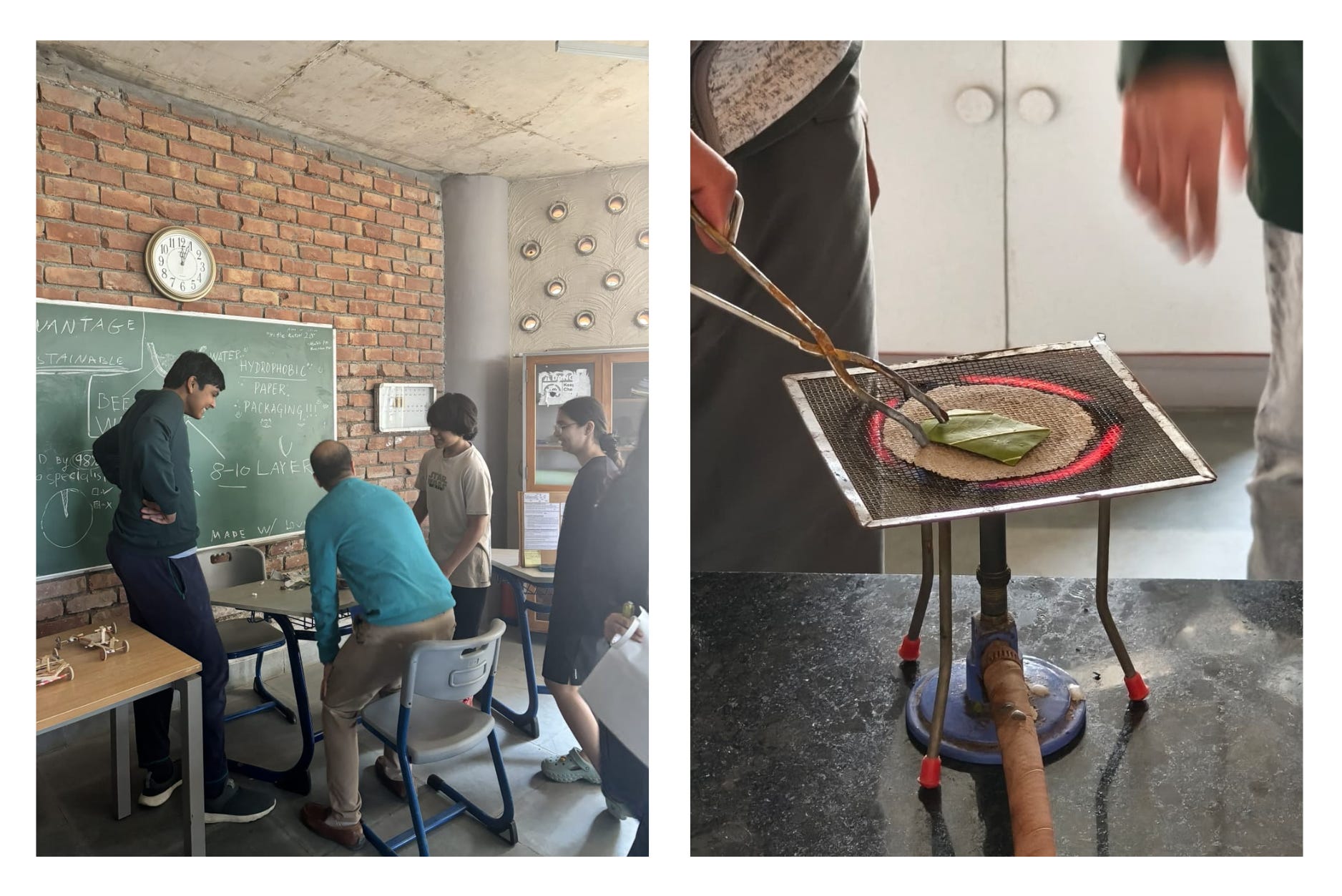
Another group saw inorganic detergents contributing to pollution in a big way. They set out to test bio-enzymes and homemade chemical-free washing soaps. Once again, they have developed interesting prototypes and have committed to producing enough to sell at school.
One of the groups focused on rabbit care. They have spread awareness within the school community on how to handle rabbits if and when required. They are also researching their other needs, such as nutrition and safety. The larger goal is to make people empathetic towards animals, and not just rabbits in general. A small group of learners is also working on social discrimination.
Grade 9 students aim to provide solutions to common problems faced, particularly by the underprivileged. They are working towards providing low-cost solutions to reduce air pollution, reducing illiteracy, and preventing common diseases in the nearby village areas and creating employment by upcycling clothes.
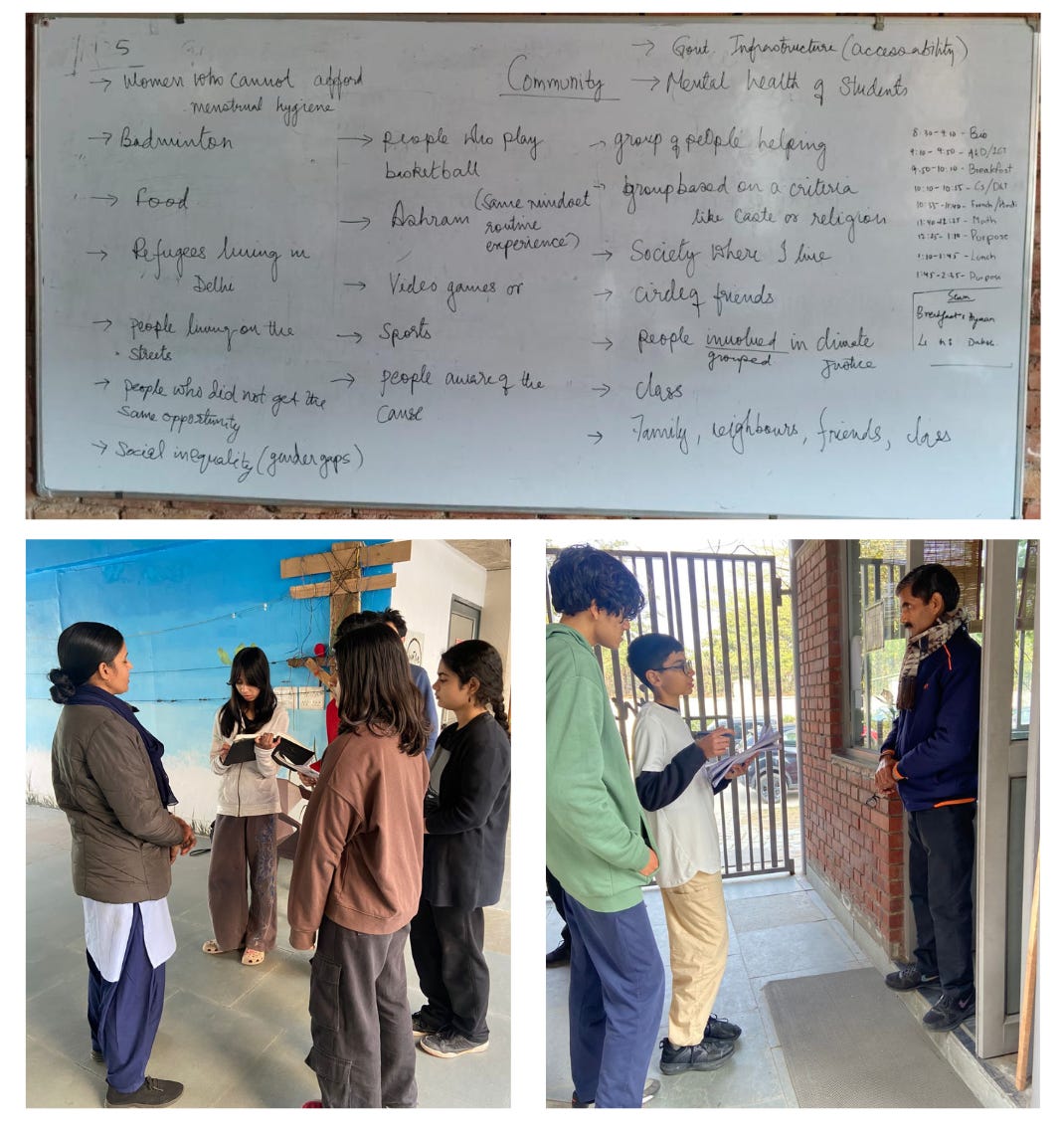
Their approach is all about community outreach and interaction to bring behaviour change. They believe that interacting one-on-one at the ground level and conducting awareness campaigns will lead to greater acceptance. They are now building campaigns that will incentivise people to change their behaviour.
While working on their projects, the students have been mindful of the fact that to solve problems at a national or global level, they first need to address local issues.
Therefore, they have offered solutions that are simple, pragmatic, yet effective. They have faith in their vision and in their actions.
Grade 11 learners have already identified developing critical awareness in under-privileged students about potential risks to lives- cyber-crime, bullying, abuse, sexual and substance abuse. We have already written about it. Click here.
Gearing up..
We, as facilitators, are inspired to see an intensity in their work for the local community, whether as schools, neighbourhoods or villages around us in Noida. We are gearing up to support them in testing their ideas and driving social change, as they return in April.