
Our Farm-based Open-learning Project
We have been working with learners from Grades 2 to 5 over last 18 months to raise environment-consciousness and are seeing success -Deviya Didi, visiting farming facilitator (SowGood Learning Farm).

Why should the children farm in school?
If you have seen kids playing in the mud, then the answer to this question is obvious. Digging dirt makes them happy and increases their immunity. There is scientific research to back this and this itself should be a good enough reason.
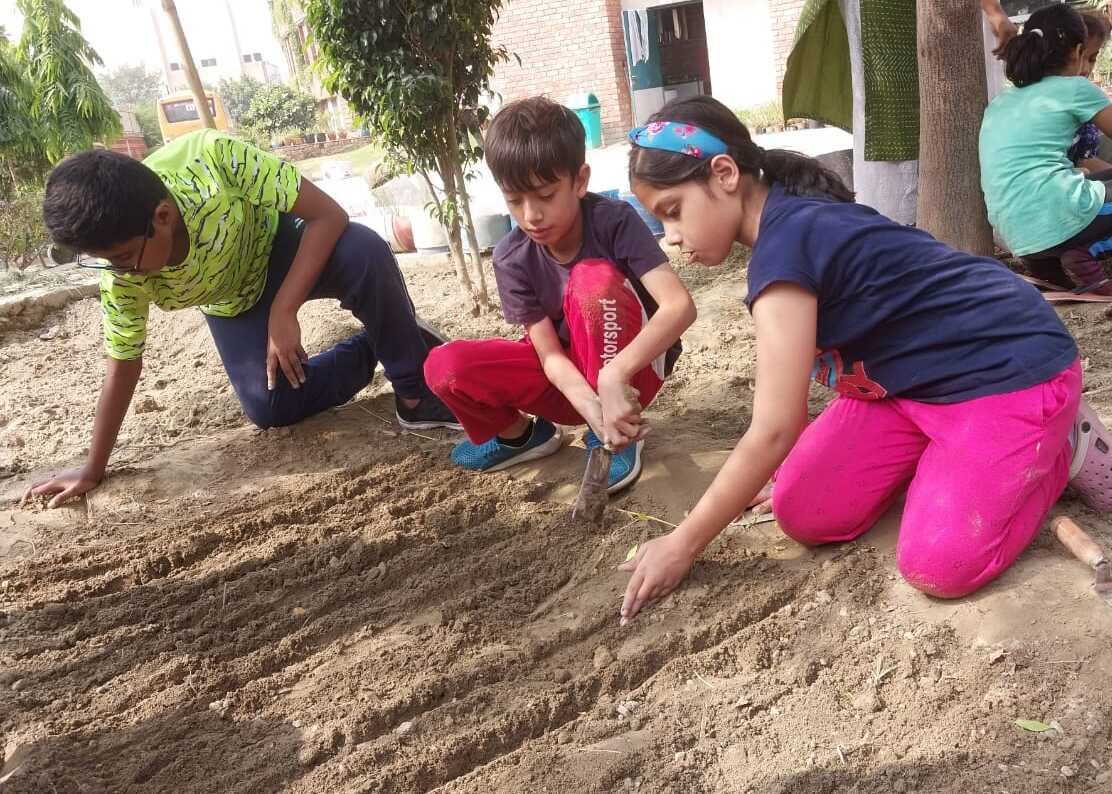
But does farming do just this? For a child, sowing tiny seeds and seeing them grow into a crop is magic! This cannot be taught through books – information is not learning – the feeling and connection becomes knowledge. You just have to look at the glow in the children’s eyes when they see their fully grown farm patch and this, dawns on you. They experience the bountifulness of the earth. They learn to look at soil as a living thing which has to be nourished with organic matter.
You can see children trying to clean up slush from the leaves of the overwatered plants. They know when the plants are green, standing straight and happy. They feel for them. In fact one child commented that he did not like saplings. “You have pulled them out from the nursery on Friday. Today is Monday morning. For two days they have been out of their home and looking sad” he finished.
This led to a discussion on whether we humans can survive without eating and water for two days.
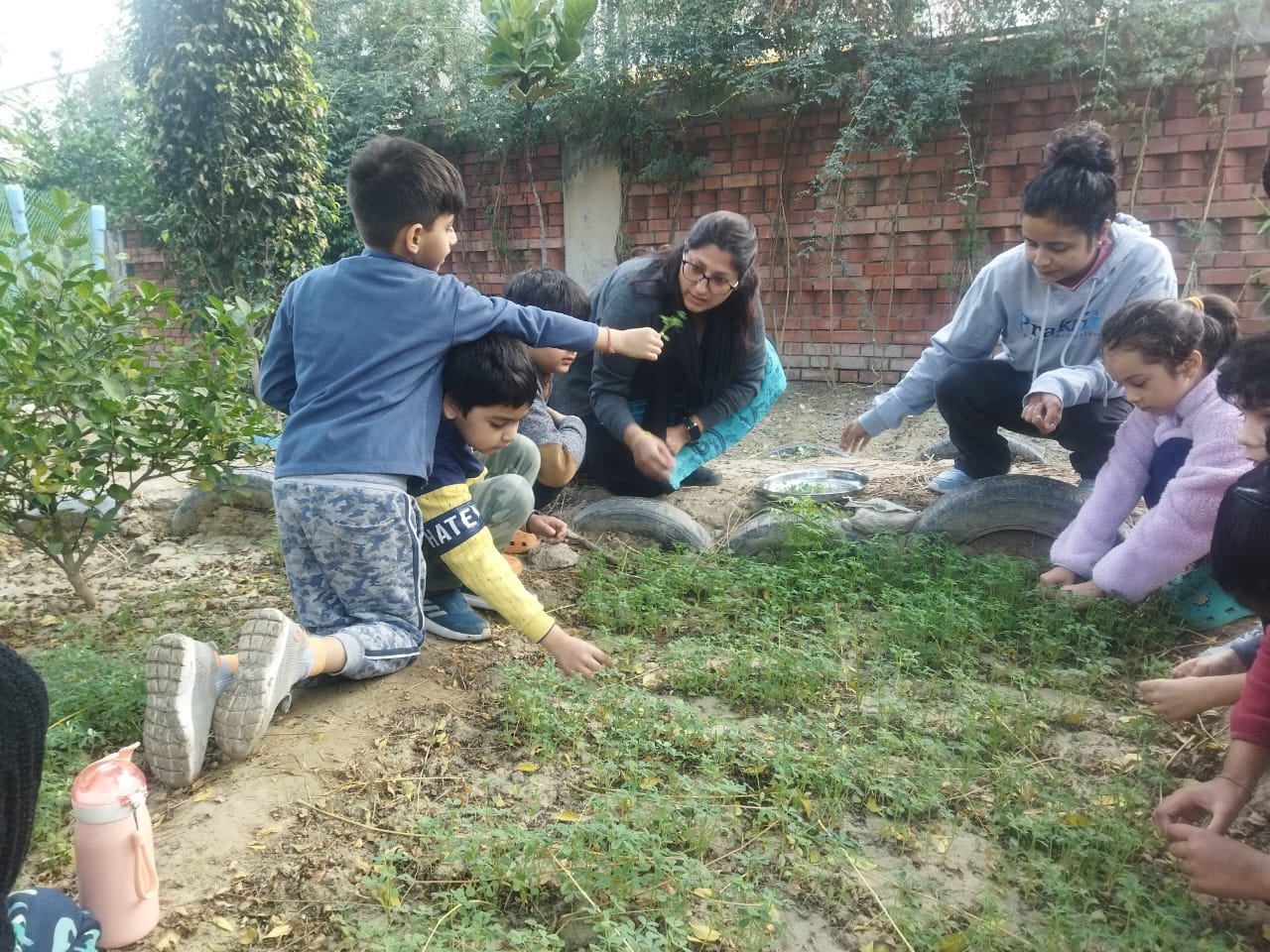
We struggle at home to get them to eat greens. But at the farm, we see children nibbling at leaves of anything they have grown without hesitation. In one farming session for example, we had harvested fenugreek and one child wanted to know how it tasted. We then realized none of adults knew. One of us said it is perhaps bitter. A few children without hesitation chewed the leaves; one said “it was salty” and another said “ it tastes tangy”. All of us are learning!
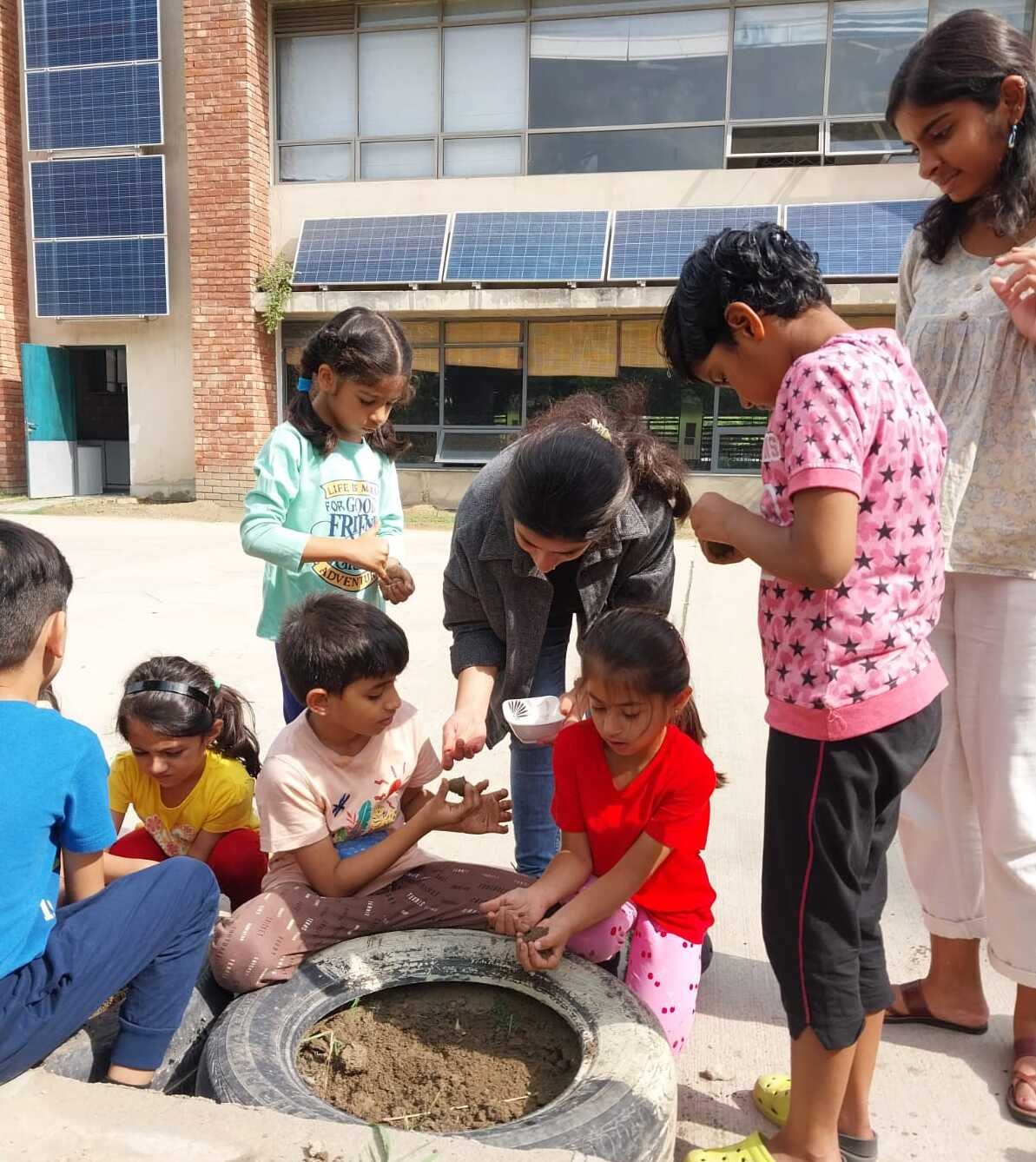
The children learn to prepare soil, plan in the farm, sow in a pattern, observe the cycle and harvest. We also try and plan to get them to cook their harvest, make a meal in the school and serve. The joy of cooking in a community and eating what one has cooked has to be seen to be believed. These activities also help in developing fine and gross motor skills. Research has shown that farming in school and cooking helps children move towards healthier eating habits.
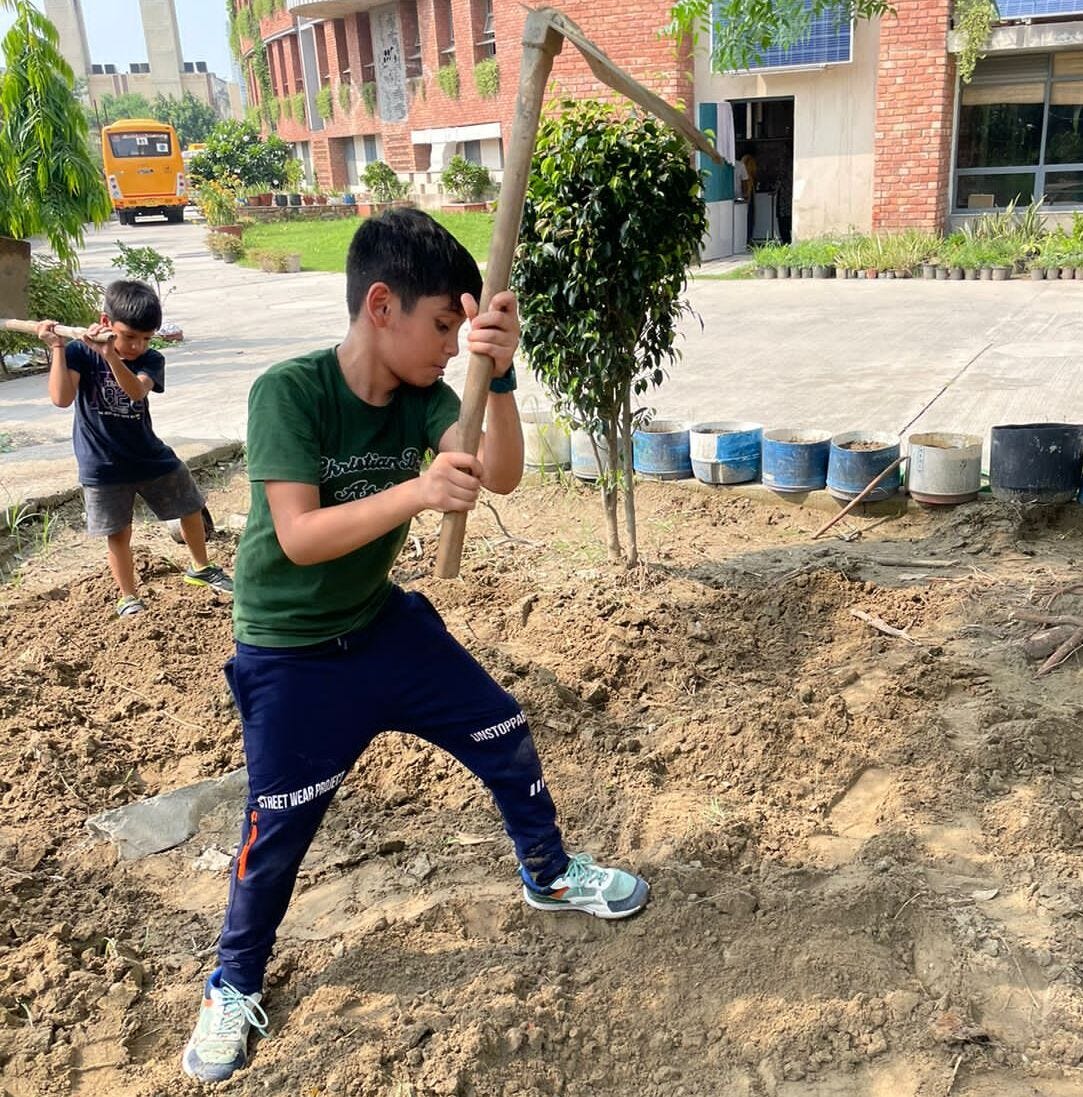
The project is not only about cultivating crops; it's a platform for problem-solving.
Can we grow plants in waste plastic bottles, in a vertical frame and build a micro watering system is one problem that a group has come up with and is working on. The project is also about making the learners aware of sustainable solutions to problems.
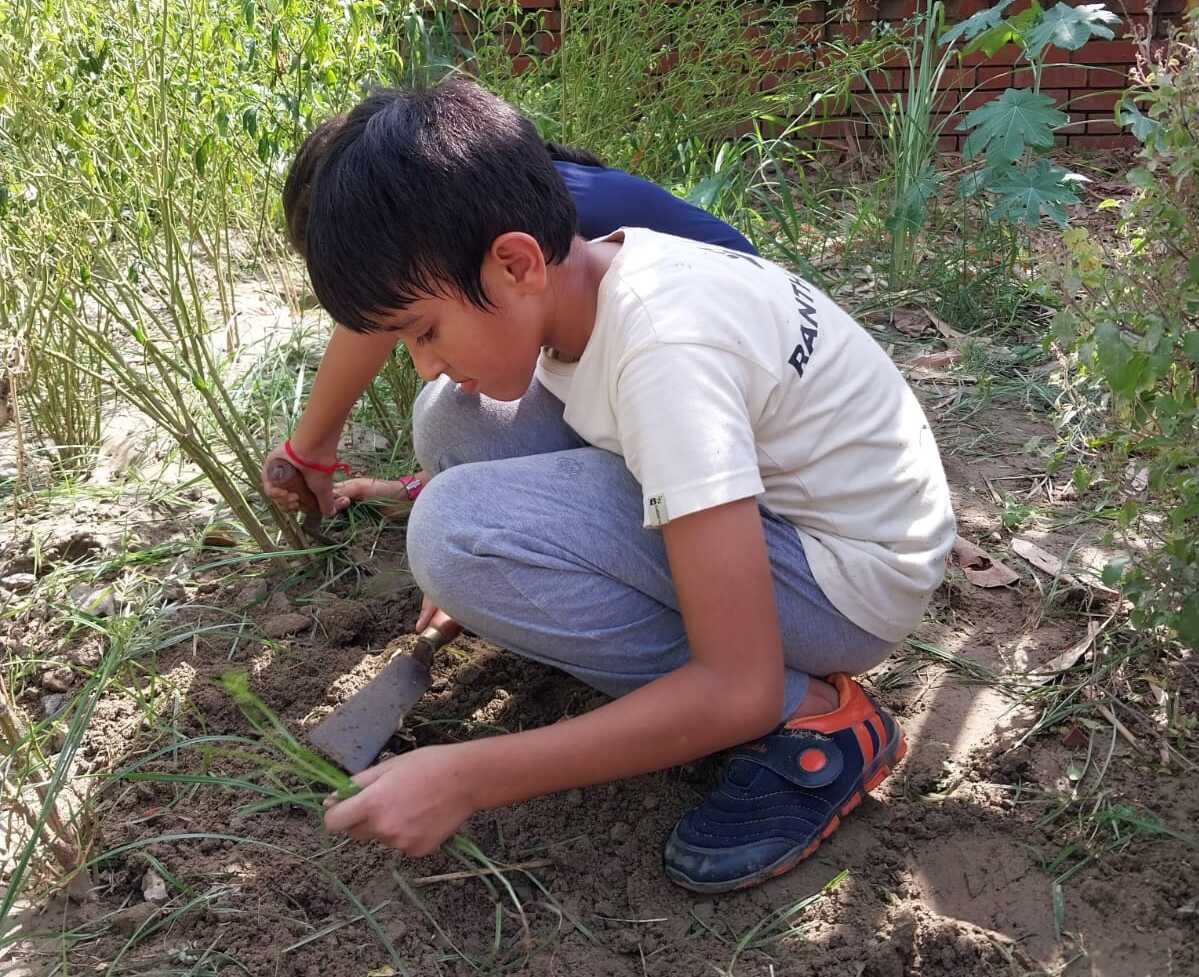
By engaging in hands-on activities children are not only cultivating plants but also sowing the seeds of environmental consciousness. This farming project becomes a transformative educational experience, empowering the next generation to envision and actively contribute to a more sustainable and harmonious future. Through this endeavor, learners not only learn about agriculture and technology but also grasp the invaluable lessons of responsibility, innovation, and the interconnectedness between human actions and the well-being of the planet.
This is wonderful 🙂