

At Prakriti, food is more than just sustenance—it’s a quiet teacher.
Every meal offers an opportunity to nourish the body, awaken the senses, and build a deeper understanding of nature, health, and culture. Our approach is grounded in both modern nutritional science and the timeless wisdom of Ayurveda, crafted especially to support children’s physical vitality and mental clarity throughout their day.
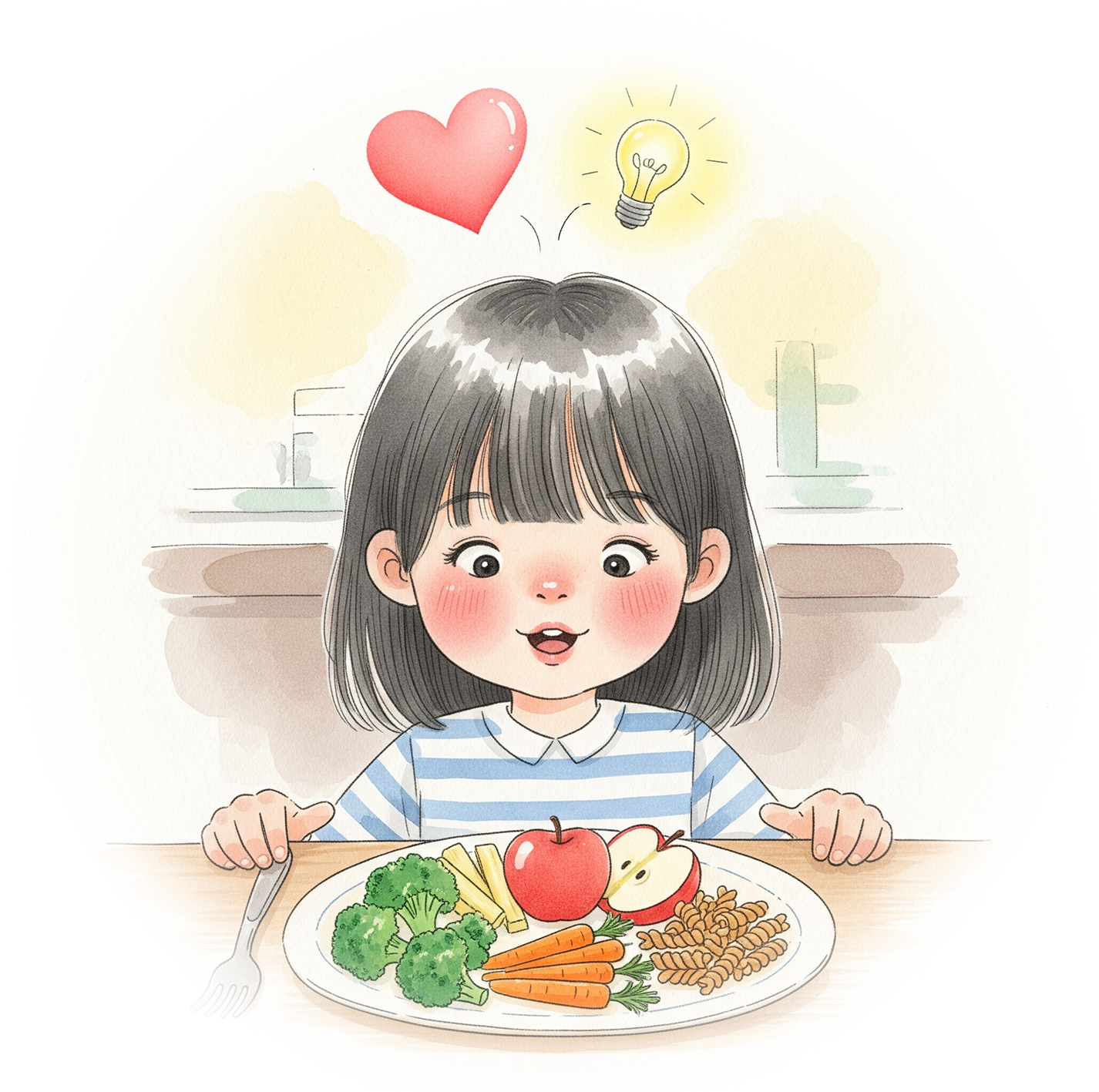
We know that after lunch, children return to their classrooms for more learning, movement, and creativity. So our meals are designed to ensure they feel energized, not sluggish—light, alert, and ready to engage, not heavy or drowsy.
Thoughtful Sourcing, Seasonal Cooking
We use only local and seasonal ingredients, not just for their freshness and taste, but because they are easier for young bodies to digest and assimilate. Nature provides what we need in each season—cooling foods in summer, warming ones in winter, and grounding ones during seasonal transitions.
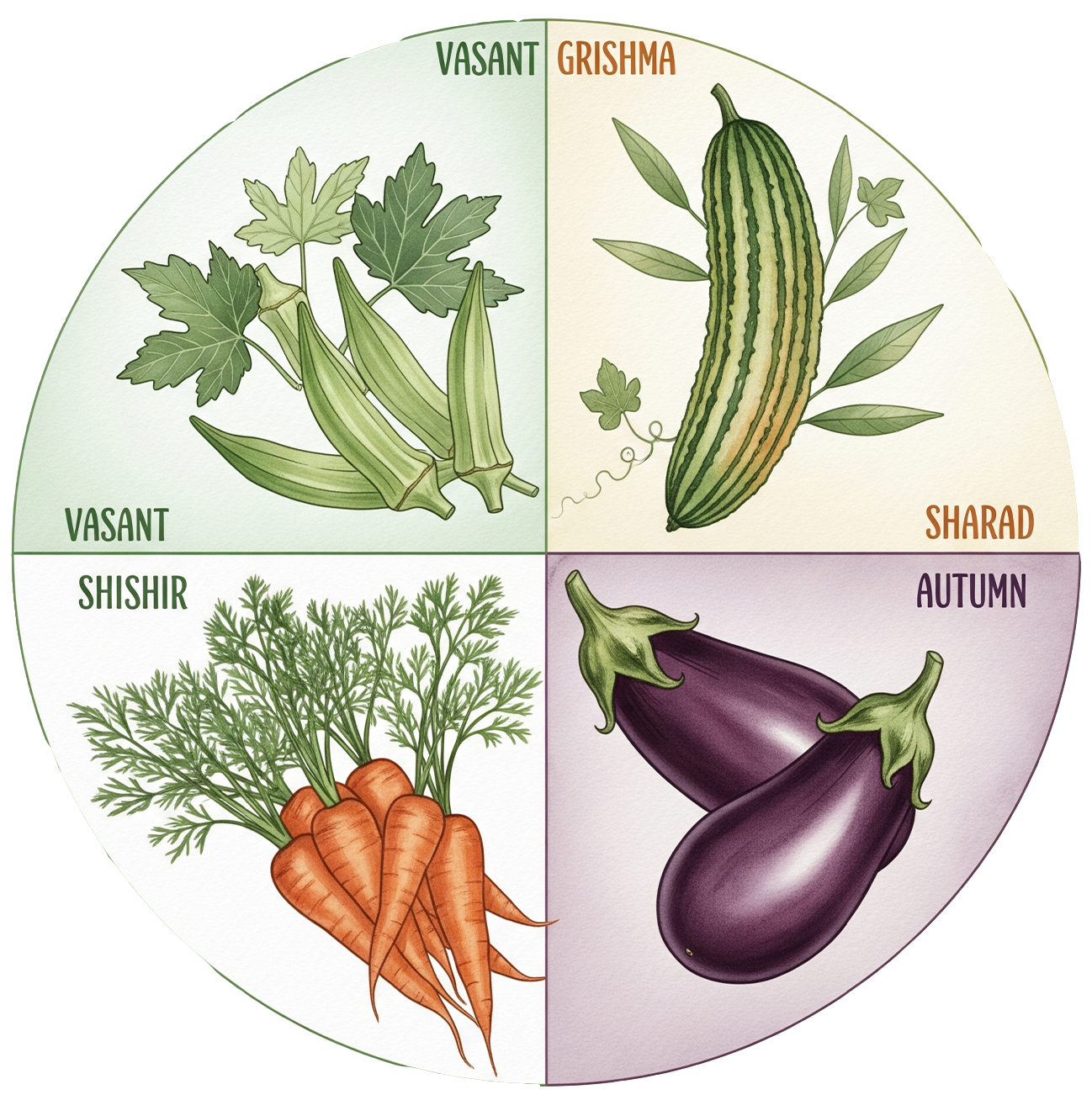
Our commitment to sourcing locally also means we are supporting smallholding farmers who practice traditional, chemical-free farming methods. This reduces the carbon footprint of our food and fosters a deeper connection between our school and the surrounding land and community.
Food That Feels Like Home
Our cooking is simple, clean, and mindful—more like what you'd find in a loving home than a commercial kitchen. We avoid over-spicing or over-processing dishes. Instead, we let the natural taste, texture, and aroma of each ingredient shine.
This helps children connect with their food more deeply—experiencing how sweet a carrot can be, or how satisfying the crunch of fresh cucumber is without added salt.
Guided by Ayurveda, Built for Balance
We follow Ayurvedic principles of food combining, preparation, and digestion. Meals are cooked in a way that enhances the bioavailability of nutrients, meaning children’s bodies can actually absorb what’s good for them. We:
Replace refined sugar with jaggery or naturally sweet ingredients
Use salt sparingly and wisely, especially in raw preparations like salads
Combine ingredients based on season and digestive ease
Focus on light, warming, and gut-friendly recipes, especially for lunchtime
Learning from the Plate: Displaying Ingredients & Culinary Curiosity
We’ve recently introduced a new initiative: ingredients displayed as it is in the dining area. This helps children see, recognize, and learn about what’s in their food. It’s a simple yet powerful way to raise awareness about what they’re eating, why it’s good for them, and how different ingredients work together.
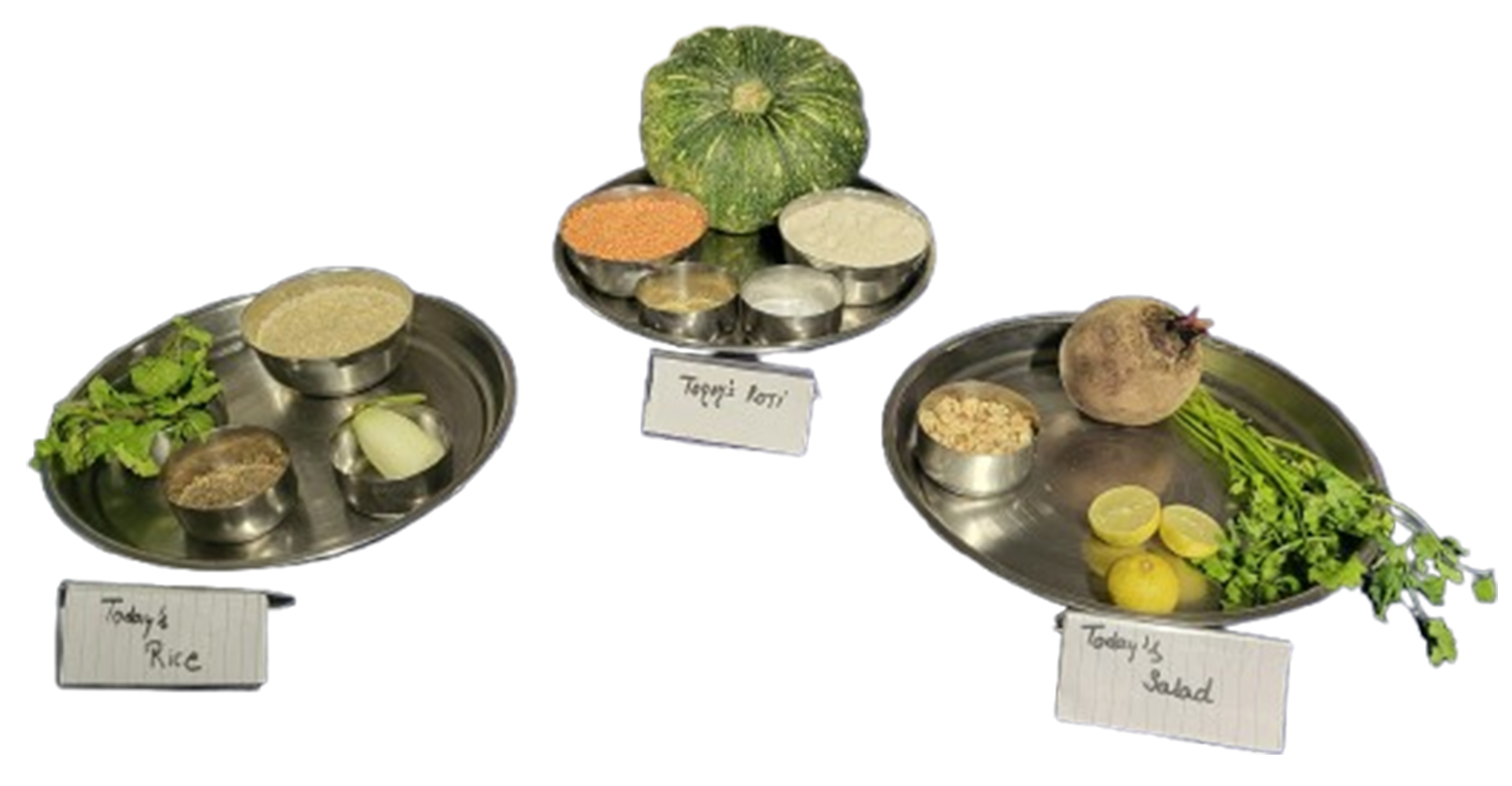
Often, they’re surprised to find how familiar vegetables or grains taste completely new when prepared differently:
A soft and fragrant chapati made with pumpkin atta and dal flour
A soothing rice dish paired with gentle bottle gourd (lauki), transformed with the right seasoning
Stews or sabzis fortified with “secret health ingredients” like moringa, amaranth, or lentil sprouts
These aren’t just nutritious additions—they're a subtle introduction to the idea that food is powerful, and that flavour and health can co-exist beautifully when we cook with care and intention.
Food as a Sensory and Emotional Experience
When children eat this way, something shifts. They begin to notice their food, ask questions, and form preferences based on experience—not just habit. They start to realize that how they feel after eating matters, and that good food doesn’t need to be fancy—it needs to be real.
By making meals this mindful, we’re also teaching children to:
Eat slowly and with awareness
Appreciate their local food culture
Understand the impact of food choices on their body and the planet
Co-creating nutrition knowledge with out learners , we marked last week as nutrition week where we had a lot of these conversations with our learners of each grade . We helped them put all the food in perspective and understand the value of nutrients within those.
Click here to see the the charts prepared by our learners independently after the workshops .
In short, we nourish more than just their bodies—we help build a lifelong relationship with food that is rooted in respect, curiosity, and joy.
awesome