

In most settings, a room full of teenagers from diverse backgrounds is a recipe for posturing.
Usually, there is a “winner” and a “loser,” a podium, and a judge. But Hocokah—the Socratic Dialogue at Prakriti—scraps that script entirely.
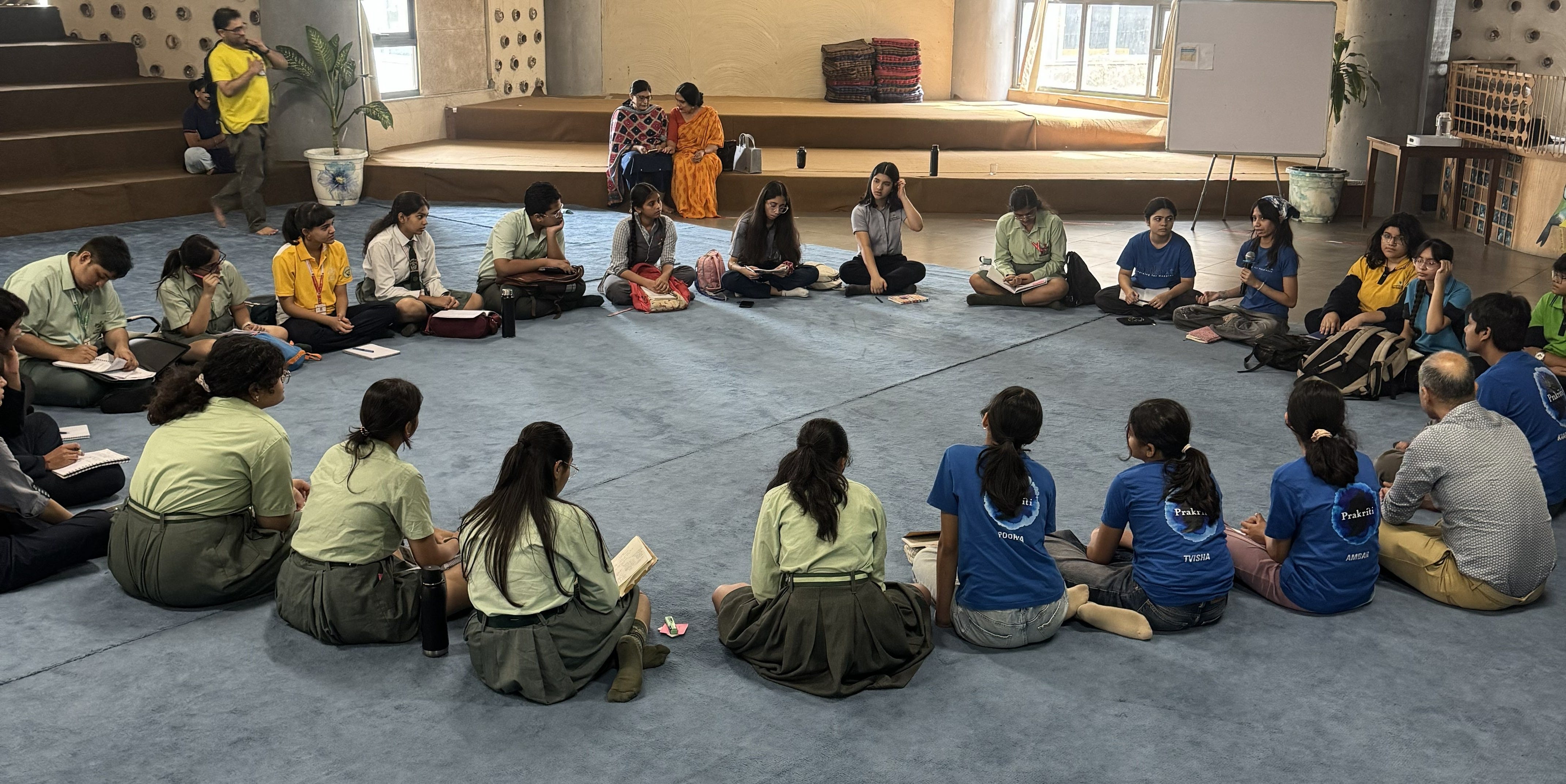
There are no trophies here. Instead, there is a process that feels less like a school event and more like an archaeological dig into the human mind. This April, Hocokah 2026 (also known as Purva Paksha) brought together learners from Grades 8 to 12 to engage in an inquiry that most adults shy away from: Morality, Divinity, and the Human Spirit.
“We may not know Him as God, we may know Him as Nature, our Higher Self, Infinity, some ineffable Goal. It was so that Buddha approached Him, so approaches Him the rigid Adwaitin. He is accessible even to the Atheist. To the Materialist, He disguises Himself in matter. For the Nihilist, He waits ambushed in the bosom of Annihiliation”.
- Sri Aurobindo in Essays of the Gita
The Prep: A Timeless Debate (God)
Before students even set foot on campus, they are sent into the deep end via a learning pack. Through curated readings and simulations they were exposed to a respectful arguing technique and the questions that required deep thinking on the topic of the Divine. They understood that the Divine manifests in different ways to different people and it was appropriate to present one’s view without disregarding the others. Before the participants came in, we felt that they were seeking in a true sense.
Moving Beyond the Binary
The philosophy of Hocokah 2026 was built on a clear distinction: while debate can get people to eventually take one side, in a dialogue, there might not be a resolution. This year’s participants grappled with several insights, open questions and conundrums:
Who decides on morality?
If there is God then why do good people suffer?
Can mind ever know the unknown?
If there is no Divine existence, how is the universe in perfect balance?
Religion is a path to realise God, why then does it become an object of disbelief?
How do we realise the Divine experience?
The Circle: Where the Ego Goes to Die
The “Circle” at Prakriti isn’t just a seating arrangement; it’s a psychological boundary. The rule is simple but brutal: Safety through courage. In a standard debate, you listen just long enough to find a gap in the other person’s armor. In the Hocokah process, you listen to become the other person for a second. Facilitators—known as “anchors”—refuse to let participants off the hook with easy “I agree” statements. Instead, they use “potent conundrums” to jam the gears.
The most intense part of the day is responding to the provocations. Just as a small group of twenty starts to feel like a tribe—safe, understood, and harmonious—the facilitators start to introduce provocations through reading of abstract or merely stating questions.
Suddenly, the dynamic shifts. The “harmony” is gone, and the room gets crowded. This is a deliberate stress test where the challenge is: Can you keep your sensitivity when the noise increases? Can you still listen with integrity when there are many voices in quick succession? Can you continue to respond to the arguments instead of making an unrelated point. It moves the students from merely “thinking” about a concept to “perceiving” the living, breathing reality of the person sitting across from them.
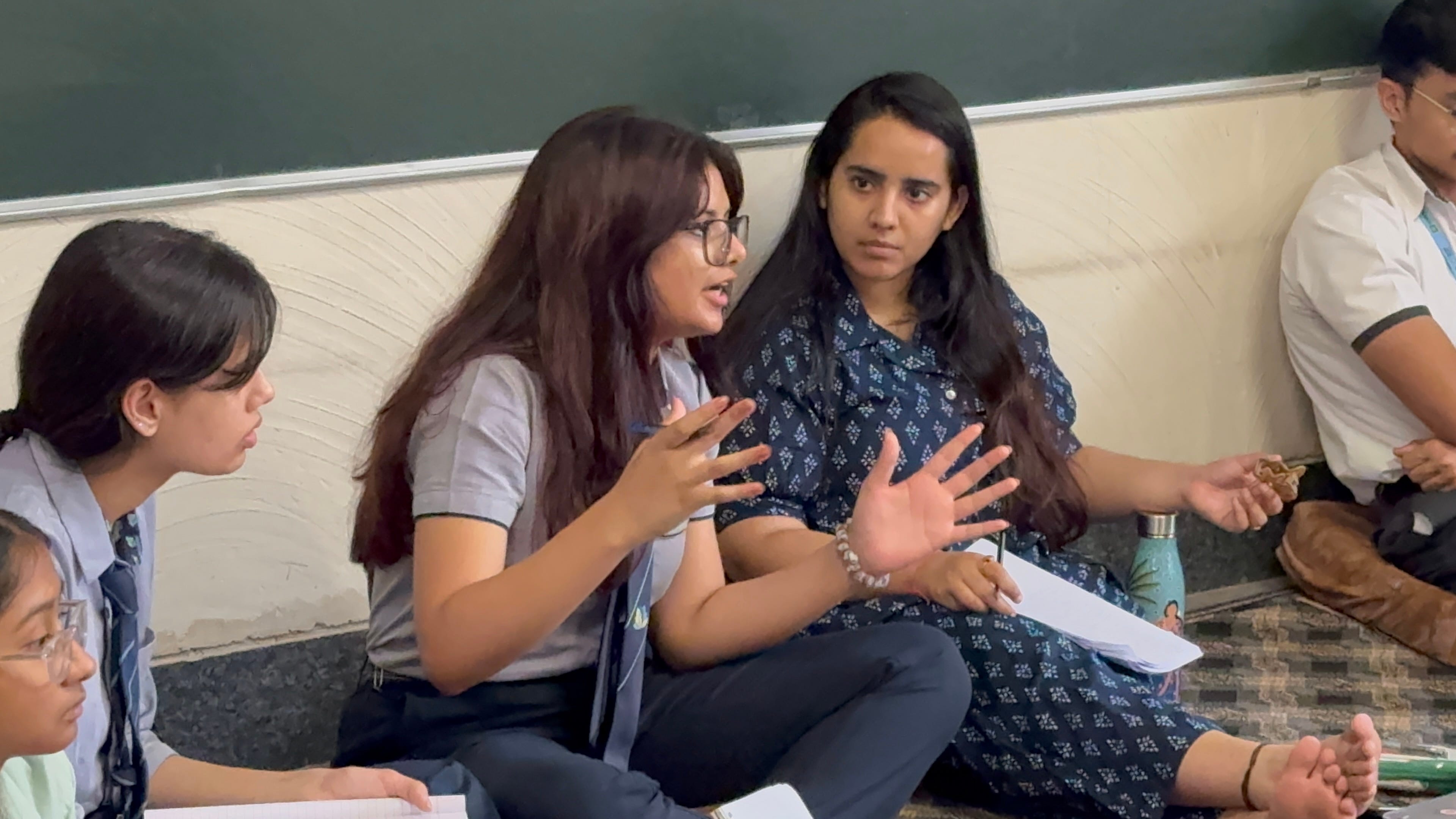
Reflections from some of the participants
“Hocokah, for me, was an extremely innovative and interesting experience. It’s respectful, informal discussion was inspiring because everyone was aware of the freedom they were given and how they were to treat it. It was thrilling to hear everyone’s insights and perspectives and I left the event with even more questions but better understanding and exposure.”
“Until about a month ago, I had never really pondered these questions. I hadn’t given much thought to ethics, philosophy, or morality either. Participating in Hocokah changed that completely and made me see the world through a very different lens. “Hocokah” is a Lakota word meaning “sacred circle.” It represents a protected, non-judgmental space where people can express their thoughts freely and openly.”
“My experience in Hocokah overall was very interesting, in some ways enlightening and an event which opened my mind to various interpretations of the simple term god and lots of philosophical ideas. It gave me a calm, listening space to share my thoughts and ideas as well as listen to those of others. The reading given as well as the online sessions were of a kind of philosophical depth and type I had never experienced nor learned before, and I really enjoyed learning about the different interpretations of religious religiousness famous philosophers and even Albert Einstein had! I am really looking forward to going next year and learning about new things!”
“Overall, the entire event was enriching and inspiring. One of the things I appreciated the most was the opportunity to listen to a wide range of perspectives. You don’t need to have a fixed opinion when you begin, but by the end, you naturally develop some understanding of the topic. While some viewpoints I heard were very different from my own, they expanded my thinking and allowed me to see things from new angles. By the end, I had developed a completely fresh perspective on many ideas.”
The Synthesis: From Logic to Art
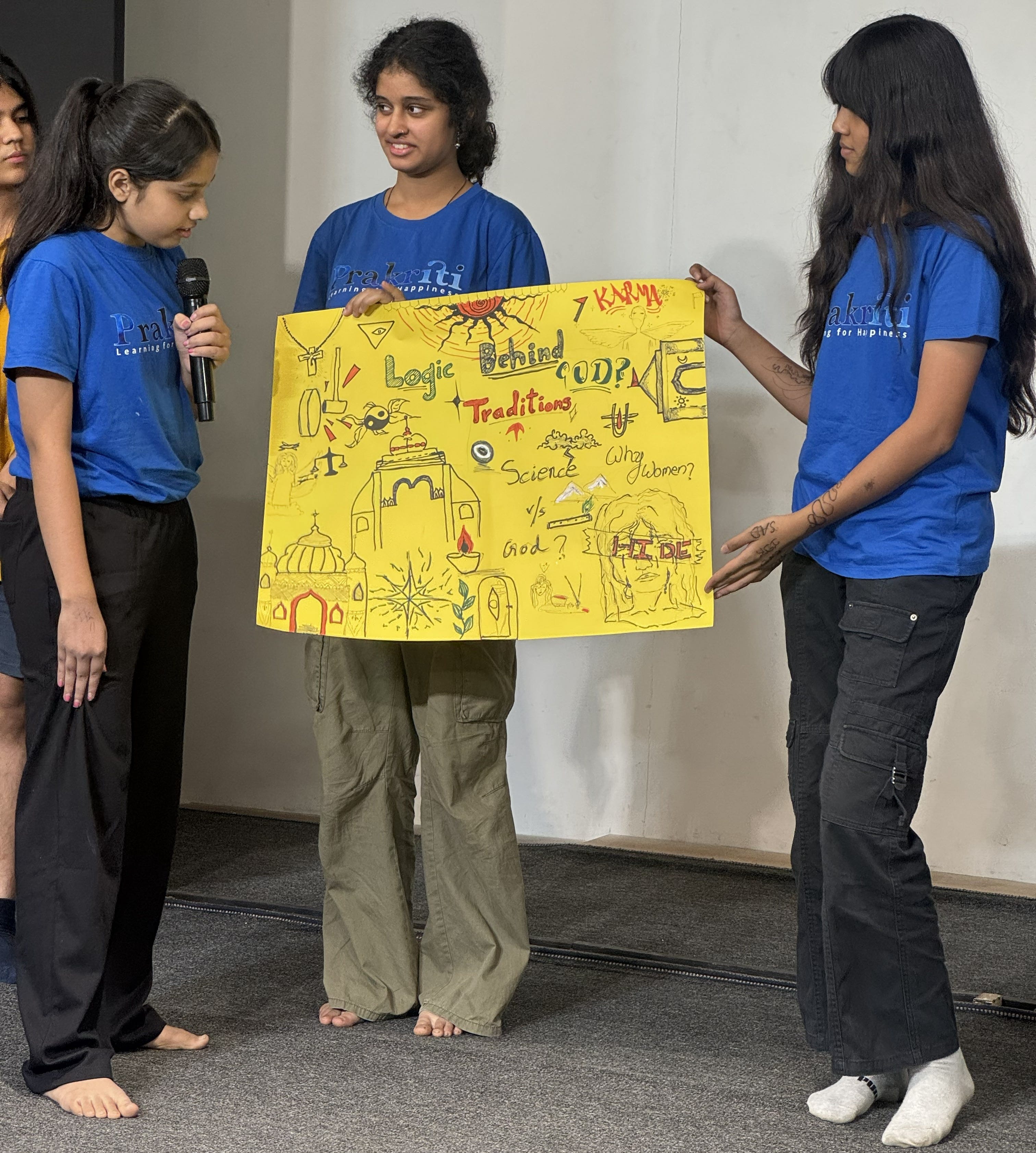
If you spend six hours deconstructing the human condition, a summary paragraph won’t cut it. The final step of the Hocokah process is a pivot into the visceral.
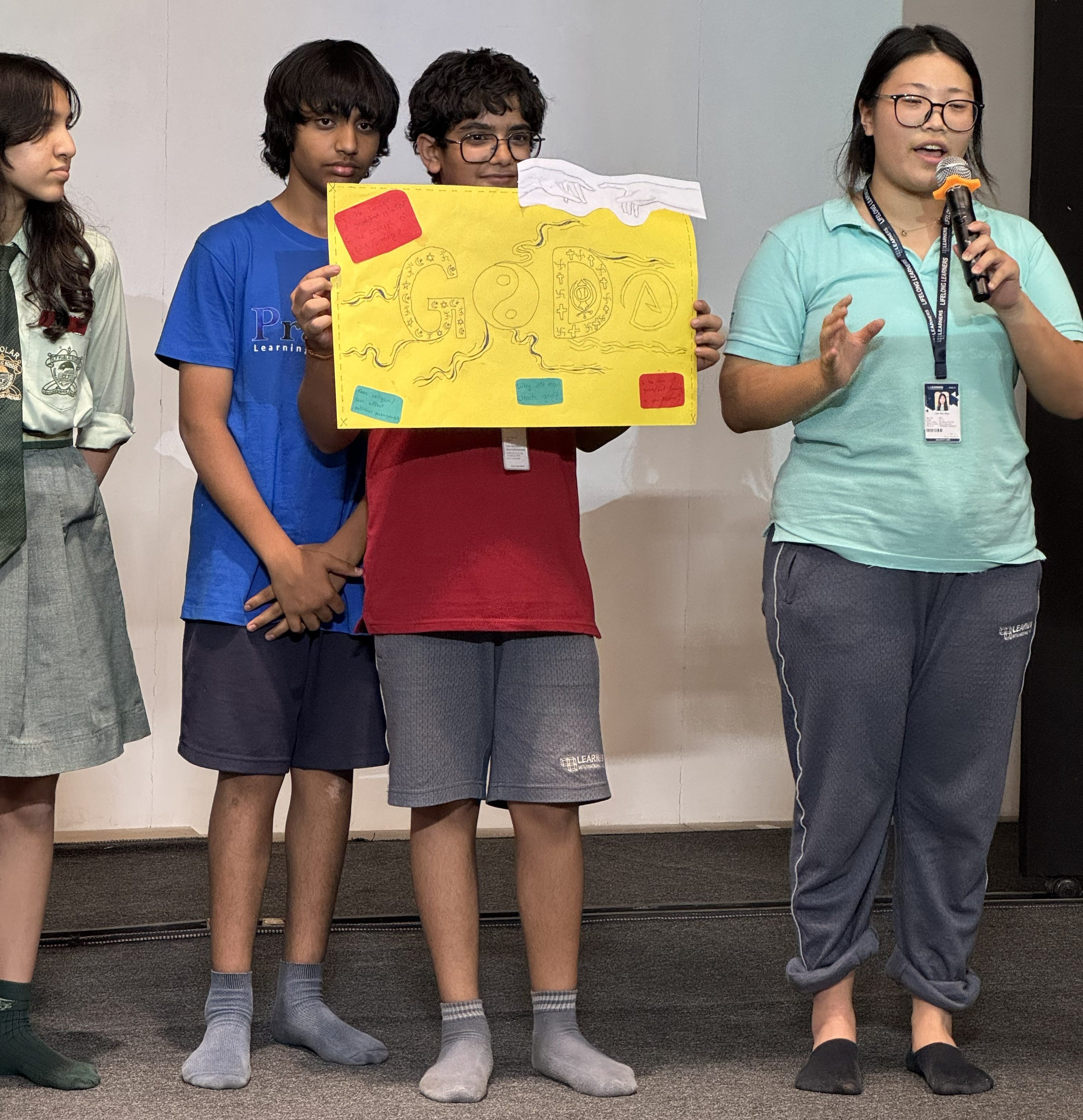
The dialogue ends when the talking stops and the art begins. Whether it’s a poem that catches the throat or a piece of theatre that mirrors the day’s tension, this is where the intellectual labour becomes a lived memory. They aren’t just “reporting” what they learned; they are expressing how they’ve been altered.
The Takeaway
Hocokah is a reminder that we don’t need more “debaters.” We need people who can sit in a circle, face a potent conundrum, and have the stamina to stay in the conversation until the “other” no longer feels like a stranger.
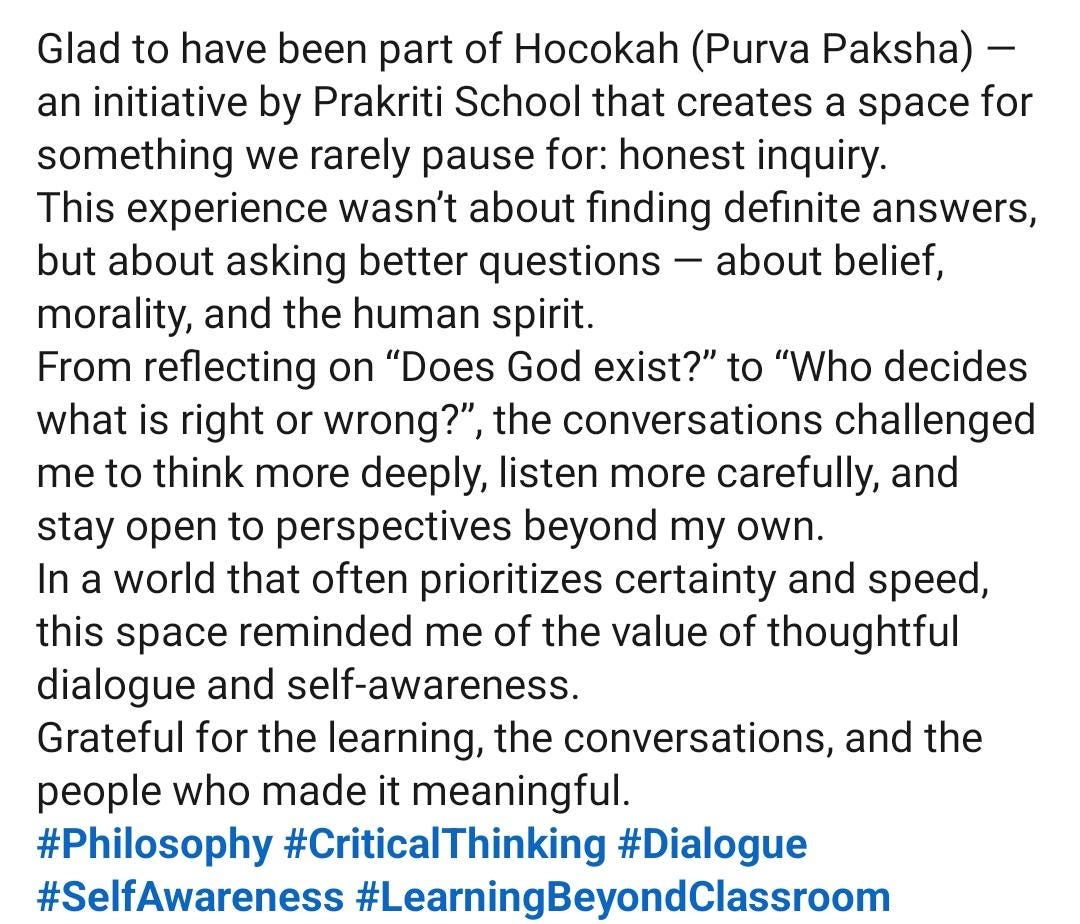
Note by one of the participating learners from a visiting school
The process is the point. The clarity is the prize. For a few hours in Noida, the world stopped being a competition and started being a shared inquiry. The students didn’t leave with “answers” about the Divine; they left with the ability to listen with sensitivity and to question with courage.
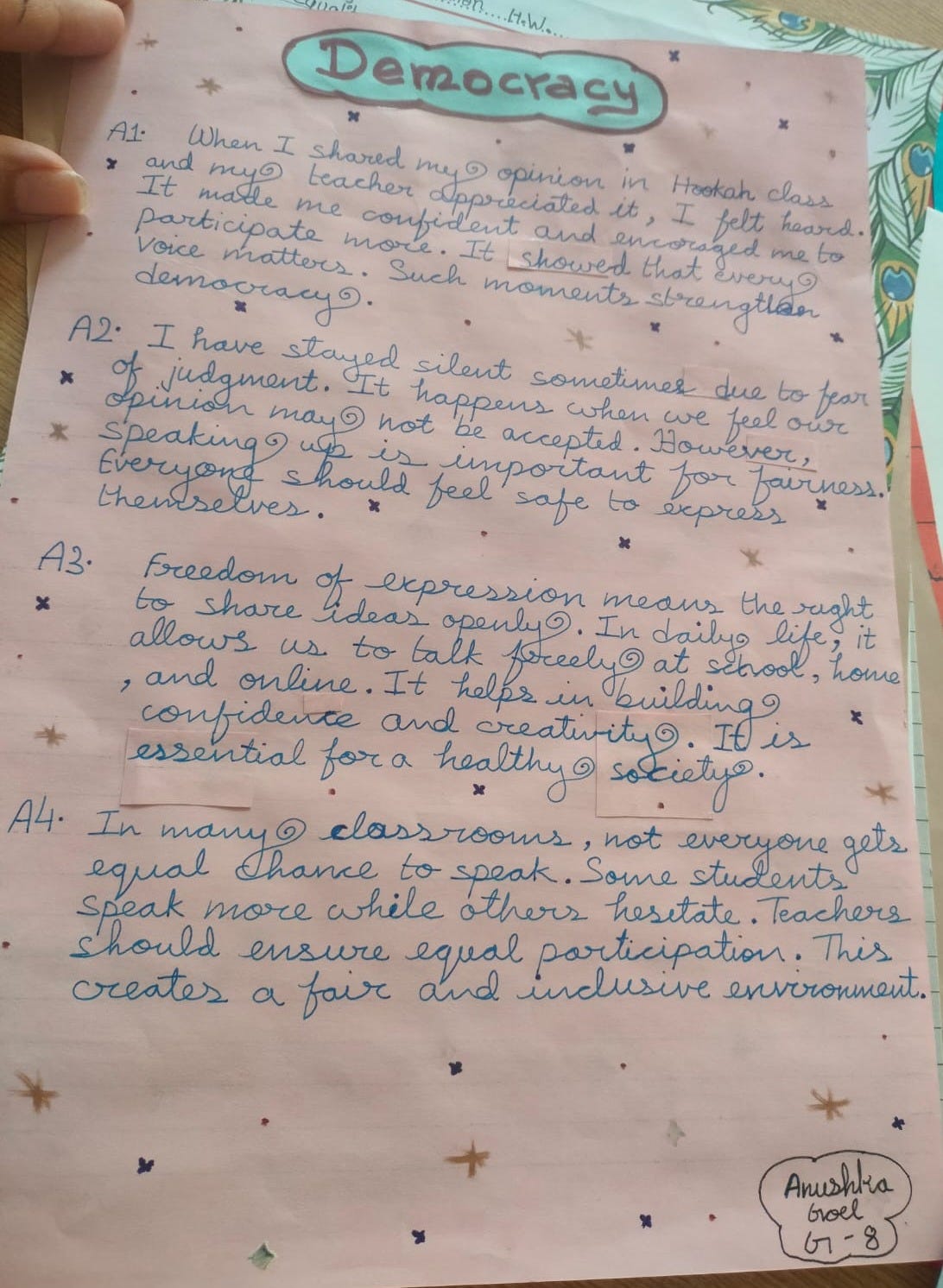
If our learners are able to connect classroom learning to what they experience in real life and make meaning, the purpose of education is fulfilled. Here is a note from one of our learners who connected ‘democracy’ to what she experienced in the event.
Finally, we would like to laud the students from Learners International School, Shiv Nadar School (Noida), Shiv Nadar School (Gurugram), Om Foundation, Prometheus School, DLF Public School & Nehru World School for their exceptional engagement and insightful contributions throughout these dialogues. Their willingness to grapple with complex questions and their commitment to open and honest discourse were instrumental in the success of this transformative experience.