
Design & Technology: Building a Nation of Problem Solvers
Design & Technology (D&T) is a subject in IGCSE which is a great way to develop problem solving and Visual Functional Design Building Skills. By Priyanka Kaur Oberoi.

“You can’t understand a system until you try to change it.”
— Buckminster Fuller
Not every learner dreams of designing buildings or engineering machines.
But every learner should know what it means to notice something broken, wonder how it could be better, and try to fix it.
They should get to ask, Why is this like this?
They should get to sketch an idea, test it, remake it — not for a grade, but to see what happens when thought meets action.
This isn’t about becoming anything. It’s about learning to see clearly, think critically, and build with purpose.
When we think of Design and Technology (D&T) as a subject, it’s often reduced to the idea of “making” — designing a product, building a model, crafting a structure. But this subject, when taught with intention, is about far more than aesthetics or form. It is, at its core, a training ground for engineering mindset, practical intelligence, and inventive spirit.
Much like the NCC prepares youth for national service, Design and Technology prepares young minds for real-world problem solving — for observing, adapting, designing, and even failing until the solution fits.
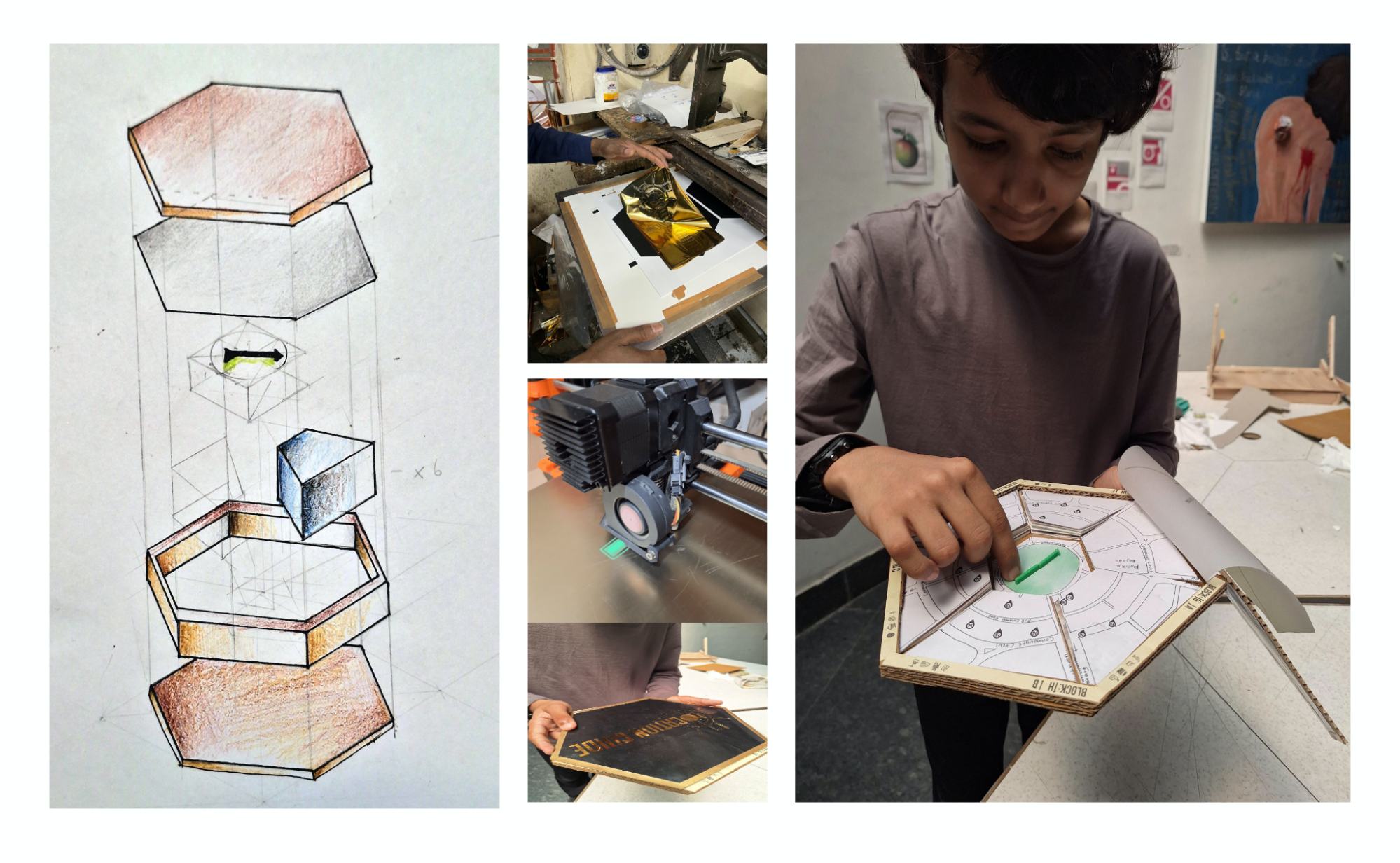
Image 1: Hemang Garg’s project that received an A* in IGCSE, 2025: An interactive location guide for Connaught Place, designed in a hexagonal form that echoes CP’s architectural layout.
‘D&T gives kids the instincts of an engineer, even before they know the formulas.’
Every object, space, and system we interact with has been designed consciously or carelessly by someone. Helping students notice this is the first step. Teaching them to question it and then reimagine it is where the real learning begins.
This kind of thinking often gets boxed into a single subject, dismissed as “just making things” — a product, a poster, a prototype. But taught with care, it becomes something far more powerful. A training ground for systems thinking, engineering logic, and creative action. A place where ideas are tested, broken, rebuilt — and sometimes even work.
A Lesson from My Time at NID…
As a learner at NID (National Institute of Design), I was surrounded by learners from varied disciplines — product designers, engineers, visual communicators, film-makers. This cross-pollination was powerful. It trained our minds not just in image-making, but in systems thinking. It encouraged us to be technologists as much as artists.
One memory stands out clearly after passing out from college-
I was assigned to photograph a Redbull marathon event called Wings for Life. Unlike a regular race, this one had no fixed end — the race would continue until the runners were caught up by a moving car. My job? Capture every moment, till the very end. I was placed on the back of a motorbike following runners through long stretches of road. But the problem? The race would continue into the night — and there were no streetlights for miles.
No one had thought of this.
The challenge wasn’t photography — it was visibility. I needed to build a lighting system that could attach to the back seat of the moving bike, stable enough to survive potholes, bright enough to light the subject, and mobile enough to follow the runners. I rigged a system using battery-powered LED panels mounted to an adjustable frame, tested it across terrain, and it worked. In fact, it worked so well that Redbull bought the system from me after its success in the run. This secured my job with them too for all their assignments in Delhi NCR.
I wonder if I got that job for being a good photographer or an engineer with the lights?
That moment taught me something profound…
The job wasn’t just about taking great photographs. It was about solving a design and technology problem.
And for that, I silently thanked NID — for placing me in the company of thinkers who viewed the world through the lens of “how might we?”
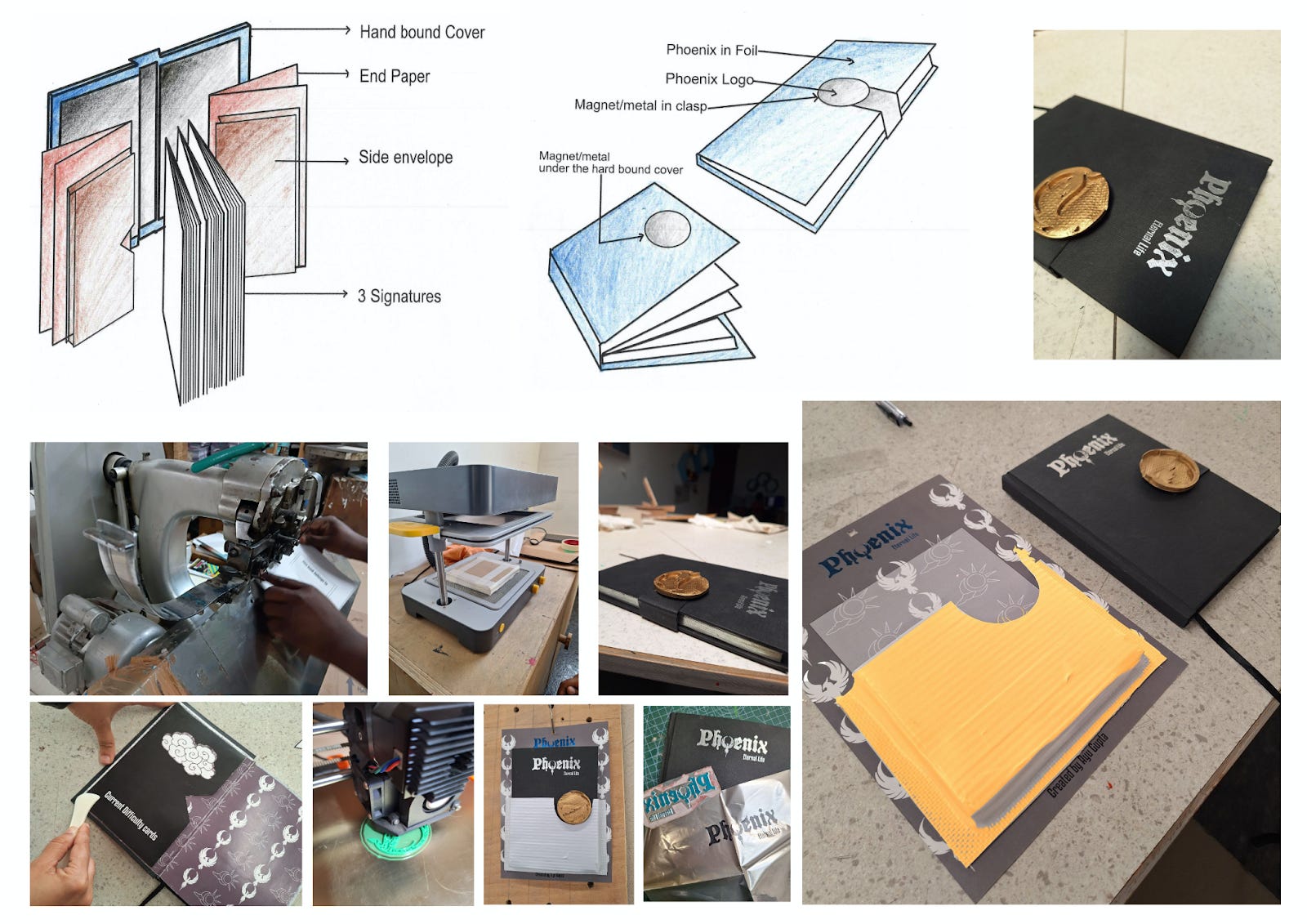
Image 2: Ayu Gupta’s D&T IGCSE 2025 project that received Grade A: A healing journal designed as a real-life game—where one can not only record difficulties but also work through and overcome them in play. A journal that reimagines what journaling can be. Phoenix — a journal where you rise through ashes.
We often imagine engineers and designers as two separate worlds. Design & Technology collapses that boundary. In today’s complex reality—climate change, urban sprawl, ageing populations, inequity—we need minds that can see what others miss, repair what’s broken, and create what’s new.
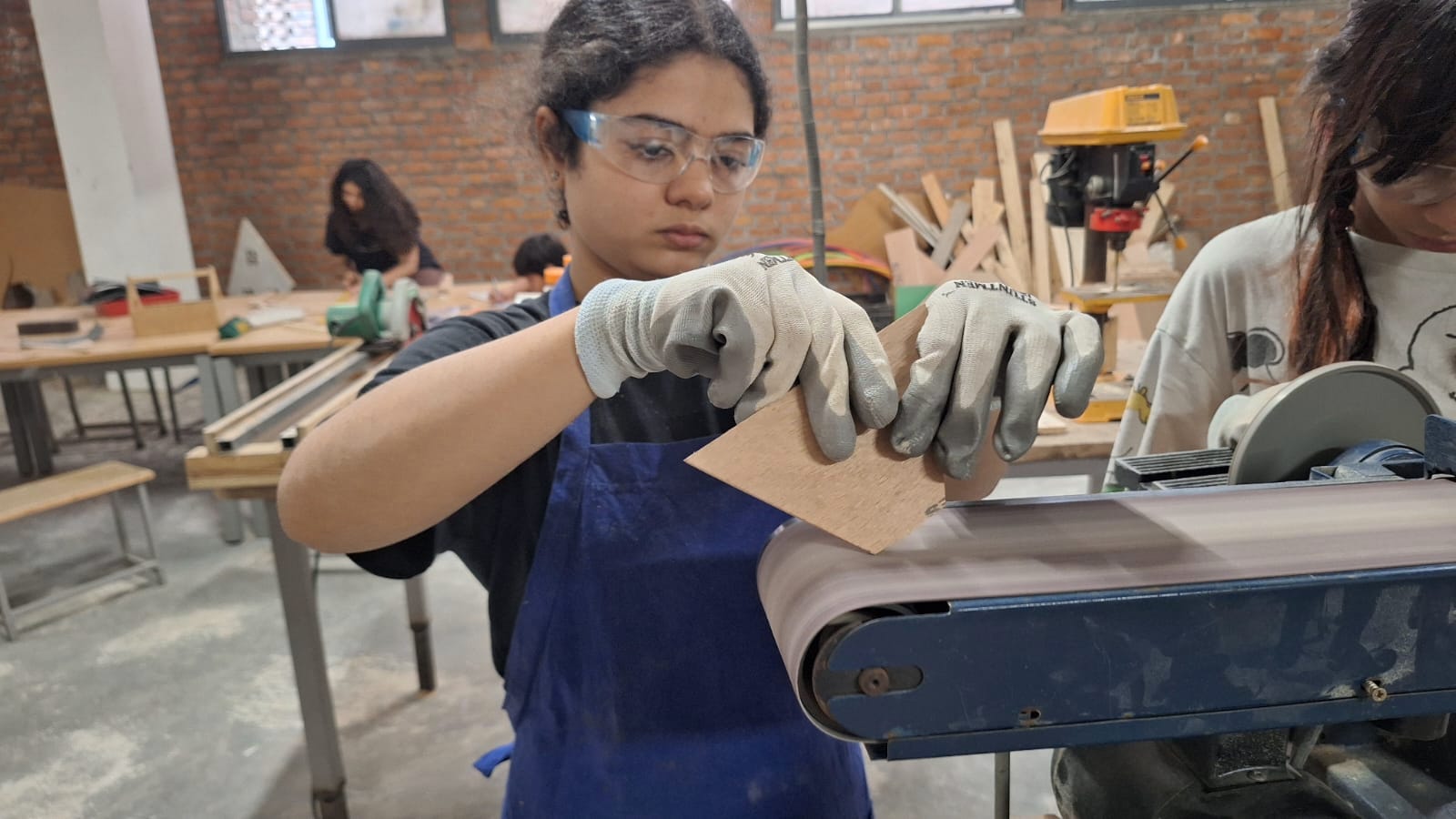
Image 3: Noor from Grade 9 experimenting with wood and its properties in the school’s makers lab.
When learners say they want to be designers, they usually picture fashion, logos, or apps. Those drawn to engineering think of machines, code, or rockets. But at the heart of both lies the same impulse: to understand people, and to craft solutions that truly work. Design focuses on improving human experience; engineering ensures systems work reliably in the real world.
Both begin with the same habits: observing closely, identifying real needs, thinking critically, and testing ideas. That’s where Design & Technology comes in. It gives learners a space to practise those habits early through their hands, tools, and imagination long before they have to pick a “side.”
I teach them that the very first step in designing is empathy. Whether you’re creating a logo, building a car, or developing an incubator for a rural hospital, the process is surprisingly similar. IDEO, the global design consultancy, calls this design thinking. I break it down for my students like this:
– Start with empathy: understand the real needs.
– Define the problem: clearly and specifically.
– Generate ideas: wide and wild.
– Prototype fast: work with your hands.
– Test and refine: repeat
- Repeat the cycle again and again — iterate, iterate, iterate: the mantra of design.
This process doesn’t just belong to designers. It belongs to problem solvers. And the sooner learners practise it, the more equipped they’ll be to navigate whatever comes next — whether that’s architecture, robotics, sustainability, medicine, or industrial design.
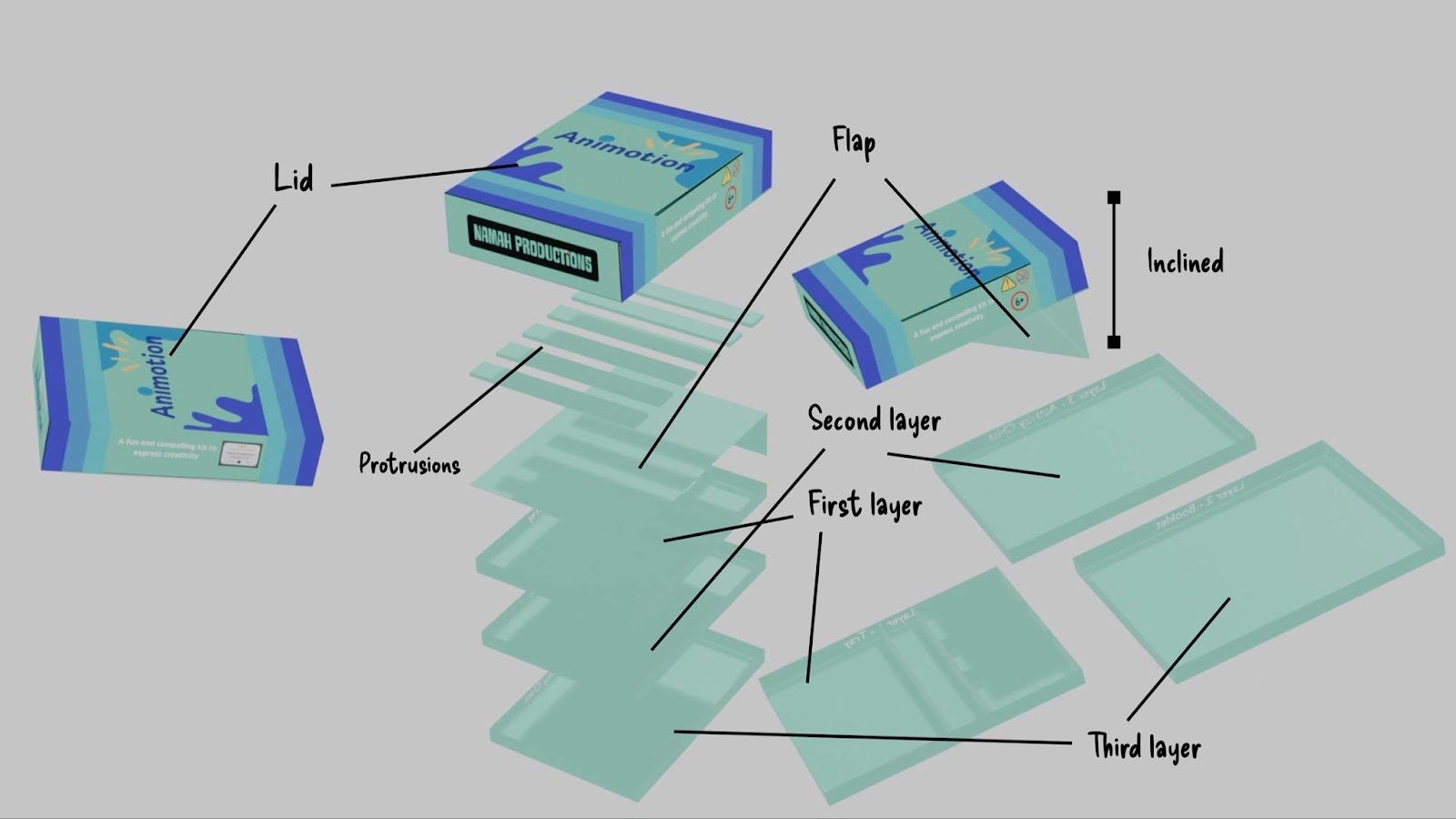
Image 4: Namah’s D&T IGCSE 2025 project that received Grade A: A flipbook-making kit that stores everything you need—including the workstation—inside one compact box.
This isn’t about funneling students into careers. Not everyone will become a designer. Not everyone will become an engineer. But everyone, at some point, will need to look at a messy situation and figure out how to make it better.
If we can teach our learners how to notice what’s broken, imagine what’s possible, and build something real, we've already given them a head start.
So happy to see learners working on path of real life problem solving and SDL ( Self directed learning ).